
| Field | Information |
|---|---|
| Species | Otodus megalodon — Otodontidae |
| Period | Miocene to Early Pliocene, ~23–3.6 Ma |
| Diet type | Apex predator — large marine mammals primary prey |
| Key evidence | Tooth marks on whale bones; stable isotope analysis |
| Trophic level | Among the highest recorded for any shark — estimated ~4.5 |
Quick Answer:Otodus megalodon fed primarily on large marine mammals, including whales, dolphins, and seals. Fossil evidence — tooth marks on cetacean bones and stable isotope analysis — confirms it occupied one of the highest trophic levels of any shark ever studied. It was not an indiscriminate feeder but an apex predator targeting large, energy-rich prey.
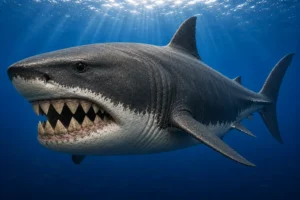
Fifty tonnes of sharks do not stay fed on fish. Otodus megalodon operated at the top of a Miocene ocean food web built around large marine mammals, and the fossil record has preserved direct evidence of exactly what it was targeting — and how it brought prey down.
What Did Megalodon Eat?
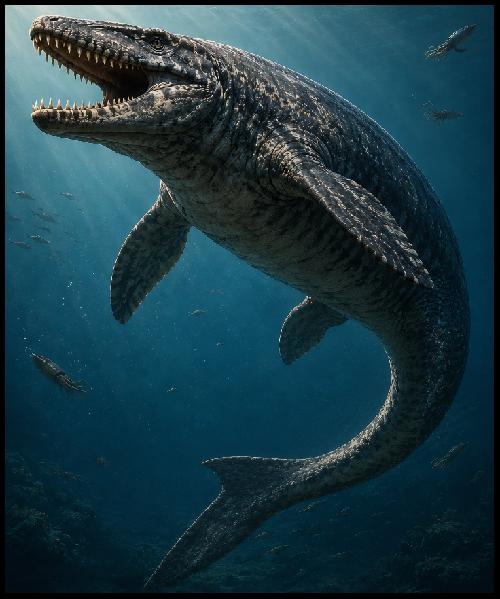
The diet of Otodus megalodon consisted primarily of large marine mammals. Direct fossil evidence includes bite marks attributable to megalodon teeth found on the bones of baleen whales, sperm whales, and smaller cetaceans. Stable nitrogen and zinc isotope analysis of megalodon teeth places it at an exceptionally high trophic level — estimated at approximately 4.5, comparable to or exceeding that of modern orca (Orcinus orca) — confirming it consumed prey well up the food chain rather than filtering or scavenging lower-trophic organisms.
Prey categories documented or strongly inferred from fossil evidence:
- Baleen whales (mysticetes) — bite-marked bones recovered from multiple formations
- Toothed whales (odontocetes) — including smaller sperm whale relatives
- Dolphins and porpoises — documented from tooth-mark evidence on smaller cetacean remains
- Pinnipeds (seals and sea lions) — inferred from co-occurrence and isotope data
- Large bony fish and other sharks — inferred as supplementary prey, lower trophic contribution
Estimates remain model-dependent. Details here reflect current scientific consensus but may be revised as new fossil evidence or isotope analysis emerges.
How Did Megalodon Hunt?
Biomechanical modelling and tooth-mark pattern analysis suggest that megalodon employed a targeted attack strategy rather than pursuit predation. Tooth marks concentrated on the bone-dense pectoral girdles and flipper bases of large whales indicate that it immobilised prey by disabling locomotion before feeding. This attack pattern differs from the soft-tissue biting approach seen in modern great white sharks (Carcharodon carcharias) when attacking marine mammals.
Attack Strategy Evidence
Fossil evidence from whale bones preserves two distinct mark types: deep, parallel gouges consistent with initial disabling strikes, and broader surface scores consistent with feeding. Several specimens show marks from multiple attack angles, suggesting repeated repositioning during a kill. Whether megalodon ambushed prey from depth or approached from alongside is not directly evidenced — depth-ambush is inferred from comparison with large modern sharks, but remains a Tier 3 inference.
Prey Size Targeting
Stable isotope data and the size distribution of bite-marked whale fossils suggest that Otodus megalodon preferentially targeted large prey rather than the smallest available cetaceans. This high-investment feeding strategy is consistent with the energetic demands expected for an apex predator of this body size.
Body mass estimates for megalodon typically fall in the range of approximately 30,000–50,000 kg (66,000–110,000 lb), with some higher estimates proposed depending on modelling assumptions. Larger body size would have increased absolute energy requirements, reinforcing a strategy focused on large, energy-rich prey.
Trophic Position and Ecosystem Role
Current interpretations remain subject to revision. Details here reflect current scientific consensus but may be revised as new fossil evidence or analysis emerges.
A 2022 study published in Nature Communications (McCormack et al.) used zinc isotope analysis to place Otodus megalodon at a trophic level substantially above co-occurring sharks and many other marine predators, indicating a very high position within Miocene marine food webs.
These findings suggest that megalodon was likely among the dominant apex predators of its ecosystems. Its disappearance near the end of the Pliocene may have contributed to cascading ecological effects in marine communities, though the extent of its top-down regulatory influence remains an open question in current research.
Related and Contemporary Species
- Livyatan melvillei — a large raptorial sperm whale contemporary with megalodon; isotope evidence suggests overlapping prey preferences and possible direct ecological competition
- Carcharodon carcharias (great white shark) — ecological successor rather than descendant; likely competed for prey during megalodon’s terminal decline.
- Odobenocetops — a small cetacean representative of the prey fauna that Megalodon exploited in the Pliocene coastal seas
- Isurus spp. (mako sharks) — co-occurring apex sharks that occupied lower trophic positions in the same formations
- Zygophyseter varolai — extinct raptorial sperm whale; another large co-occurring predator whose prey range overlapped with megalodon’s feeding ecology
Frequently Asked Questions
Did megalodon eat whales?
Yes. Fossil evidence directly supports whale predation — bite marks consistent with megalodon teeth have been identified on the bones of multiple cetacean species, including baleen whales. Stable isotope analysis confirms megalodon occupied a trophic level consistent with large marine mammal predation rather than fish-dominated feeding.
What was megalodon’s trophic level?
Stable isotope analysis estimates megalodon’s trophic level at approximately 4.5, placing it among the highest values recorded for any shark. This figure is derived from zinc isotope ratios in fossil teeth and is subject to revision as the methodology is refined and applied to additional specimens.
Did megalodon eat great white sharks?
There is no direct fossil evidence of megalodon preying on great white sharks. The two species overlapped temporally in the late Miocene and early Pliocene, and size disparity would have made such predation physically plausible, but tooth-mark evidence on great white remains has not been reported in the peer-reviewed literature to date.
Conclusion
Otodus megalodon was a specialist apex predator whose diet centred on large marine mammals. Fossil tooth marks on cetacean bones and stable isotope data both confirm that it fed high in the food chain, targeting prey whose energy density matched its enormous metabolic requirements. The full scope of its prey range continues to be refined as isotope methodology advances.
Featured Museum Collections
Museum-quality paleoart and educational poster
collections based on evidence-informed prehistoric
Life reconstructions.