
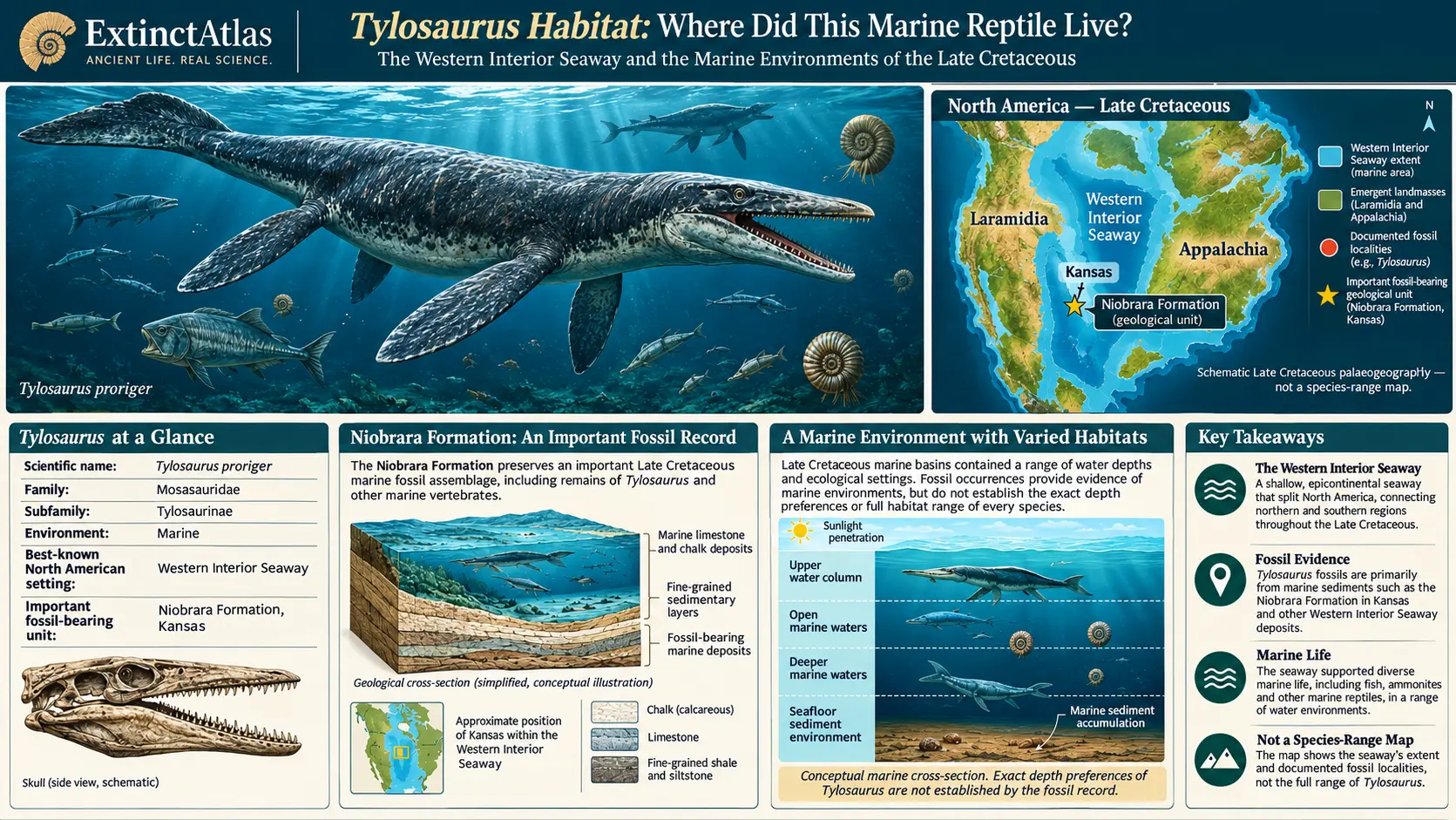
Tylosaurus lived in marine environments during the Late Cretaceous, when extensive seas covered parts of North America and connected regions of the ancient world. One of the best-known settings associated with the genus was the Western Interior Seaway, a broad marine basin that divided much of North America into eastern and western landmasses.

Fossils from the Niobrara Formation of Kansas provide important evidence of Tylosaurus in this ancient sea. However, the genus’s documented distribution extends beyond a single formation or region. Fossil occurrences attributed to Tylosaurus and other tylosaurines have been reported from several continents, although the identification and taxonomic status of individual records vary.
Understanding Tylosaurus habitat therefore requires distinguishing the environments represented by particular fossil deposits from broader reconstructions of where the living animals may have travelled.
Tylosaurus Habitat at a Glance
| Feature | Evidence-based description |
|---|---|
| Environment | Marine |
| Best-known North American setting | Western Interior Seaway |
| Important fossil-bearing unit | Niobrara Formation of Kansas |
| Other relevant deposits | Upper Cretaceous marine formations in North America and other regions |
| Likely ecological setting | Marine waters across different depths and distances from shore |
| Marine fauna recorded from the seaway | Fish, sharks, marine reptiles, turtles and diving birds |
| Main evidence | Fossil occurrences, geological context and associated marine fauna |
| Key limitation | A fossil locality records where remains were deposited, not necessarily the full habitat range of a living individual |
The Western Interior Seaway
The Western Interior Seaway was an extensive marine system that covered much of central North America during parts of the Cretaceous Period. Its changing extent and depth created a range of marine environments, from relatively shallow continental-shelf settings to more open-water areas.
During the Late Cretaceous, this seaway supported diverse marine life. Its deposits contain fossils of fish, sharks, turtles, diving birds, plesiosaurs, and mosasaurs. Tylosaurus was one of the large marine reptiles represented in this ecosystem.
The seaway’s geography changed over geological time as sea level, sedimentation, and regional geology shifted. It should not be treated as a single, unchanging body of water throughout the entire Late Cretaceous.
The Niobrara Formation and Tylosaurus
The Niobrara Formation of western Kansas is among the most important geological units for studying Tylosaurus. Its marine deposits preserve a diverse assemblage of Cretaceous vertebrates, including multiple mosasaur genera.
| Geological unit | Relevance to Tylosaurus |
|---|---|
| Niobrara Formation | Major marine fossil-bearing unit in Kansas, including remains assigned to Tylosaurus |
| Smoky Hill Chalk Member | A major subdivision of the Niobrara succession that preserves abundant marine vertebrate fossils and has been important in research on tylosaurine diversity |
| Pierre Shale Group | Preserves Upper Cretaceous mosasaur fossils, including tylosaurine material and specimens tentatively referred to cf. Tylosaurus sp. |
The Smoky Hill Chalk Member records changes in marine conditions and fossil assemblages through its succession. Researchers have examined the distribution of mosasaur remains within these deposits to investigate whether different taxa occupied different environments or changed in abundance over time.
The Pierre Shale Group provides additional evidence of tylosaurine diversity. However, its fossil records should be evaluated at the level of the individual specimen and geological unit rather than treated as a single, uniform occurrence. Some historical Pierre Shale records have uncertain taxonomic status and should not be treated as securely identified species.
These records do not support reducing the habitat of Tylosaurus to one exact depth or distance from shore. Geological occurrence patterns are affected by the distribution of animals, preservation, sedimentation, and the history of fossil collection.
Did Tylosaurus Live in Deep Water or Near the Coast?
The evidence does not establish a single preferred water depth for every species or population of Tylosaurus.
The distribution of mosasaur fossils within the Smoky Hill Chalk succession has been studied in relation to stratigraphy and changing marine conditions. Such work can help identify patterns in fossil occurrence, but those patterns do not independently demonstrate that Tylosaurus consistently preferred offshore or nearshore waters.
A fossil found in offshore marine sediments can indicate that the animal or its remains entered that environment. It does not, by itself, prove that the animal spent its entire life there. Carcasses and bones can move after death, and geological deposits represent particular conditions at the time of burial rather than a complete record of an animal’s movements.
The most defensible interpretation is that Tylosaurus occupied marine environments, while the exact distribution of its populations across shallow and open-water settings remains a question for specimen-based and stratigraphic research.
What Was the Marine Environment Like?
The Western Interior Seaway supported a diverse community of marine vertebrates. Its fossil record includes bony fish, sharks, turtles, diving birds, plesiosaurs, and several groups of mosasaurs.
These animals formed part of the wider ecosystem in which Tylosaurus lived. Their remains help researchers reconstruct the community’s diversity and the range of ecological roles present in the seaway.
However, finding different animals in the same geological formation does not prove that they lived at precisely the same time, occupied identical habitats or interacted directly. Such conclusions require more detailed evidence from the relevant beds and specimens.
The marine setting also varied geographically. Temperature, water depth, circulation, oxygenation and sedimentation could differ across the seaway and through time. A single description of the Western Interior Seaway cannot be applied without qualification to every Tylosaurus locality.
Was Tylosaurus Found Outside North America?
Tylosaurine mosasaurs are documented from several regions beyond North America, including parts of Europe, Africa, New Zealand and Antarctica. However, not all these occurrences represent confirmed records of the genus Tylosaurus.
Bardet and colleagues identified an isolated Campanian tooth from this region as tylosaurine and considered Tylosaurus a possible identification. Because the specimen is isolated and its genus-level assignment is uncertain, it should be treated as a tentative occurrence rather than a confirmed range record.
Other records from outside North America belong to different tylosaurine genera. The presence of these related mosasaurs demonstrates the wider geographic distribution of the subfamily, but it does not automatically extend the confirmed range of Tylosaurus.
The geographic range of a genus should therefore be assembled from evaluated fossil records rather than by combining every occurrence of a related group. Taxonomic revisions and discoveries may change the interpretation of individual records.
Evidence Strength and Assessment
| Claim | Evidence strength | Assessment |
|---|---|---|
| Tylosaurus lived in marine environments | Strong | Supported by its fossil record and marine geological context |
| The Western Interior Seaway was an important habitat region | Strong | Abundant fossils occur in Upper Cretaceous marine deposits of central North America |
| The Niobrara Formation preserves important Tylosaurus fossils | Strong | Documented in geological and paleontological literature |
| Tylosaurus always lived in deep offshore water | Not established | Fossil occurrence patterns do not demonstrate a universal depth preference |
| All tylosaurine fossil records belong to Tylosaurus | Unsupported | The subfamily includes other genera, and some records are taxonomically uncertain |
| Every animal found in the same formation interacted directly with Tylosaurus | Unsupported | Shared geological context does not prove direct interaction or exact contemporaneity |
| The full geographic range of Tylosaurus is known | Incomplete | Fossil sampling and taxonomic uncertainty limit range reconstruction |
Frequently Asked Questions
Where did Tylosaurus live?
Tylosaurus was a marine reptile. The Western Interior Seaway of North America is one of its best-known settings, with important fossils found in deposits such as the Niobrara Formation of Kansas.
Did Tylosaurus live in the Western Interior Seaway?
Yes. Fossils assigned to Tylosaurus are known from Upper Cretaceous deposits associated with the Western Interior Seaway.
Did Tylosaurus live near the shore or in deep water?
The evidence does not establish one universal preference. Fossil distribution and geological context can help reconstruct habitat, but depositional setting does not necessarily equal the exact water depth or living location of an individual.
Did Tylosaurus live outside North America?
Tylosaurine fossils are known from multiple continents. However, not every tylosaurine occurrence can confidently be assigned to the genus Tylosaurus. Each proposed genus-level record requires evaluation of its taxonomic evidence.
What other animals lived in the same sea?
The Western Interior Seaway preserved fossils of fish, sharks, turtles, diving birds, plesiosaurs, and other mosasaurs. The exact composition of the community varied by location and geological age.
References
- Bardet, N., Pereda Suberbiola, X., & Corral, J. C. (2006). A Tylosaurine Mosasauridae (Squamata) from the Late Cretaceous of the Basque-Cantabrian Region. Estudios Geológicos, 62(1), 213–218. https://doi.org/10.3989/egeol.0662121
- Jiménez-Huidobro, P., Simões, T. R., & Caldwell, M. W. (2019). A new hypothesis of the phylogenetic relationships of the Tylosaurinae (Squamata: Mosasauroidea). Frontiers in Earth Science, 7, 47. https://doi.org/10.3389/feart.2019.00047
- Everhart, M. J. (2005). Tylosaurus kansasensis, a new species of tylosaurine (Squamata, Mosasauridae) from the Niobrara Chalk of western Kansas, USA. Netherlands Journal of Geosciences, 84(3), 231–240. https://doi.org/10.1017/S0016774600021016
- Schumacher, B. A. (1993). Biostratigraphy of Mosasauridae (Squamata, Varanoidea) from the Smoky Hill Chalk Member, Niobrara Chalk (Upper Cretaceous) of Western Kansas. Master’s thesis, Fort Hays State University. https://doi.org/10.58809/OECC8449
- Meredith, R. W., Martin, J. E., & Weigeltner, P. N. (2007). The largest mosasaur (Squamata: Mosasauridae) from the Missouri River area (Late Cretaceous; Pierre Shale Group) of South Dakota and its relationship to Lewis and Clark. In J. E. Martin & D. C. Parris (Eds.), The Geology and Paleontology of the Late Cretaceous Marine Deposits of the Dakotas (Geological Society of America Special Paper 427, pp. 209–214). https://doi.org/10.1130/2007.2427(15)
- Kansas Historical Society. “State Fossils.” https://www.kansashistory.gov/kansapedia/state-fossils/18626
Recommended Paleontology & Natural History Books
As an Amazon Associate, Extinct Atlas may earn from qualifying purchases.
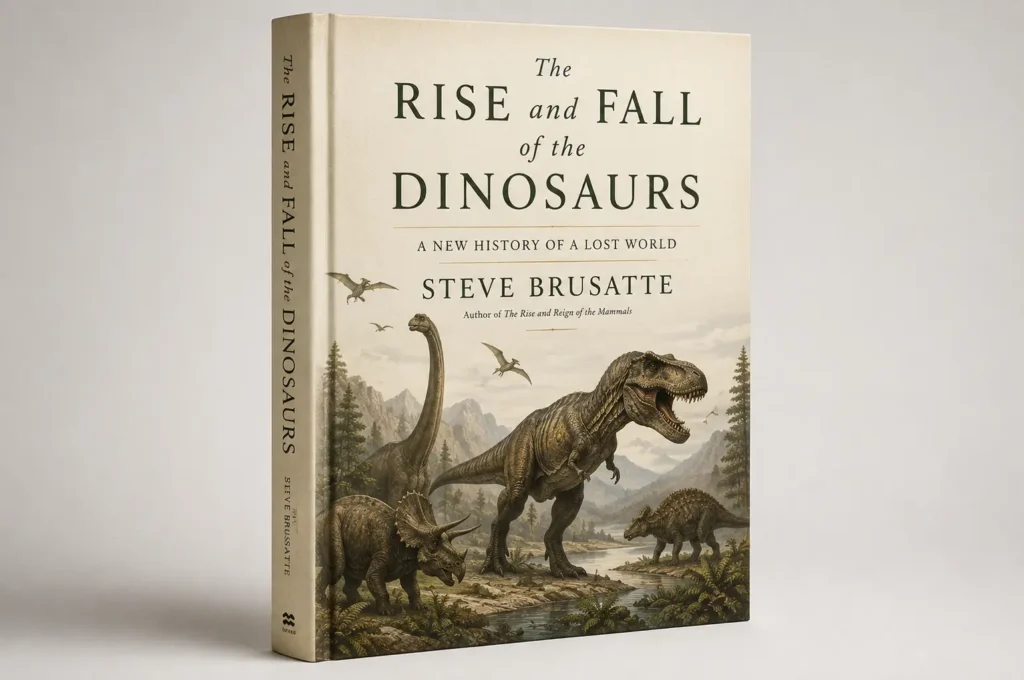
The Rise and Fall of the Dinosaurs
A compelling history of dinosaurs, tracing their origins, diversification, 200-million-year reign, extinction, and enduring legacy.
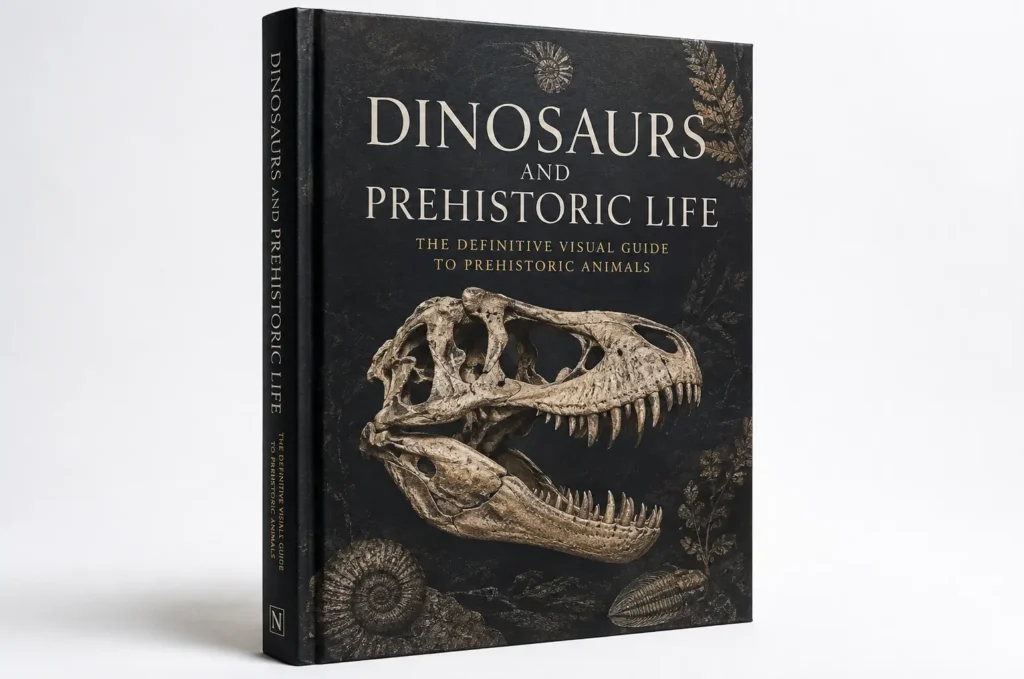
Dinosaurs and Prehistoric Life
A richly illustrated visual reference exploring dinosaurs, fossils, evolution, and prehistoric life across geological time.
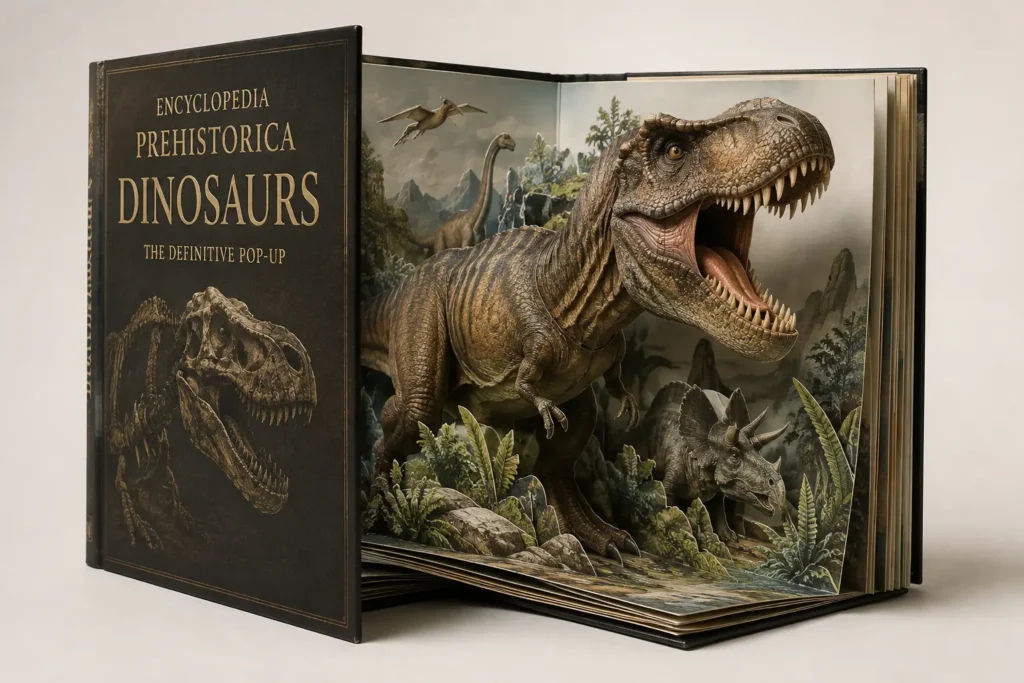
Encyclopedia Prehistorica: Dinosaurs
An interactive dinosaur book featuring spectacular three-dimensional pop-ups, particularly suited to young readers and families.
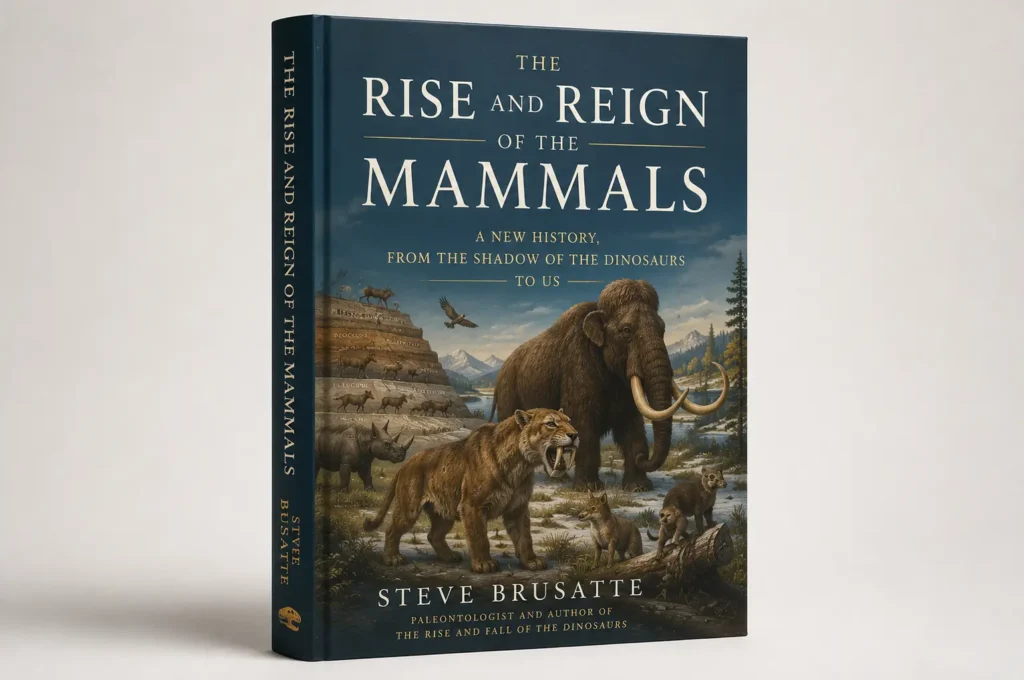
The Rise and Reign of the Mammals
A sweeping history of mammalian evolution, from their origins alongside dinosaurs through the Cenozoic and the emergence of humans.