

The available fossil evidence attributed to Tylosaurus documents a scaly body covering, not feathers. Historical descriptions of preserved skin impressions record small scales, consistent with its identity as a marine squamate reptile. No fossil evidence currently establishes that Tylosaurus had feathers. Its skin should therefore be reconstructed with scales rather than feathers, while avoiding unsupported claims about its complete appearance or colour.

What do Tylosaurus fossils reveal about its skin?
The skin of Tylosaurus is unusually informative because some fossils preserve impressions of the body covering alongside skeletal remains. An important historical example is specimen KUVP 1075, from Kansas. In 1878, F. H. Snow published a description of the dermal covering of a mosasauroid reptile. His account is the historical source for the reported scale features associated with this specimen.
Snow described numerous small scales with a diamond-shaped outline and a raised ridge. These observations provide evidence of scale form in the preserved region. They do not preserve every detail of the animal’s skin, and they should not be treated as a complete record of its integument from head to tail.
| Feature | Evidence and interpretation | Limitation |
|---|---|---|
| Scales | Fossil skin impressions attributed to Tylosaurus preserve a small-scale covering | Preservation is limited to particular specimens and body regions |
| Scale shape | Snow’s historical description reports small, diamond-shaped scales | Scale shape and dimensions should be tied to the documented specimen |
| Raised ridges | The historical description reports a raised ridge, or keel, on the scales | The distribution of this feature across the entire body is not completely documented |
| Skin texture | The preserved impressions reveal aspects of the surface covering | Fossilization does not necessarily preserve the original texture, colour or flexibility |
| Body colour | The fossil evidence considered here does not establish a complete colour pattern for Tylosaurus | Colour in most reconstructions should be treated as an artistic interpretation unless supported by specific evidence |
Did Tylosaurus have feathers?
No fossil evidence currently establishes that Tylosaurus had feathers. Its preserved integument includes scales, and its placement among mosasaurid squamates is consistent with a scaled reptilian body covering.
The distinction is between an absence of supporting evidence and a claim about every aspect of its biology. No known feather impressions or feather-like structures have been demonstrated for Tylosaurus. A scientifically responsible reconstruction should therefore omit feathers rather than introduce them as a speculative feature without supporting evidence.
Images that show Tylosaurus with a feathered body should not be presented as evidence-based reconstructions.
What did its scales look like?
The historical description by Snow (1878) reports small, diamond-shaped scales with a raised ridge along the long axis. These structures were much smaller than the large plates or conspicuous scutes that viewers may associate with some modern reptiles.
The documented scales are important because they show that the body covering was not simply smooth skin. However, an illustration should not imply that every scale on every part of the animal had exactly the same shape, size, or ridge pattern. The available fossil impressions record particular areas of skin, not a complete skin map.
When describing the scale pattern, it is useful to distinguish three levels of information:
- Directly preserved: the shapes and surface details visible in the fossil impressions.
- Reconstructed: the extension of that pattern into body regions where the skin is not preserved.
- Unknown or uncertain: details such as the full-body variation in scale form, the original colour pattern, and other soft-tissue characteristics that the available specimen does not establish.
Could its scales have helped it swim?
The shape of a scale can inform hypotheses about its function, but function is not directly preserved in the same way as the scale’s outline.
Research on other mosasaurs provides comparative context. Lindgren and colleagues (2009) examined preserved integument in Plotosaurus and discussed how its keeled scales may have influenced water flow along the body. A separate study by Lindgren, Everhart, and Caldwell (2011) examined three-dimensionally preserved integument in Ectenosaurus clidastoides. The authors interpreted features of its scales and underlying dermal structure as possible adaptations that reduced surface deformation and frictional drag during locomotion.
These studies concern different mosasaur genera. They do not demonstrate the exact effect of the scales in Tylosaurus, including those described from KUVP 1075. A claim that its scales reduced drag or improved swimming performance should therefore be framed as a comparative functional hypothesis, not as a directly observed fact. The effect would depend on scale geometry, orientation, arrangement across the body, and the conditions of movement.
What can scientists infer from skin impressions?
Skin impressions preserve evidence that may be lost from most fossil skeletons. They can help researchers investigate the shape and arrangement of scales and compare integument across related marine reptiles.
Nevertheless, the fossil record of skin is uneven. Soft tissues usually require particular conditions to be preserved, and an impression may retain surface shape without preserving the original biological material. A lack of skin impressions on a specimen does not mean the animal lacked scales; equally, a patch of preserved scales does not establish every detail of the body’s covering.
Comparisons with other mosasaurs must also account for taxonomic differences. A structure documented in one genus may suggest a useful hypothesis for another, but it is not direct evidence that both had identical skin.
Evidence strength and assessment
| Claim | Evidence strength | Assessment |
|---|---|---|
| Tylosaurus had scales | Strong | Fossil skin impressions attributed to Tylosaurus preserve scale evidence |
| Some preserved scales were small and diamond-shaped | Strong for the described specimen | Do not assume the exact pattern was uniform across the entire body |
| Some scales had a raised ridge | Supported by the historical description | The complete distribution of ridged scales is not established |
| Tylosaurus had feathers | Unsupported | No established feather evidence is known; feathers should not be included in an evidence-based reconstruction |
| Scales influenced hydrodynamic performance | Plausible functional interpretation | Research on Plotosaurus and Ectenosaurus offers comparative context, not a direct measurement of the effect in Tylosaurus |
| The complete body colour of Tylosaurus is known | Not established by the evidence discussed here | Avoid presenting a particular colour scheme as certain without specimen-specific evidence |
References
- Snow, F. H. (1878). On the dermal covering of a mosasauroid reptile. Transactions of the Kansas Academy of Science, 6, 54–58. https://doi.org/10.2307/3623557
- Lindgren, J., Alwmark, C., Caldwell, M. W., & Fiorillo, A. R. (2009). Skin of the Cretaceous mosasaur Plotosaurus: Implications for aquatic adaptations in giant marine reptiles. Biology Letters, 5(4), 528–531. https://doi.org/10.1098/rsbl.2009.0097
- Lindgren, J., Everhart, M. J., & Caldwell, M. W. (2011). Three-dimensionally preserved integument reveals hydrodynamic adaptations in the extinct marine lizard Ectenosaurus (Reptilia, Mosasauridae). PLOS ONE, 6(11), e27343. https://doi.org/10.1371/journal.pone.0027343
Recommended Paleontology & Natural History Books
As an Amazon Associate, Extinct Atlas may earn from qualifying purchases.
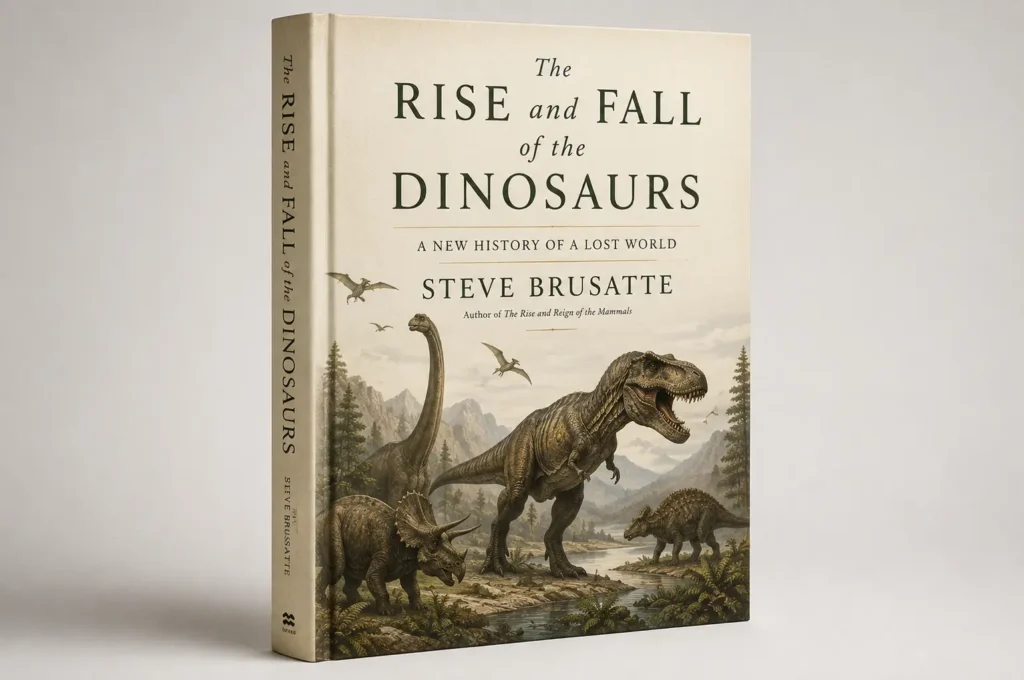
The Rise and Fall of the Dinosaurs
A compelling history of dinosaurs, tracing their origins, diversification, 200-million-year reign, extinction, and enduring legacy.
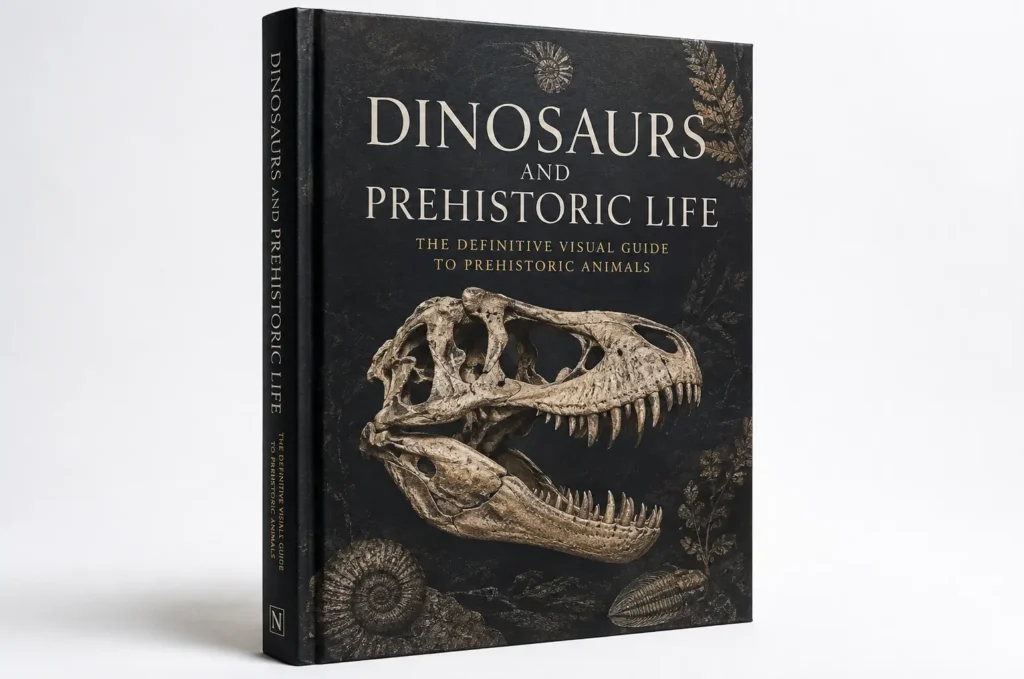
Dinosaurs and Prehistoric Life
A richly illustrated visual reference exploring dinosaurs, fossils, evolution, and prehistoric life across geological time.
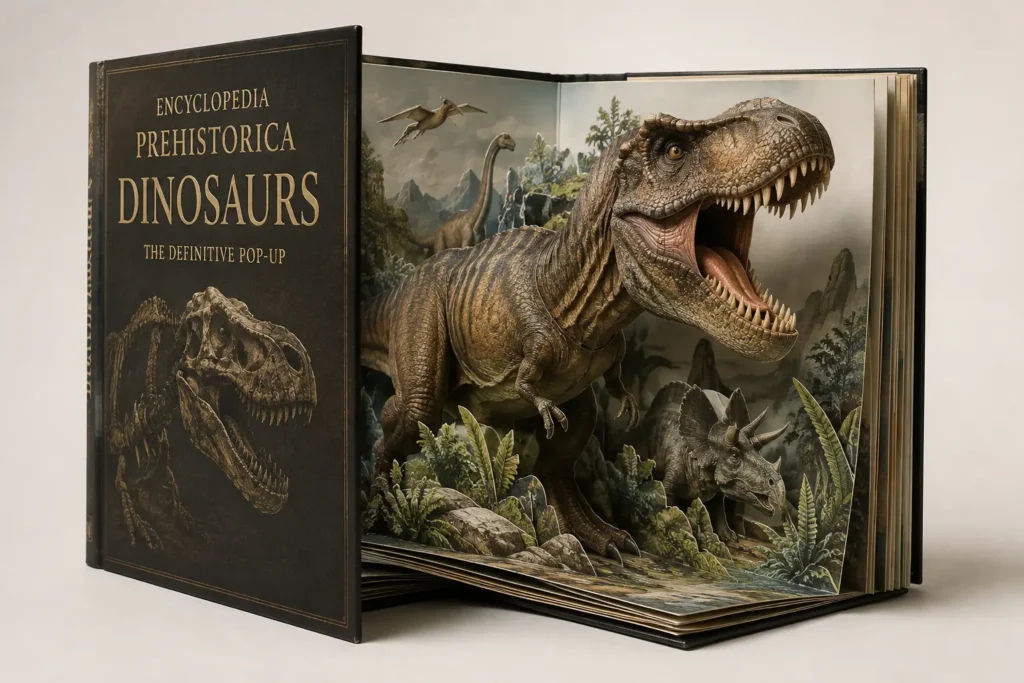
Encyclopedia Prehistorica: Dinosaurs
An interactive dinosaur book featuring spectacular three-dimensional pop-ups, particularly suited to young readers and families.
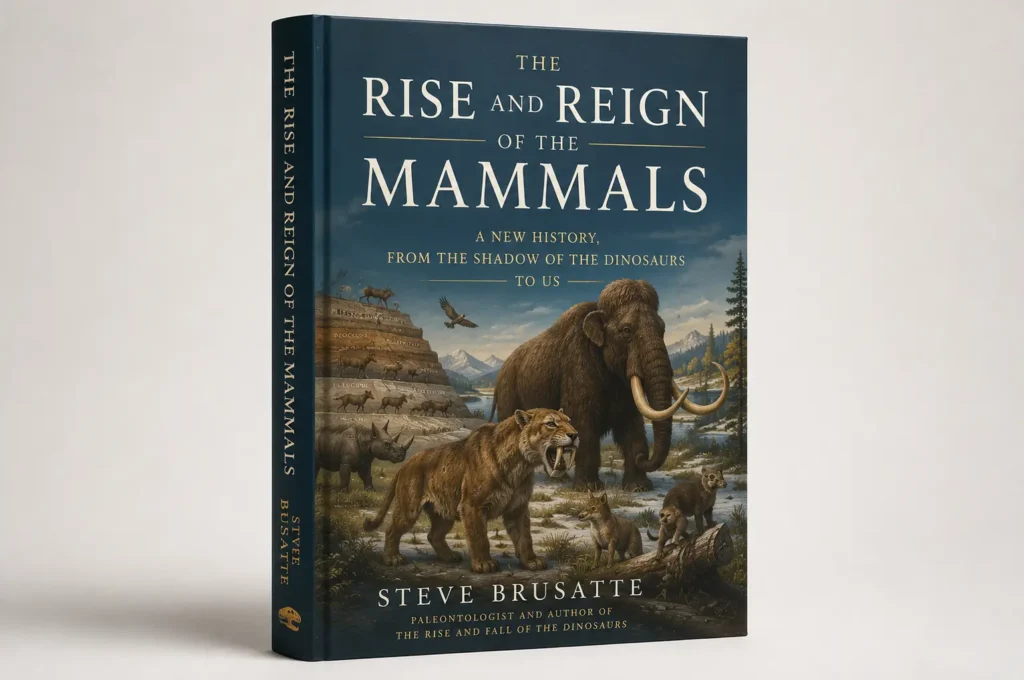
The Rise and Reign of the Mammals
A sweeping history of mammalian evolution, from their origins alongside dinosaurs through the Cenozoic and the emergence of humans.