

Tylosaurus was a large marine reptile that moved through Cretaceous seas using a streamlined body, four paddle-shaped limbs, and a powerful tail. Its skeleton provides evidence about its swimming mechanics, but it does not preserve a direct record of speed. Research using anatomical measurements and biomechanical models can help estimate aspects of its locomotor performance; these estimates must be distinguished from measured swimming speeds.

How fast could Tylosaurus swim?
The exact swimming speed of Tylosaurus is not established. Fossil anatomy and biomechanical modelling can help researchers investigate how it accelerated and moved through water, but they do not justify presenting one precise speed as a confirmed maximum.
A 2026 study modelled burst-lunge performance in several mosasaurs, including Tylosaurus proriger. Across the tested model conditions, T. proriger showed higher normalized lunge velocities than the sampled mosasaurines. This is evidence for a difference in predicted burst performance under the study’s modelling assumptions—not a direct measurement of its speed in life.
The distinction matters because a rapid lunge, sustained swimming, and maximum speed are different aspects of locomotion. A result for one cannot automatically be used as a numerical estimate for the others.
What does its skeleton tell us about swimming?
| Anatomical feature | What it can indicate | Important limitation |
|---|---|---|
| Elongated body and vertebral column | The body’s shape and flexibility influenced how it moved through water | Fossil bones alone do not fully reconstruct swimming movements |
| Tail and caudal vertebrae | Tail movement was important to propulsion; vertebral form helps constrain possible motion | Soft tissues, muscle power and the complete movement cycle must be reconstructed |
| Paddle-shaped forelimbs | Reconstructed functional interpretations suggest that the forelimbs could contribute to steering, stability and manoeuvring | Their precise contribution during different swimming behaviours is not directly preserved |
| Paddle-shaped hindlimbs | Reconstructed functional interpretations suggest a possible contribution to control and stability | Their relative contribution to propulsion remains uncertain |
| Overall body proportions | Provide inputs for reconstructing hydrodynamics and locomotor mechanics | Body proportions alone cannot establish a reliable speed in metres per second |
These features should be considered together. Swimming performance depends not only on the shape of individual bones but also on the interaction between the body, tail, paddles, muscles and surrounding water. The proposed roles of the forelimbs and hindlimbs are functional interpretations rather than directly preserved evidence of how the animal used each paddle.
How did Tylosaurus propel itself?
The vertebral column and tail provide important clues to the mechanics of mosasaur swimming. Research on Tylosaurus proriger has examined vertebral proportions and the potential range of movement along different parts of the spine. These analyses are consistent with a swimming mode in which movement of the rear body and tail played a substantial role.
The tail’s role in propulsion should not be confused with the role of the paddles. The limbs could contribute to manoeuvring, directional control and stability, while the tail generated important propulsive movement. The exact contribution of each structure during acceleration, cruising and turning remains a matter for anatomical and biomechanical interpretation.
The fossil skeleton also does not preserve the full soft-tissue system. Muscle dimensions, muscle performance and the detailed motion of the tail must be reconstructed or modelled, introducing uncertainty into estimates of locomotor performance.
Could Tylosaurus accelerate rapidly?
A study published online in October 2026 used a drag-based biomechanical model to investigate burst-lunge performance in four mosasaurs. The analysis included Tylosaurus proriger, Platecarpus tympaniticus, Mosasaurus sp., and Plotosaurus bennisoni.
The model examined how factors such as tail excursion, reconstructed muscle power, and hydrodynamic drag affected predicted lunge velocity. Within the tested conditions, greater tail-curl amplitude and power output increased predicted velocity. Tail-curl amplitude was the dominant factor influencing the modelled lunge performance, while increases in drag coefficient produced comparatively modest reductions in predicted velocity.
The study also found higher normalized lunge velocities for the sampled russellosaurines—including T. proriger—than for the sampled mosasaurines.
The authors proposed that these differences may reflect contrasting locomotor and hunting strategies. The model results were interpreted as potentially consistent with russellosaurines being better suited to ambush-style attacks and the sampled mosasaurines being more consistent with pelagic cruising. These are proposed ecological implications of the biomechanical results, not direct observations of hunting behaviour.
These findings are important, but their scope must remain clear:
- They are model-derived estimates, not observations of a living animal.
- They concern burst-lunge performance rather than a universal maximum swimming speed.
- They depend on reconstructed anatomy and assumptions about movement, muscle performance, and water resistance.
- Comparisons among the modelled taxa do not establish that every species within a group moved in the same way.
- The proposed hunting strategies are interpretations of modelled performance, not direct evidence of specific hunting events.
The results therefore support a more specific discussion of locomotor capability without settling the exact speed of Tylosaurus.
Was Tylosaurus built for sustained swimming?
The answer is less certain than a simple description of it as either a fast swimmer or a slow swimmer would suggest.
Comparative research on mosasauroid locomotory ecomorphology has identified differences in forelimb morphology among major groups. Cross and colleagues (2022) examined locomotory disparity using forelimb measurements as functional proxies and discussed the evolution of different locomotory strategies, including adaptations associated with sustained activity in more pelagic forms. This provides a broader evolutionary context for interpreting mosasaur locomotion, but it does not directly establish the sustained swimming performance of Tylosaurus.
That interpretation does not mean Tylosaurus was incapable of swimming efficiently or covering substantial distances. Nor does it establish that it was always slower than other large marine reptiles. Sustained swimming, acceleration and manoeuvring are distinct performance demands, and conclusions about one should not automatically be extended to the others.
Evidence strength and assessment
| Claim | Evidence strength | Assessment |
|---|---|---|
| The skeleton can constrain possible swimming mechanics | Strong for anatomical structure; interpretive for motion | Vertebral, tail and limb anatomy provide evidence, but movement must be reconstructed |
| Tail movement was important to propulsion | Supported by comparative anatomy and locomotor research | The precise contribution of the tail under different swimming conditions remains uncertain |
| Tylosaurus proriger can be modelled for burst-lunge performance | Supported by a published biomechanical study | The output is model-dependent, not a directly measured speed |
| The modelled T. proriger had higher normalized lunge velocity than the sampled mosasaurines | Supported within the study’s tested conditions | This is a relative result from a particular model and taxon sample |
| A precise maximum swimming speed is known | Not established by the evidence discussed here | Do not publish an exact speed without a traceable estimate, method and clearly defined performance measure |
| Tylosaurus was incapable of sustained swimming | Not established | Proposed differences in locomotor specialisation do not demonstrate an inability to sustain swimming |
What remains uncertain?
Several questions remain open to investigation:
- What range of sustained swimming speeds could Tylosaurus maintain?
- How did its acceleration and turning performance vary with body size and age?
- How sensitive are estimated burst-lunge velocities to alternative reconstructions of tail movement, muscle power, and drag?
- How representative are the available specimens of variation within Tylosaurus?
- How closely do proposed locomotor differences correspond to actual ecological behaviour?
Answering these questions requires more than assigning a speed from body length or comparing Tylosaurus with a modern marine animal. Quantitative estimates should identify the specimen or reconstruction used, the performance being modelled, the assumptions involved, and the uncertainty in the result.
References
- Formoso, K. K., Hebdon, N., Fish, F. E., Cieri, R. L., & Habib, M. B. (2026). Mosasaur tail morphology reveals burst swimming performance and ecological diversity. Current Biology. Published online 7 October 2026. https://doi.org/10.1016/j.cub.2026.09.036
- Cross, S. R. R., Moon, B. C., Stubbs, T. L., Rayfield, E. J., & Benton, M. J. (2022). Climate, competition, and the rise of mosasauroid ecomorphological disparity. Palaeontology, 65(2), e12590. https://doi.org/10.1111/pala.12590
- Carpenter, J. A. (2017). Locomotion and skeletal morphology of Late Cretaceous mosasaur, Tylosaurus proriger. Honors College thesis, Georgia Southern University. https://digitalcommons.georgiasouthern.edu/honors-theses/284/
- Russell, D. A. (1967). Systematics and Morphology of American Mosasaurs (Reptilia, Sauria). Bulletin of the Peabody Museum of Natural History, Yale University, 23, 1–237. https://elischolar.library.yale.edu/peabody_museum_natural_history_bulletin/23/
Recommended Paleontology & Natural History Books
As an Amazon Associate, Extinct Atlas may earn from qualifying purchases.
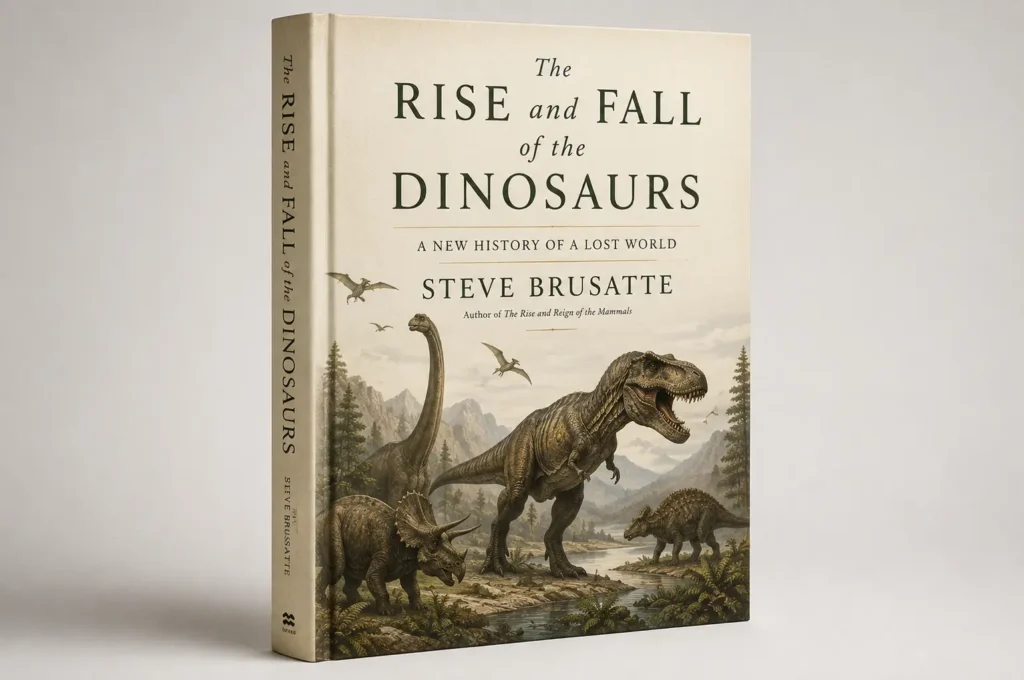
The Rise and Fall of the Dinosaurs
A compelling history of dinosaurs, tracing their origins, diversification, 200-million-year reign, extinction, and enduring legacy.
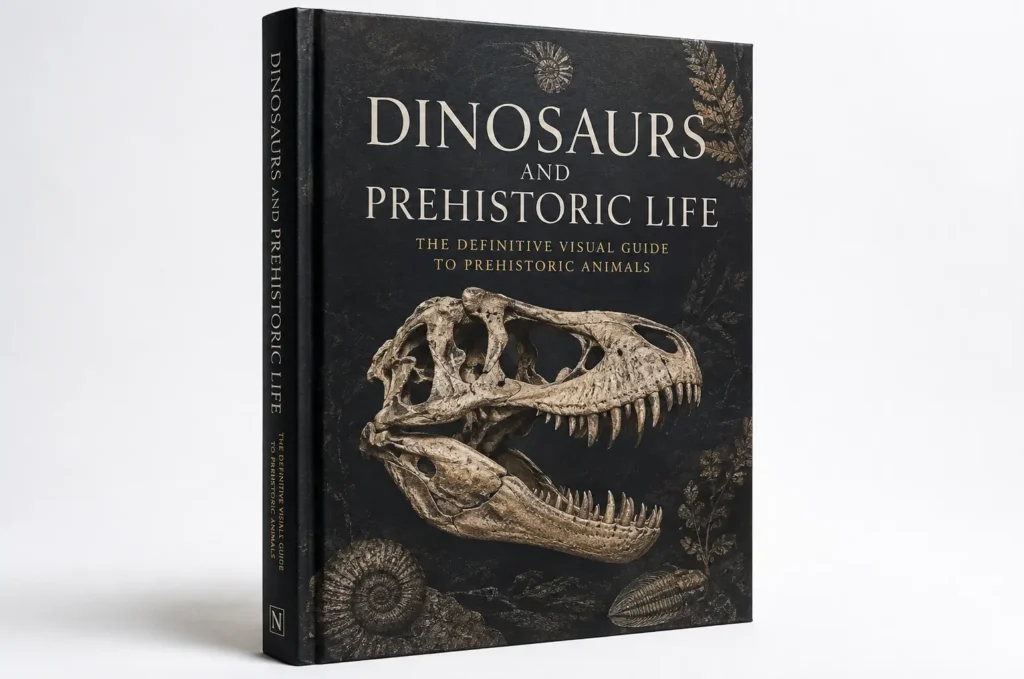
Dinosaurs and Prehistoric Life
A richly illustrated visual reference exploring dinosaurs, fossils, evolution, and prehistoric life across geological time.
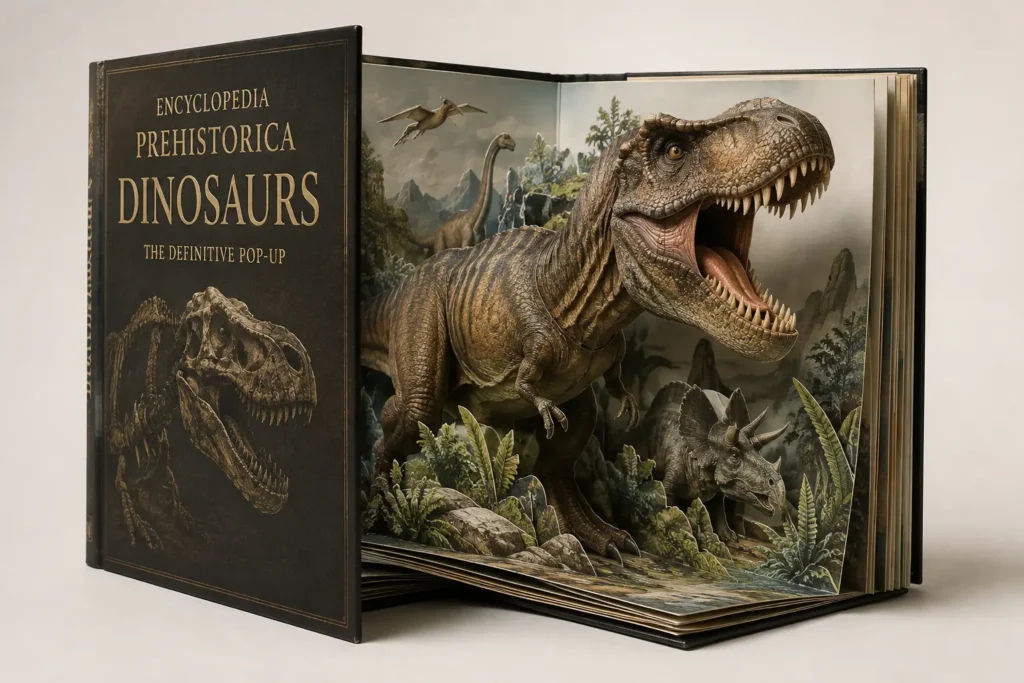
Encyclopedia Prehistorica: Dinosaurs
An interactive dinosaur book featuring spectacular three-dimensional pop-ups, particularly suited to young readers and families.
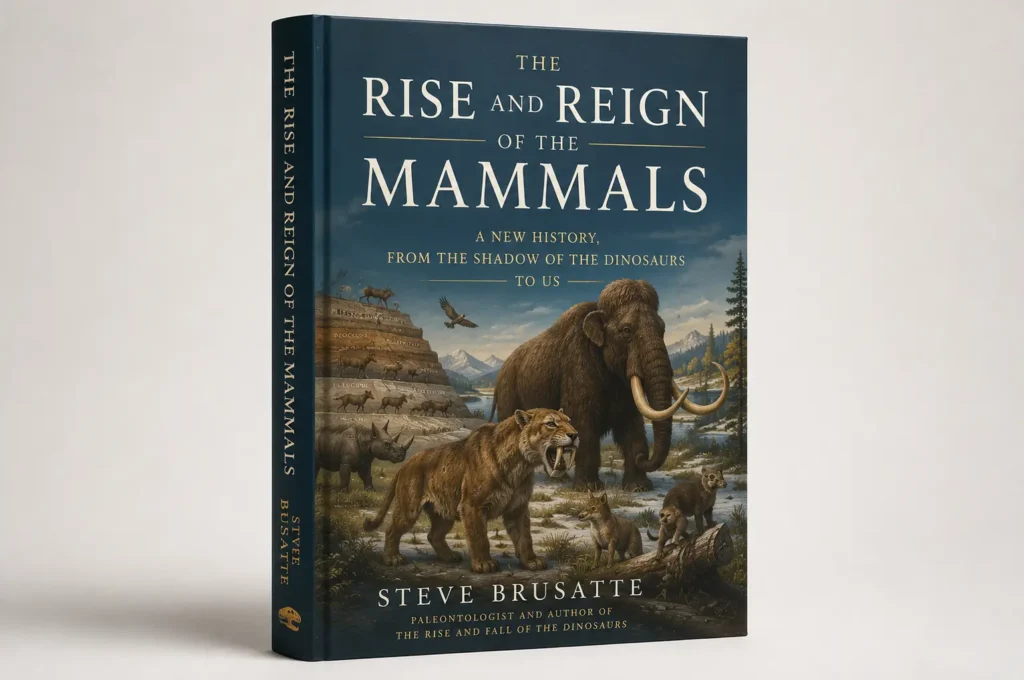
The Rise and Reign of the Mammals
A sweeping history of mammalian evolution, from their origins alongside dinosaurs through the Cenozoic and the emergence of humans.