

Species Quick Info
| Field | Information |
|---|---|
| Scientific Name | Triceratops horridus |
| Topic | Extinction |
| Taxonomic Group | Ceratopsidae |
| Geological Age | Late Cretaceous (Maastrichtian, approximately 68–66 million years ago) |
| Extinction Date | Approximately 66.0 million years ago |
| Extinction Event | Cretaceous–Paleogene (K–Pg) Mass Extinction |
| Most Widely Accepted Cause | Chicxulub asteroid impact |
| Evidence Strength | Exceptional Direct Evidence |
Quick Answer
Triceratops horridus became extinct approximately 66 million years ago during the Cretaceous–Paleogene (K–Pg) mass extinction, when a large asteroid struck what is now the Yucatán Peninsula of Mexico. The impact triggered rapid global environmental changes—including massive wildfires, darkness caused by atmospheric dust and aerosols, sharply reduced photosynthesis, climate disruption, and the collapse of terrestrial food webs—that eliminated all non-avian dinosaurs.
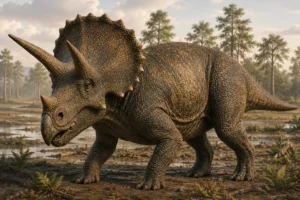
Current scientific evidence overwhelmingly supports the Chicxulub impact as the primary cause of the extinction of Triceratops. Although scientists continue to investigate whether environmental changes such as volcanism or regional ecological shifts affected Late Cretaceous ecosystems before the impact, there is no strong evidence that these factors alone caused the disappearance of Triceratops.
Because Triceratops lived during the final few million years of the Cretaceous and is abundant in the latest Maastrichtian rock record, it is one of the key species used to study the end-Cretaceous extinction.
Extinction Evidence Strength Overview
| Topic | Confidence | Evidence Type |
|---|---|---|
| Time of Extinction | Exceptional | Radiometric dating and stratigraphy |
| Chicxulub Impact | Exceptional | Impact crater, shocked minerals, global ejecta layer |
| K–Pg Boundary Correlation | Exceptional | Worldwide geological marker |
| Rapid Environmental Change | Exceptional | Geological, geochemical, and paleontological evidence |
| Collapse of Food Webs | Very High | Fossil record and ecological modelling |
| Extinction Mechanisms | High | Multiple independent scientific studies |
| Pre-impact Ecological Stress | Moderate | Active area of research |
| Alternative Extinction Hypotheses | Weak to Moderate | Limited supporting evidence |
Summary
| Category | Current Understanding |
|---|---|
| Extinction Event | Cretaceous–Paleogene (K–Pg) Mass Extinction |
| Approximate Age | 66.0 million years ago |
| Primary Cause | Chicxulub asteroid impact |
| Duration of Initial Catastrophe | Hours to years |
| Long-Term Recovery | Millions of years |
| Survival of Non-Avian Dinosaurs | None |
| Scientific Consensus | Chicxulub impact caused the extinction |

Introduction
Triceratops horridus was among the last non-avian dinosaurs to inhabit Earth. It lived during the Maastrichtian Stage of the Late Cretaceous and disappeared at the Cretaceous–Paleogene (K–Pg) boundary approximately 66 million years ago, alongside Tyrannosaurus rex, Edmontosaurus, Ankylosaurus, and thousands of other species.
For much of the twentieth century, the cause of this extinction remained one of paleontology’s greatest mysteries. Numerous hypotheses—including gradual climate change, disease, sea-level fluctuations, volcanic eruptions, and ecological competition—were proposed to explain the disappearance of the dinosaurs.
Today, decades of geological, geochemical, and paleontological research have transformed scientific understanding of this event. Evidence from the Chicxulub impact crater, a worldwide iridium-rich boundary layer, shocked quartz, tektites, tsunami deposits, and the fossil record collectively demonstrates that a massive asteroid impact triggered one of the most severe mass extinctions in Earth’s history.
Although researchers continue to investigate the precise sequence of environmental changes following the impact, there is broad scientific agreement that Triceratops became extinct because it was unable to survive the cascading ecological collapse that followed this global catastrophe.
When Did Triceratops Become Extinct?
Current evidence indicates that Triceratops horridus disappeared at the Cretaceous–Paleogene boundary, approximately 66.0 million years ago.
This timing is supported by exceptionally well-dated rock sequences across western North America, particularly the Hell Creek Formation and equivalent Maastrichtian formations. Fossils of Triceratops occur abundantly within sediments deposited immediately before the K–Pg boundary but have never been confirmed from rocks deposited after the extinction event.
Chronology
| Event | Approximate Age |
|---|---|
| Appearance of Triceratops | ~68 million years ago |
| Final Known Populations | Immediately before 66.0 million years ago |
| Chicxulub Impact | 66.0 million years ago |
| K–Pg Boundary | 66.0 million years ago |
| Last Confirmed Triceratops Fossils | Latest Maastrichtian |
The absence of Triceratops fossils above the boundary layer is particularly significant because the geological record preserving its habitat continues into the Paleogene. This abrupt disappearance indicates extinction rather than gradual replacement by another ceratopsian species.
The same pattern is observed for nearly all other non-avian dinosaurs, supporting the conclusion that Triceratops vanished during a rapid global extinction event rather than through a prolonged decline.
Evidence Strength
Exceptional Direct Evidence
Radiometric dating, magnetostratigraphy, biostratigraphy, and extensive fossil collections independently place the extinction of Triceratops precisely at the K–Pg boundary.
What Caused the Extinction?
The overwhelming scientific consensus is that Triceratops horridus became extinct because of the Chicxulub asteroid impact, which triggered catastrophic global environmental change.
Approximately 66 million years ago, an asteroid estimated to have measured 10–15 kilometres (6–9 miles) in diameter struck the shallow seas near present-day Chicxulub, on the Yucatán Peninsula of Mexico.
The collision released an amount of energy equivalent to billions of nuclear weapons, instantly excavating a crater approximately 180 kilometres (112 miles) in diameter and ejecting enormous quantities of rock, dust, sulfur-rich material, and molten debris into the atmosphere.
Unlike local volcanic eruptions or regional environmental disturbances, this event affected the entire planet.
Immediate consequences included:
- Intense seismic activity
- Mega-tsunamis along coastlines
- Global ejecta fallout
- Widespread wildfires in many regions
- Atmospheric dust and aerosols are blocking sunlight
- Rapid disruption of the global climate
- Collapse of photosynthesis
- Breakdown of terrestrial and marine food webs
Large herbivores such as Triceratops depended on abundant vegetation to sustain their massive body size. As plant productivity declined following the impact, food resources disappeared across large areas. Carnivores subsequently suffered as herbivore populations collapsed.
Current evidence indicates that extinction resulted not from the direct blast itself over most of the globe, but from the cascading environmental consequences that unfolded over days, months, years, and decades after the impact.
Evidence Strength
Exceptional Direct Evidence
The causal relationship between the Chicxulub impact and the K–Pg mass extinction is supported by the impact crater, globally distributed ejecta deposits, shocked quartz, iridium enrichment, geochemical signatures, and the abrupt disappearance of numerous fossil groups at the boundary.
The Chicxulub Asteroid Impact
The Chicxulub impact represents one of the best-documented catastrophic events in Earth’s geological history.
The asteroid struck carbonate- and sulfate-rich rocks beneath a shallow sea, vaporizing both the impactor and large volumes of Earth’s crust. The enormous collision generated a plume of vaporized rock and molten droplets that was launched high into the atmosphere before falling back across the planet.
Key Characteristics of the Impact
| Feature | Current Estimate |
|---|---|
| Impact Age | 66.0 million years ago |
| Asteroid Diameter | Approximately 10–15 km |
| Crater Diameter | Approximately 180 km |
| Location | Chicxulub, Yucatán Peninsula, Mexico |
| Energy Released | Equivalent to billions of nuclear weapons |
| Global Effects | Yes |
As ejected material re-entered Earth’s atmosphere, it generated intense radiant heating over wide areas. Fine dust, sulfate aerosols, and soot remained suspended in the atmosphere, reducing the amount of sunlight reaching Earth’s surface.
This reduction in sunlight dramatically curtailed photosynthesis, causing the collapse of food chains that depended on primary plant production. Large herbivorous dinosaurs such as Triceratops would have been especially vulnerable because of their enormous daily food requirements and dependence on productive terrestrial ecosystems.
Today, the Chicxulub crater, the global K–Pg boundary layer, and numerous independent geological markers provide exceptionally strong evidence linking this impact directly to the extinction of Triceratops and the end of the non-avian dinosaurs.
Evidence Strength
Exceptional Direct Evidence
The Chicxulub impact is documented by one of the strongest bodies of evidence in historical geology, including the preserved impact crater, worldwide ejecta deposits, shocked minerals, geochemical anomalies, tsunami deposits, and precisely dated boundary sediments. These independent datasets collectively establish the impact as the principal driver of the end-Cretaceous mass extinction.
How the Impact Killed Triceratops
Although the Chicxulub asteroid impact occurred within minutes, the extinction of Triceratops horridus was almost certainly the result of a sequence of environmental catastrophes that unfolded over hours, days, months, and years. Rather than dying from the impact itself, most populations would have faced rapidly deteriorating ecosystems that could no longer support large herbivorous dinosaurs.
Scientists describe this as a cascade of environmental collapse, in which multiple interconnected processes progressively disrupt terrestrial food webs.
Stage 1: Immediate Regional Devastation
The asteroid struck the Yucatán Peninsula approximately 66 million years ago, releasing an enormous amount of energy almost instantaneously.
Near the impact site, the consequences included:
- Extreme blast waves
- Powerful earthquakes
- Mega-tsunamis affecting coastal regions
- Vaporization of rock and seawater
- Massive quantities of molten ejecta were launched into the atmosphere
These effects devastated ecosystems close to the impact but were not responsible for killing dinosaurs across the entire globe. Triceratops populations living thousands of kilometres away in western North America were instead affected primarily by the global environmental consequences that followed.
Evidence Strength
Exceptional Direct Evidence
The immediate effects of the impact are documented by the Chicxulub crater, tsunami deposits, impact breccias, and ejecta layers preserved in geological formations around the world.
Stage 2: Global Firestorms and Atmospheric Heating
One of the earliest worldwide consequences involved the return of ejecta to Earth’s atmosphere.
As molten rock fragments re-entered the atmosphere at extremely high speeds, they generated intense radiant heating over large regions. Geological evidence indicates that widespread wildfires occurred across many terrestrial environments, although the severity varied geographically.
Evidence for these fires includes:
- Charcoal-rich boundary sediments
- Soot deposits
- Burned plant remains
- Carbon-rich layers associated with the K–Pg boundary
The extent to which individual Triceratops populations were affected by fire likely depended on local vegetation, weather conditions, and distance from the impact. Some habitats may have experienced extensive burning, while others were damaged primarily by subsequent environmental change.
Evidence Strength
High Direct Evidence
Wildfire evidence is widespread but indicates regional variation in fire intensity rather than a single uniform global firestorm.
Stage 3: Darkness and Collapse of Photosynthesis
Perhaps the most significant long-term consequence of the impact was the injection of enormous quantities of dust, sulfate aerosols, soot, and vaporized rock into the atmosphere.
These particles substantially reduced the amount of sunlight reaching Earth’s surface.
Reduced sunlight caused:
- Sharp declines in photosynthesis
- Failure of many plant communities
- Reduced primary productivity
- Disruption of terrestrial ecosystems
- Collapse of aquatic food chains
For a massive herbivore such as Triceratops, this represented an existential threat.
Adults require enormous quantities of vegetation every day to maintain body mass. As forests, floodplains, and wetland ecosystems lost productivity, food availability declined dramatically.
Unlike smaller animals capable of surviving on limited food or occupying specialized refuges, very large herbivores had comparatively high energetic requirements, making them especially vulnerable to prolonged ecosystem disruption.
Evidence Strength
Exceptional Direct and Indirect Evidence
Climate models, geochemical evidence, fossil plant records, and sedimentary data strongly support a major reduction in global photosynthesis following the impact.
Stage 4: Collapse of Terrestrial Food Webs
As vegetation declined, herbivore populations experienced increasing nutritional stress.
This decline affected:
- Juvenile survival
- Adult health
- Reproductive success
- Population stability
Large herbivores formed the foundation of terrestrial food webs. Their decline inevitably affected predators, scavengers, and numerous smaller organisms that depended directly or indirectly upon them.
The extinction of Triceratops, therefore, occurred within a broader ecological collapse rather than as an isolated biological event.
Many scientists view this collapse as the primary mechanism responsible for eliminating large non-avian dinosaurs.
Evidence Strength
Very High Evidence
The simultaneous disappearance of numerous plant and animal groups at the K–Pg boundary is consistent with large-scale food-web collapse.
Stage 5: Long-Term Environmental Recovery
Although the initial catastrophe occurred rapidly, ecosystems required hundreds of thousands to millions of years to recover fully.
Immediately after the extinction:
- Non-avian dinosaurs disappeared.
- Forest ecosystems were heavily disrupted.
- Many freshwater communities survived more successfully than terrestrial ones.
- Mammals, birds, crocodilians, turtles, amphibians, and numerous other groups persisted.
Because Triceratops depended on abundant terrestrial vegetation and required large areas of productive habitat, it could not survive the prolonged collapse of Late Cretaceous ecosystems.
Evidence Strength
Exceptional Direct Evidence
Post-boundary fossil assemblages demonstrate a fundamental restructuring of terrestrial ecosystems and the permanent disappearance of all non-avian dinosaurs.
Evidence Supporting the Impact Hypothesis
The Chicxulub impact hypothesis is supported by multiple independent lines of evidence that converge on the same conclusion. Collectively, these datasets make it one of the strongest explanations for any extinction event in Earth’s history.
Principal Evidence
| Evidence | Significance |
|---|---|
| Chicxulub Crater | Identifies the impact site and event |
| Iridium-Rich Boundary Layer | Indicates extraterrestrial material worldwide |
| Shocked Quartz | Forms only under extreme impact pressures |
| Tektites and Spherules | Condensed molten ejecta from the impact |
| Tsunami Deposits | Record enormous impact-generated waves |
| Radiometric Dating | Demonstrates that the impact and extinction occurred at the same time |
| Abrupt Fossil Turnover | Documents the sudden disappearance of numerous species |
The remarkable agreement among geological, geochemical, and paleontological evidence distinguishes the Chicxulub hypothesis from earlier extinction theories that relied primarily on indirect observations.
Perhaps the strongest evidence comes from the precise temporal coincidence between:
- Formation of the Chicxulub crater.
- Deposition of the global K–Pg boundary layer.
- Extinction of Triceratops.
- Extinction of all other non-avian dinosaurs.
- Major marine extinctions.
- Collapse of many plant communities.
This convergence strongly indicates a single global catastrophe rather than a series of unrelated regional events.
Evidence Strength
Exceptional Direct Evidence
The impact hypothesis is supported by numerous independent datasets that reinforce one another, producing one of the highest levels of scientific confidence found in historical geology.
Alternative Extinction Hypotheses
Before the Chicxulub impact was identified, scientists proposed many explanations for dinosaur extinction. Some of these factors remain important areas of research because they may have influenced Late Cretaceous ecosystems before the asteroid struck.
However, current evidence indicates that none adequately explains the global and abrupt extinction pattern observed at the K–Pg boundary on its own.
Deccan Traps Volcanism
One prominent hypothesis focuses on the massive volcanic eruptions that formed the Deccan Traps in present-day India.
These eruptions released:
- Carbon dioxide
- Sulfur dioxide
- Volcanic ash
- Other atmospheric gases
Potential consequences include:
- Climate fluctuations
- Ocean acidification
- Changes in atmospheric chemistry
- Ecological stress over extended timescales
Many researchers now conclude that Deccan volcanism likely affected global environments before and after the asteroid impact. However, the fossil record indicates that non-avian dinosaurs, including Triceratops, survived until the K–Pg boundary itself.
Consequently, volcanism is generally viewed as a possible contributing stressor rather than the primary extinction mechanism.
Sea-Level Change
Late Cretaceous sea levels changed significantly as the Western Interior Seaway retreated.
These changes altered:
- Coastal environments
- Regional climates
- Habitat distribution
- Drainage systems
Although important for regional ecology, these gradual environmental changes do not explain the simultaneous worldwide disappearance of terrestrial and marine organisms at the K–Pg boundary.
Climate Change
Researchers have also investigated whether long-term climatic changes contributed to dinosaur extinction.
Evidence suggests that temperatures, rainfall patterns, and ecosystems fluctuated during the Late Cretaceous. However, these changes occurred over extended geological timescales and were survived by dinosaur populations for millions of years before the final extinction event.
Current evidence does not support gradual climate change alone as the principal cause of the extinction of Triceratops.
Disease or Competition
Earlier hypotheses proposed disease, declining reproduction, competition with mammals, or evolutionary decline.
These ideas are now considered poorly supported because:
- They fail to explain simultaneous marine extinctions.
- They cannot account for the global geological boundary layer.
- They do not explain the abrupt timing of extinction.
- They lack supporting fossil evidence.
Evidence Strength
Weak to Moderate Evidence
These hypotheses may explain aspects of Late Cretaceous environmental change but do not account for the global extinction pattern nearly as effectively as the Chicxulub impact hypothesis.
Did Triceratops Decline Before the Impact?
Whether dinosaur populations declined before the asteroid impact remains one of the most actively researched questions in Late Cretaceous paleontology.
Earlier studies suggested that dinosaurs may have experienced a gradual reduction in diversity during the final few million years of the Cretaceous. More recent work has shown that this apparent decline may be influenced by sampling biases, preservation differences, and the incompleteness of the fossil record.
For Triceratops, the available evidence indicates a different pattern.
The species is abundant within the upper Hell Creek Formation and occurs throughout sediments deposited immediately before the K–Pg boundary. Numerous juvenile, subadult, and adult individuals are known from these latest Maastrichtian deposits, indicating that breeding populations remained widespread until the end of the Cretaceous.
Some researchers have proposed subtle ecological changes within Hell Creek ecosystems shortly before the impact, but there is currently no convincing evidence that Triceratops was undergoing a prolonged decline severe enough to explain its extinction independently of the asteroid impact.
Instead, most evidence indicates that Triceratops remained a successful and ecologically important megaherbivore until it disappeared abruptly during the end-Cretaceous mass extinction.
Evidence Strength
Moderate to High Evidence
The latest Maastrichtian fossil record indicates that Triceratops remained common immediately before the K–Pg boundary. Although ongoing research continues to evaluate long-term ecological trends, current evidence does not support a major pre-impact decline as the primary explanation for its extinction.
Current Evidence Status
The extinction of Triceratops horridus is one of the best-supported events in vertebrate paleontology because it coincides with the Cretaceous–Paleogene (K–Pg) mass extinction, one of the most intensively studied events in Earth’s history. The timing of its disappearance, the existence of the Chicxulub impact crater, and a globally recognizable geological boundary layer provide multiple independent lines of evidence that converge on the same conclusion.
Unlike many extinction events that are reconstructed primarily from changes in fossil diversity, the extinction of Triceratops can be linked directly to a precisely dated global catastrophe. Radiometric dating, magnetostratigraphy, biostratigraphy, impact geology, geochemistry, climate modelling, and the fossil record collectively demonstrate that Triceratops disappeared at approximately 66.0 million years ago, coincident with the Chicxulub impact and the collapse of Late Cretaceous ecosystems.
Extinction Evidence Assessment
| Topic | Evidence Strength | Current Confidence |
|---|---|---|
| Timing of Extinction | Exceptional Direct Evidence | Very High |
| Chicxulub Impact | Exceptional Direct Evidence | Very High |
| Global K–Pg Boundary Layer | Exceptional Direct Evidence | Very High |
| Environmental Consequences of the Impact | Exceptional Direct and Indirect Evidence | Very High |
| Collapse of Terrestrial Food Webs | Very High Evidence | High |
| Extinction of Non-Avian Dinosaurs | Exceptional Direct Evidence | Very High |
| Role of Deccan Volcanism | Moderate Evidence | Moderate |
| Pre-Impact Ecological Stress | Moderate Evidence | Moderate |
| Exact Duration of Ecosystem Collapse | Moderately Constrained | Moderate |
| Survival Time of Final Triceratops Populations | Unknown | Low |
The strongest evidence concerns the timing and cause of extinction. The global distribution of the K–Pg boundary layer, the Chicxulub crater, shocked quartz, tektites, iridium enrichment, and abrupt fossil turnover collectively provide one of the most robust scientific datasets available for any event in deep time.
Greater uncertainty exists regarding the biological details of extinction. Although the overall sequence of environmental collapse is well supported, the precise duration over which individual Triceratops populations disappeared cannot be determined from the fossil record. Some local populations may have persisted slightly longer than others, but all known populations disappeared within the narrow interval associated with the end-Cretaceous mass extinction.
Overall, the extinction of Triceratops is regarded as one of the most confidently reconstructed extinction events for any extinct vertebrate.
Remaining Scientific Uncertainties
Although scientists overwhelmingly agree that the Chicxulub impact caused the extinction of Triceratops horridus, several important questions remain active areas of research.
Outstanding Questions
| Topic | Current Understanding |
|---|---|
| Exact Duration of Population Collapse | Unknown |
| Regional Survival Differences | Poorly Understood |
| Relative Contribution of Deccan Volcanism | Actively Investigated |
| Ecological Stress Before the Impact | Moderately Understood |
| Seasonal Timing of the Impact | Under Investigation |
| Long-Term Ecosystem Recovery | Well Understood at Broad Scale |
One unresolved question concerns how quickly Triceratops populations disappeared after the impact. Geological evidence indicates that the extinction was geologically instantaneous, but this still encompasses a range from days to years rather than a single moment. Current evidence does not allow scientists to determine precisely how long the final surviving populations persisted.
Another area of continuing research is the relationship between the Chicxulub impact and the extensive volcanic eruptions that formed the Deccan Traps. Many studies suggest that volcanism influenced global climate before and after the impact, potentially placing additional stress on ecosystems. However, most evidence indicates that these volcanic effects alone cannot explain the abrupt extinction of Triceratops and numerous other organisms at the K–Pg boundary.
Researchers also continue to investigate whether subtle ecological changes occurred during the latest Maastrichtian. Some studies suggest localized environmental changes or shifts in species abundance, while others find little evidence for widespread decline before the asteroid impact.
Importantly, these uncertainties concern the details of extinction rather than its primary cause. There is broad scientific agreement that the Chicxulub impact triggered the environmental collapse responsible for the extinction of Triceratops.
FAQ
Why did Triceratops become extinct?
Current scientific evidence indicates that Triceratops horridus became extinct because of the Chicxulub asteroid impact approximately 66 million years ago, which caused rapid global environmental collapse during the Cretaceous–Paleogene mass extinction.
Did the asteroid kill Triceratops instantly?
Probably not in most regions. While areas near the impact experienced immediate devastation, populations living farther away likely died as food supplies disappeared following months to years of environmental disruption, reduced sunlight, and ecosystem collapse.
Could Triceratops have survived if the asteroid had missed Earth?
Although hypothetical scenarios cannot be tested directly, current evidence indicates that Triceratops remained a successful and widespread herbivore immediately before the impact. Without the Chicxulub event, there is no strong evidence that the species was on the verge of extinction.
Did volcanic eruptions cause the extinction instead?
Large volcanic eruptions forming the Deccan Traps probably influenced Late Cretaceous climate and ecosystems, but current evidence indicates they were not the sole cause of the extinction. The strongest evidence supports the Chicxulub impact as the principal driver of the K–Pg mass extinction.
Was Triceratops already declining before the impact?
Most current research indicates that Triceratops remained common during the latest Maastrichtian. Although scientists continue to study ecological trends before the K–Pg boundary, there is no convincing evidence that the species was undergoing a catastrophic long-term decline before the asteroid struck.
Were any dinosaurs related to Triceratops able to survive?
No. All known non-avian dinosaurs, including every ceratopsian species, disappeared during the K–Pg mass extinction. Only avian dinosaurs (modern birds) survived and continued to evolve during the Cenozoic Era.
How certain are scientists about why Triceratops became extinct?
Very certain. The timing of the extinction and its association with the Chicxulub impact are supported by multiple independent geological, geochemical, and paleontological datasets, making this one of the strongest conclusions in historical geology and vertebrate paleontology.
Current Scientific Understanding
Current scientific evidence demonstrates that Triceratops horridus became extinct approximately 66 million years ago during the Cretaceous–Paleogene mass extinction, following the Chicxulub asteroid impact. The impact initiated a cascade of global environmental changes—including atmospheric dust loading, reduced sunlight, disruption of photosynthesis, climate instability, and collapse of terrestrial food webs—that eliminated all non-avian dinosaurs.
The extinction of Triceratops is supported by one of the strongest bodies of evidence available for any prehistoric event. The Chicxulub crater, globally distributed impact ejecta, iridium-rich boundary sediments, shocked quartz, radiometric dating, and the abrupt disappearance of Triceratops and numerous other organisms at the K–Pg boundary collectively provide exceptional scientific confidence in the overall explanation.
Although research continues into the roles of Deccan Traps volcanism, regional ecological changes, and the precise sequence of post-impact environmental effects, these investigations refine rather than challenge the prevailing consensus. Current evidence indicates that these factors may have influenced Late Cretaceous ecosystems but were insufficient on their own to produce the global extinction pattern observed in the fossil record.
Overall, Triceratops is understood to have been a successful and abundant megaherbivore until the final moments of the Cretaceous. Its disappearance was not the result of gradual evolutionary decline but of a rapid planetary catastrophe that permanently reshaped Earth’s biosphere and marked the end of the Age of Dinosaurs.
References
A. Primary Taxonomic Sources
- Marsh, O. C. (1889). Notice of new American Dinosauria. American Journal of Science, 37, 331–336.
- Marsh, O. C. (1890). Additional characters of the Ceratopsidae, with notice of new Cretaceous dinosaurs. American Journal of Science, 39, 418–426.
B. Impact and Extinction Literature
- Alvarez, L. W., Alvarez, W., Asaro, F., & Michel, H. V. (1980). Extraterrestrial cause for the Cretaceous–Tertiary extinction. Science, 208(4448), 1095–1108.
- Morgan, J. V., Gulick, S. P. S., Bralower, T. J., Chenot, E., Christeson, G. L., Claeys, P., Cockell, C. S., Collins, G. S., Deutsch, A., Goldin, T. J., et al. (2016). The formation of peak rings in large impact craters. Science, 354(6314), 878–882.
- Renne, P. R., Deino, A. L., Hilgen, F. J., Kuiper, K. F., Mark, D. F., Mitchell, W. S., Morgan, L. E., Mundil, R., & Smit, J. (2013). Time scales of critical events around the Cretaceous–Paleogene boundary. Science, 339(6120), 684–687.
- Schulte, P., Alegret, L., Arenillas, I., Arz, J. A., Barton, P. J., Bown, P. R., Bralower, T. J., Christeson, G. L., Claeys, P., Cockell, C. S., et al. (2010). The Chicxulub asteroid impact and mass extinction at the Cretaceous–Paleogene boundary. Science, 327(5970), 1214–1218.
C. Late Cretaceous Paleoecology
- Fastovsky, D. E., & Bercovici, A. (2016). The Hell Creek Formation and its contribution to the Cretaceous–Paleogene transition in North America. Geological Society of America Special Papers, 503, 1–7.
- Hartman, J. H., Johnson, K. R., & Nichols, D. J. (Eds.). (2002). The Hell Creek Formation and the Cretaceous–Tertiary Boundary in the Northern Great Plains: An Integrated Continental Record of the End of the Cretaceous. Geological Society of America Special Paper 361.
- Lyson, T. R., Miller, I. M., Bercovici, A., Weissenburger, K., Fuentes, A. J., Clyde, W. C., Hagadorn, J. W., Butrim, M. J., Johnson, K. R., Fleming, R. F., et al. (2019). Exceptional continental record of biotic recovery after the Cretaceous–Paleogene mass extinction. Science, 366(6468), 977–983.
D. General Reference Works
- Brusatte, S. L. (2018). The Rise and Fall of the Dinosaurs: A New History of a Lost World. Pan Macmillan.
- Paul, G. S. (2024). The Princeton Field Guide to Dinosaurs (3rd ed.). Princeton University Press.
- Weishampel, D. B., Dodson, P., & Osmólska, H. (Eds.). (2004). The Dinosauria (2nd ed.). University of California Press.
- Paleobiology Database. Triceratops horridus occurrence records and taxonomic data. https://paleobiodb.org
Recommended Paleontology & Natural History Books
As an Amazon Associate, Extinct Atlas may earn from qualifying purchases.
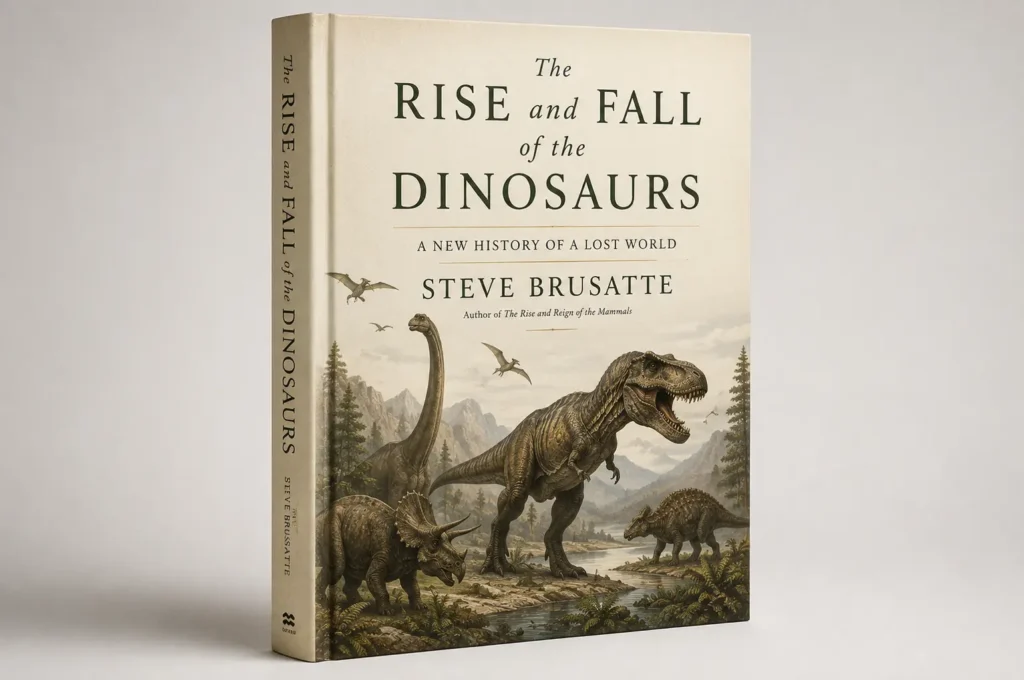
The Rise and Fall of the Dinosaurs
A compelling history of dinosaurs, tracing their origins, diversification, 200-million-year reign, extinction, and enduring legacy.
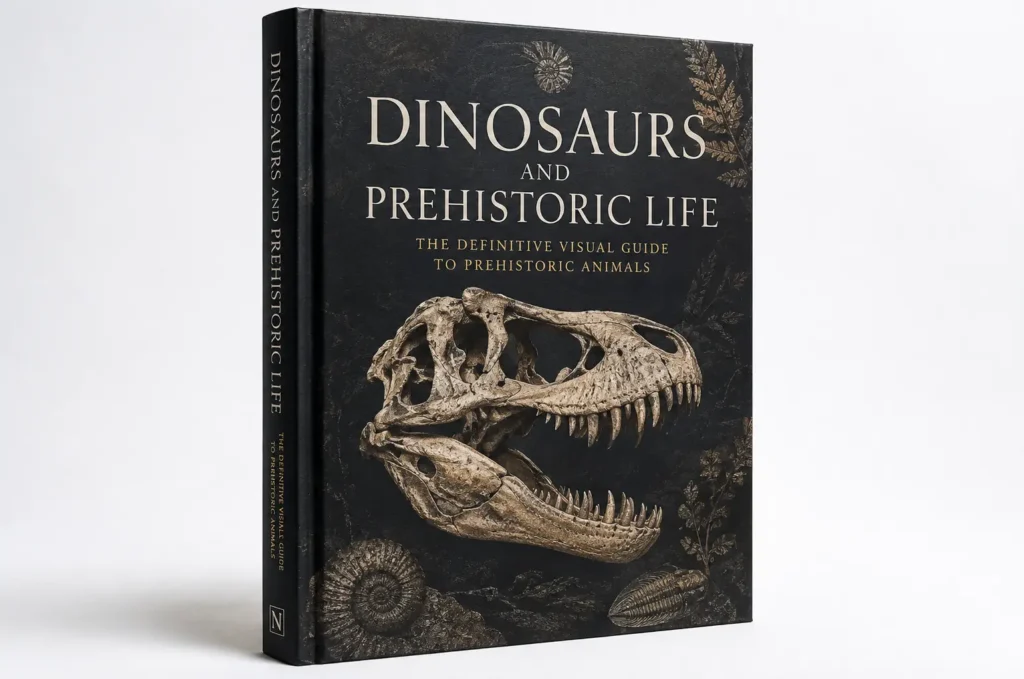
Dinosaurs and Prehistoric Life
A richly illustrated visual reference exploring dinosaurs, fossils, evolution, and prehistoric life across geological time.

Encyclopedia Prehistorica: Dinosaurs
An interactive dinosaur book featuring spectacular three-dimensional pop-ups, particularly suited to young readers and families.
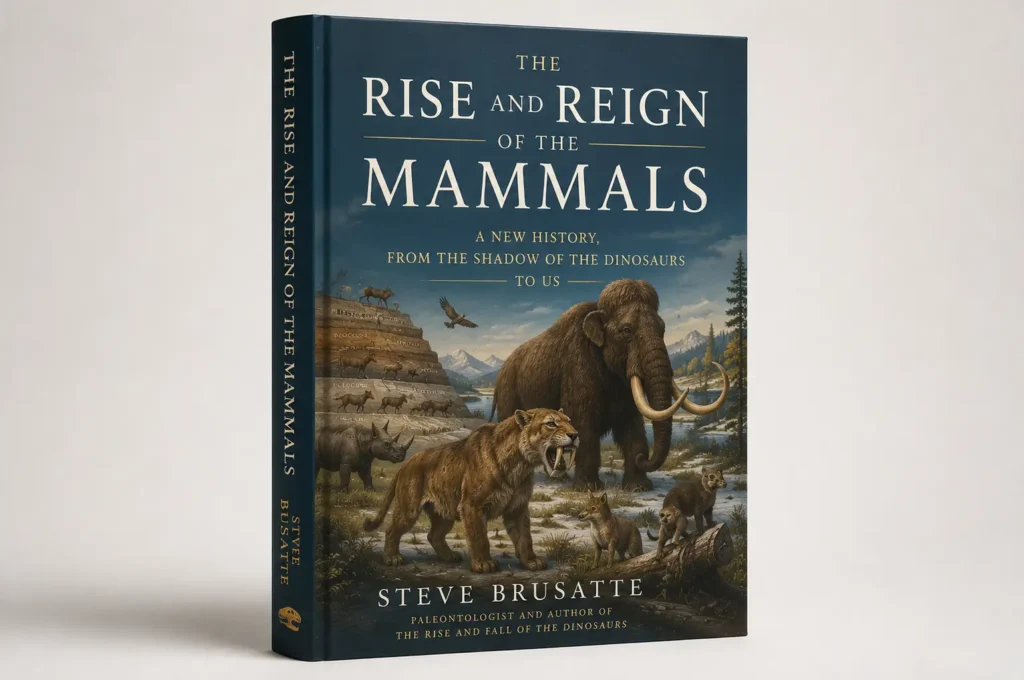
The Rise and Reign of the Mammals
A sweeping history of mammalian evolution, from their origins alongside dinosaurs through the Cenozoic and the emergence of humans.