At a Glance
| Field | Information |
|---|---|
| Species | Brachiosaurus altithorax — Sauropoda, Brachiosauridae |
| Period | Late Jurassic, 154–150 Ma |
| Diet | Herbivore — high-browsing specialist |
| Estimated daily intake | Approximately 120–260 kg (265–575 lb) of vegetation — estimates vary |
| Primary food sources | Conifers, cycads, tree ferns, ginkgoes (inferred) |
Quick Answer: Brachiosaurus ate plants exclusively, feeding as a high-browsing herbivore capable of reaching vegetation at heights unavailable to most other Morrison Formation dinosaurs. Based on comparison with large living herbivores and biomechanical modelling of its body mass, daily food intake is estimated at roughly 120–260 kilograms (265–575 lb) of plant material, though this figure carries substantial uncertainty.

Introduction
Few Jurassic animals could browse where Brachiosaurus fed. Its elongated forelimbs and long neck elevated the mouth to heights of roughly 9 metres (30 ft) or more above the ground — enough to access the upper canopy of Jurassic conifers that shorter-necked herbivores could not reach. That vertical advantage likely shaped the entire structure of its feeding ecology.
What Did Brachiosaurus Eat?
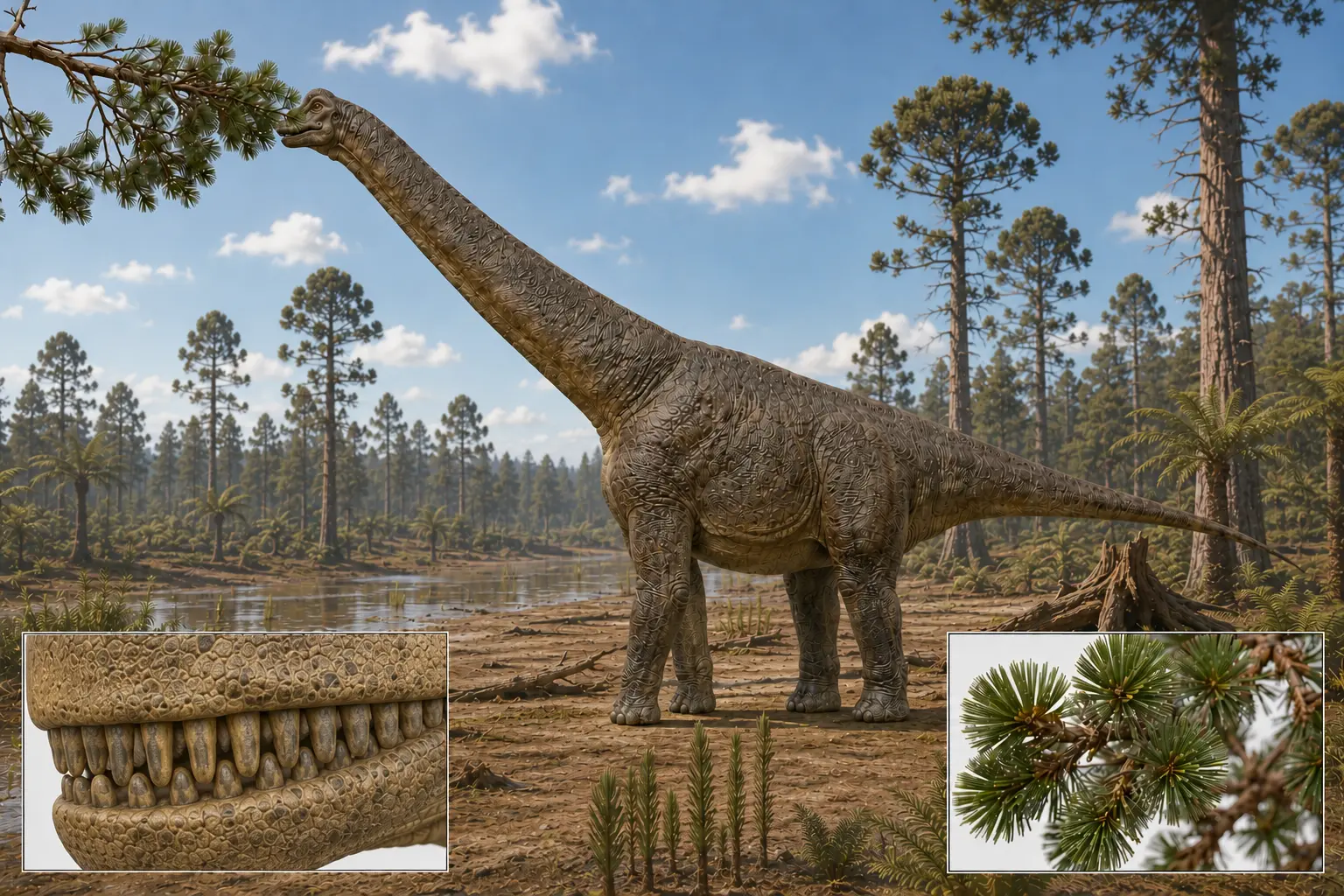
Brachiosaurus was a herbivore that fed primarily on high-growing vegetation, including conifers, cycads, ginkgoes, and tree ferns. Fossil evidence from the Morrison Formation — the rock unit that preserves its remains — documents the presence of these plant types as part of the Late Jurassic flora. Direct evidence of gut contents or specific plant consumption has not been recovered for Brachiosaurus altithorax, so plant preferences are inferred from the available paleobotanical record and comparison with related taxa. Tooth morphology — spatula-shaped teeth suited to cropping rather than grinding — indicates the animal bit off vegetation rather than processing it orally before swallowing.
Tooth Morphology and Feeding Mechanics
Fossil evidence shows that Brachiosaurus possessed large, chisel-shaped teeth positioned at the front of the jaws. This tooth form is consistent with cropping vegetation cleanly rather than chewing it. Comparison with other brachiosaurids suggests the animal likely consumed large volumes of relatively unprocessed plant material, relying on fermentation within a large gut for digestion. No evidence of gastroliths — stomach stones sometimes used to aid digestion — has been confirmed for B. altithorax, though their presence in other sauropods remains documented and their role in sauropod digestion is debated.
Browsing Height and Canopy Access
The neck anatomy of Brachiosaurus is covered in detail in our full post on neck anatomy and forelimb function, but its dietary significance is direct. Based on skeletal proportions and biomechanical modelling of neck posture, Brachiosaurus could access vegetation at heights of approximately 9–13 metres (30–43 ft) above the ground. This placed it well above the browse line of contemporaries such as Diplodocus and Camarasaurus, which fed at lower heights. Comparison with modern large-bodied browsers such as giraffes suggests this vertical partitioning would have reduced direct feeding competition with other herbivores sharing the same habitat.
Plant Types Available in the Morrison Formation
The Late Jurassic Morrison Formation flora did not include grasses or flowering plants — both evolved later. Fossil evidence from the formation documents conifer forests, cycad stands, tree ferns, and ginkgo trees as the dominant plant communities. Brachiosaurus likely fed primarily on the foliage and softer stems of tall conifers, given its browsing height and the abundance of these plants in the formation. Inferences about specific plant preferences beyond this level remain speculative, as direct dietary evidence has not been recovered.
How Much Did Brachiosaurus Eat Per Day?
Brachiosaurus’s estimated daily food intake is approximately 120–260 kilograms (265–575 lb) of plant material, though this figure is derived from biomechanical modelling rather than direct evidence and should be treated as an order-of-magnitude estimate. The calculation applies metabolic scaling relationships drawn from living large-bodied endotherms and ectotherms to the estimated body mass range of Brachiosaurus. Because the animal’s precise metabolic rate — and whether it was closer to a warm-blooded or cold-blooded physiology — remains uncertain, the intake estimate spans a wide range. Comparison with modern large terrestrial mammals of similar mass suggests the higher end of the range is more plausible if Brachiosaurus maintained an elevated metabolic rate, but this cannot be confirmed from fossil evidence alone.
What Was Brachiosaurus’s Biggest Enemy?
Brachiosaurus’s most significant predatory threat in the Morrison Formation came from large theropod dinosaurs, principally Allosaurus fragilis and Torvosaurus tanneri. Fossil evidence from the Morrison Formation includes Allosaurus bones and teeth in close association with large sauropod material, and tooth-marked bones attributable to large theropod feeding have been documented in the formation. Whether adult Brachiosaurus individuals were regularly targeted — as opposed to juveniles or weakened animals — cannot be established from current evidence. Comparison with predator-prey dynamics in modern large-mammal ecosystems suggests that very large, healthy adults were likely low-priority targets for even the largest theropods. Juvenile Brachiosaurus were almost certainly more vulnerable, though direct fossil evidence for predation on brachiosaurid juveniles specifically is limited.
Related and Contemporary Species
Allosaurus fragilis — the dominant large predator of the Morrison Formation and the most likely significant predatory threat to Brachiosaurus. Camarasaurus supremus — a Morrison sauropod contemporaneous with Brachiosaurus; fed at lower heights and likely occupied a different browsing tier. Diplodocus carnegii — another Morrison herbivore; low-browsing body plan suggests limited direct feeding overlap with Brachiosaurus. Stegosaurus stenops — a Morrison Formation contemporary; ground-level browser with no significant dietary overlap with Brachiosaurus. Torvosaurus tanneri — a large Morrison theropod and potential predator of large sauropods, including Brachiosaurus.
Frequently Asked Questions
How much did a Brachiosaurus eat a day?
The estimated daily food intake of Brachiosaurus is approximately 120–260 kilograms (265–575 lb) of plant material, based on biomechanical modelling applied to its estimated body mass range. This figure is not derived from direct fossil evidence and depends heavily on assumptions about metabolic rate, which remains uncertain for large Jurassic sauropods. The wide range reflects genuine scientific uncertainty.
Did Brachiosaurus swallow stones to help digest its food?
Whether Brachiosaurus used gastroliths — stones swallowed to aid digestion — has not been confirmed from B. altithorax fossil material. Some other sauropods show evidence of gastroliths, but their role in sauropod digestion generally is still debated. Without confirmed gastrolith associations for B. altithorax specifically, the question cannot be resolved from current evidence.
Could Brachiosaurus eat underwater or wade to feed?
Earlier reconstructions depicted Brachiosaurus as a semi-aquatic animal that fed on soft aquatic vegetation while partially submerged. This interpretation has been rejected by modern palaeontology. Biomechanical analysis of the limb structure, lung position, and body density indicates Brachiosaurus was a fully terrestrial animal. Fossil evidence places it in floodplain and semi-arid environments rather than deep aquatic settings.
Note: Brachiosaurus metabolic rate and the dietary role of gastroliths in sauropods are active areas of research. Details reflect current scientific consensus but may be revised as new evidence emerges.
Conclusion
Brachiosaurus was a high-browsing herbivore that fed on the conifers, cycads, and tree ferns of the Late Jurassic Morrison Formation. Its elevated shoulder height and long neck gave it access to a feeding tier few contemporaries could reach, likely reducing direct competition with lower-browsing sauropods. Daily food intake estimates are substantial but remain provisional, pending better constraints on sauropod metabolic rates.
References
B. Peer-Reviewed Literature
Hummel, J., Gee, C.T., Südekum, K.-H., Sander, P.M., Nogge, G., and Clauss, M., 2008. In vitro digestibility of fern and gymnosperm foliage: implications for sauropod feeding ecology and diet selection. Proceedings of the Royal Society B, 275(1638), pp.1015–1021. https://doi.org/10.1098/rspb.2007.1728
Fiorillo, A.R., 1998. Dental microwear patterns of the sauropod dinosaurs Camarasaurus and Diplodocus: evidence for resource partitioning in the Late Jurassic of North America. Historical Biology, 13(1), pp.1–16. [verify reference before publishing]
Gee, C.T., 2011. Dietary options for the sauropod dinosaurs from an integrated botanical and paleobotanical perspective. In: Klein, N., Remes, K., Gee, C.T. and Sander, P.M. (eds.) Biology of the Sauropod Dinosaurs: Understanding the Life of Giants. Indiana University Press, Bloomington, pp.34–56. [verify reference before publishing]
C. Monographs, Books, and Technical Reports
Sander, P.M., Christian, A., Clauss, M., Fechner, R., Gee, C.T., Griebeler, E.-M., Gunga, H.-C., Hummel, J., Mallison, H., Perry, S.F., Preuschoft, H., Rauhut, O.W.M., Remes, K., Tütken, T., Wings, O. and Witzel, U., 2011. Biology of the sauropod dinosaurs: the evolution of gigantism. Biological Reviews, 86(1), pp.117–155. https://doi.org/10.1111/j.1469-185X.2010.00137.x
D. Databases and Online Resources
Paleobiology Database — Morrison Formation flora and fauna occurrence data. https://paleobiodb.org
Featured Museum Collections
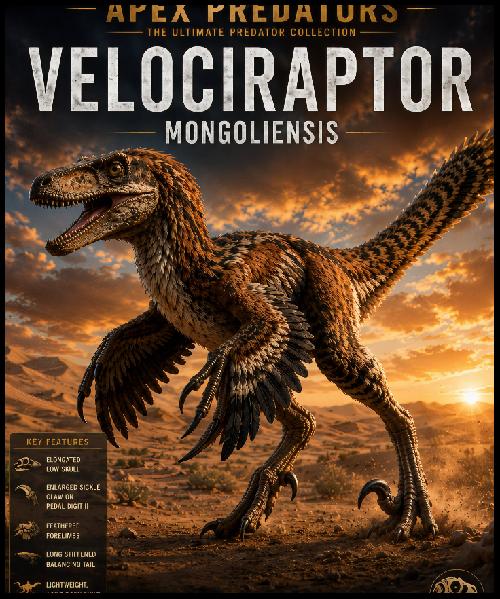
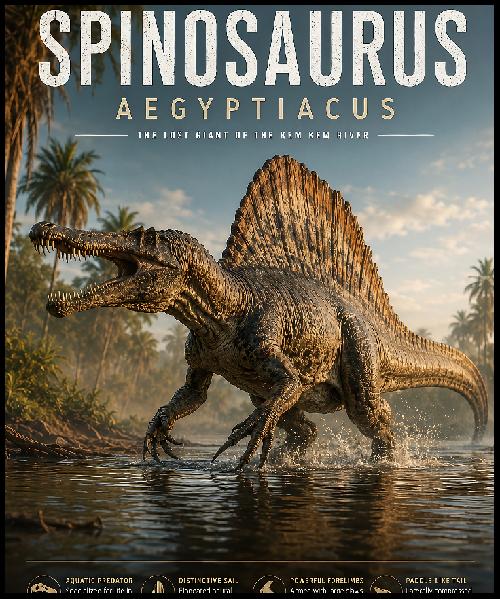
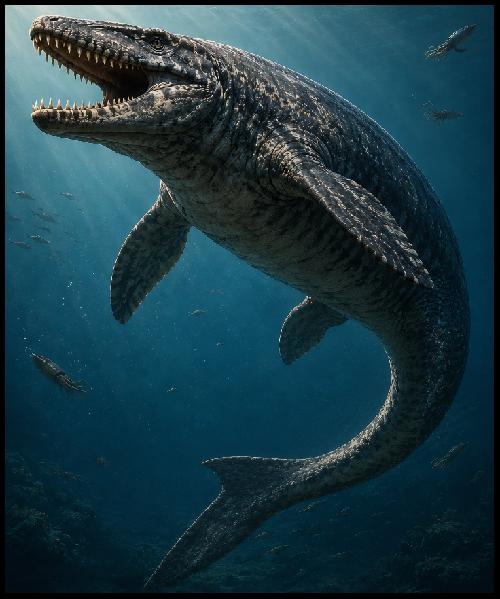
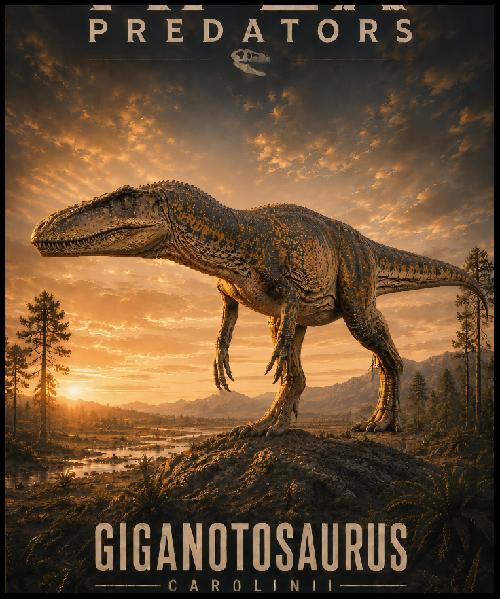
Museum-quality paleoart and educational poster
collections based on evidence-informed prehistoric
Life reconstructions.