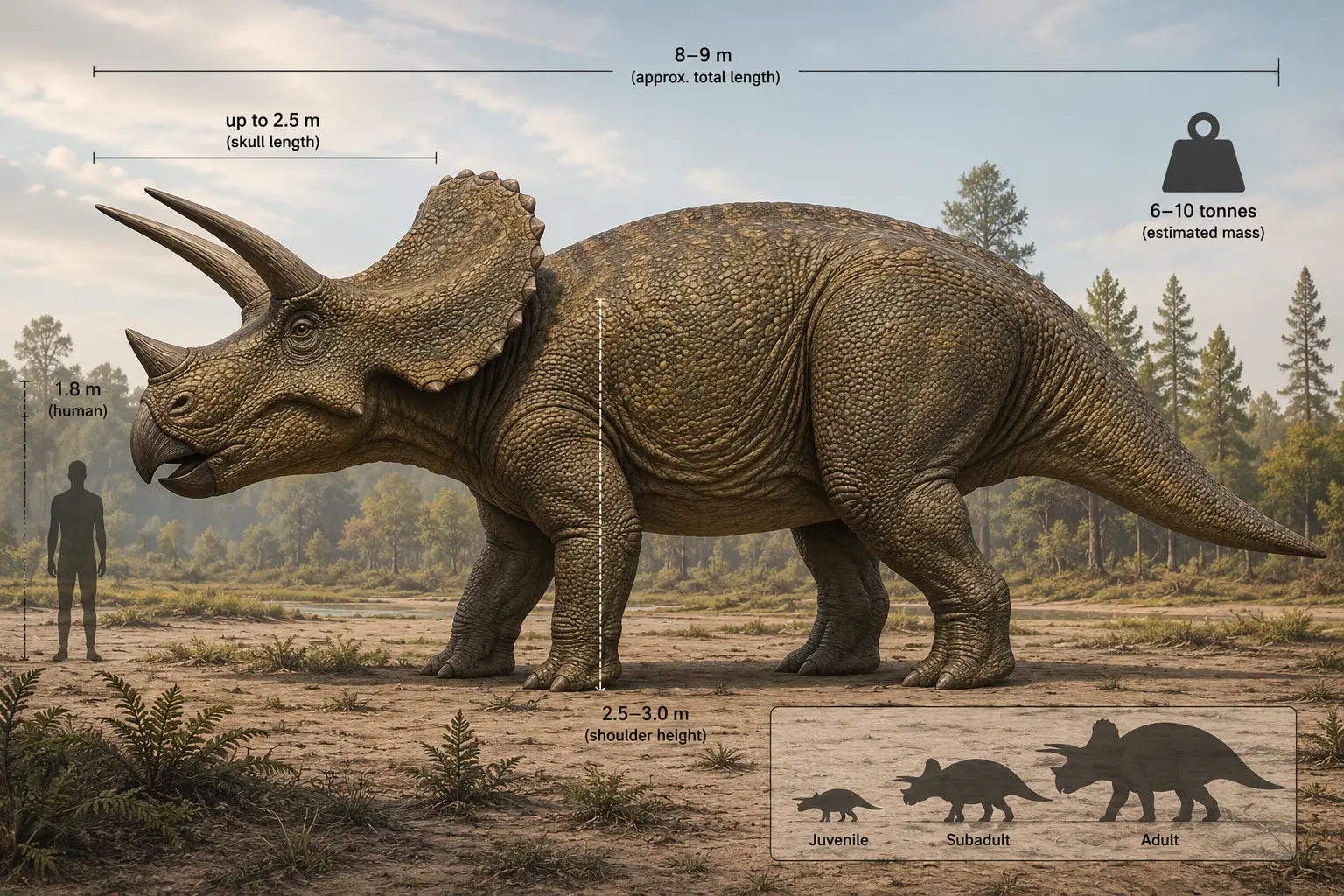
Species Quick Info
| Field | Information |
|---|---|
| Scientific Name | Triceratops horridus |
| Topic | Body Size |
| Taxonomic Group | Ceratopsidae |
| Geological Age | Late Cretaceous (Maastrichtian, approximately 68–66 million years ago) |
| Known Specimen Basis | Hundreds of specimens, including the holotype (USNM 4842), numerous complete skulls, associated skeletons, and individuals representing nearly all growth stages |
| Estimated Length | 7.9–9.0 m |
| Estimated Weight | Approximately 5–9 tonnes |
| Evidence Strength | Exceptional Direct Evidence |
Quick Answer
Triceratops horridus was one of the largest horned dinosaurs, measuring approximately 7.9–9.0 metres (26–30 feet) in length and weighing an estimated 5–9 tonnes (5.5–9.9 short tons). Unlike many dinosaurs known from fragmentary fossils, Triceratops is represented by hundreds of specimens, including exceptionally preserved skulls and multiple associated skeletons. This extensive fossil record allows scientists to estimate its body dimensions with a very high degree of confidence, making its overall size among the best understood of any non-avian dinosaur.
Although body length is directly constrained by fossil evidence, body mass estimates remain dependent on biomechanical and volumetric reconstruction because muscles and other soft tissues are not preserved. Nevertheless, independent modelling approaches consistently place Triceratops within the 5–9 tonne range.
Summary
| Measurement | Current Estimate |
|---|---|
| Length | 7.9–9.0 m |
| Weight | Approximately 5–9 tonnes |
| Shoulder/Hip Height | Approximately 2.8–3.2 m |
| Skull Length | Up to approximately 2.5 m |
| Largest Known Individuals | Multiple mature adults from the Hell Creek and Lance formations |
| Evidence Strength | Exceptional Direct Evidence |
Evidence Strength Overview
| Measurement | Confidence | Evidence Type |
|---|---|---|
| Overall Body Length | Very High | Direct fossil evidence from numerous associated skeletons |
| Skull Dimensions | Exceptional | Hundreds of well-preserved skulls and cranial elements |
| Limb Proportions | Very High | Direct skeletal evidence from multiple individuals |
| Body Mass | High | Strong inference based on volumetric reconstruction and biomechanical modelling |
| Growth Series | Exceptional | Juvenile, subadult, and adult specimens document ontogenetic development |
| Maximum Species Size | High | Numerous mature individuals, although the absolute upper size limit remains open to refinement |
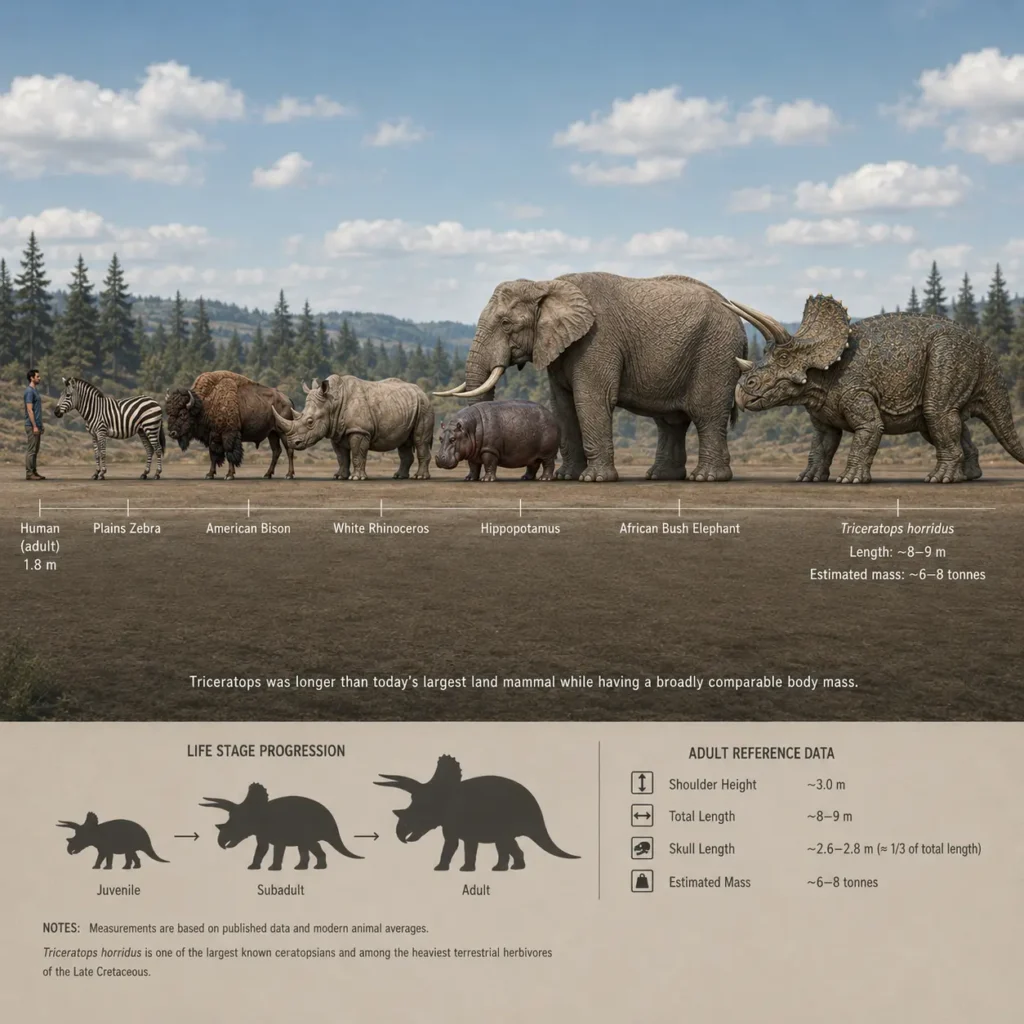
Introduction
Among all ceratopsian dinosaurs, Triceratops horridus is one of the most completely documented in terms of body size. Its abundant fossil record provides paleontologists with an exceptional dataset for reconstructing body proportions, estimating adult dimensions, and studying growth throughout life.
Unlike many dinosaur species that are known from only a handful of incomplete specimens, Triceratops is represented by hundreds of fossils recovered from the Late Maastrichtian deposits of western North America. These include isolated skulls, nearly complete skulls, partial skeletons, articulated individuals, and specimens representing juveniles, subadults, and fully mature adults.
Because so many individuals have been discovered, estimates of body length are based primarily on direct skeletal measurements rather than comparisons with related species. Consequently, Triceratops size estimates are considered among the most reliable available for any extinct dinosaur.
Body mass estimates remain somewhat less certain because fossil skeletons preserve only hard tissues. Researchers therefore reconstruct the missing muscles, organs, skin, and other soft tissues using digital volumetric models and biomechanical analyses. While different modelling approaches produce slightly different values, modern studies consistently place adult Triceratops within a relatively narrow mass range.
How Large Was Triceratops?
Size Overview
| Dimension | Estimate |
|---|---|
| Length | 7.9–9.0 m |
| Weight | Approximately 5–9 tonnes |
| Shoulder/Hip Height | Approximately 2.8–3.2 m |
| Skull Length | Up to approximately 2.5 m |
Triceratops horridus possessed one of the largest skulls ever evolved by a terrestrial vertebrate. In the largest adults, the skull—including the beak, horns, and frill—could reach approximately 2.5 metres (8.2 feet) in length, accounting for nearly one-third of the animal’s total body length.
Behind this enormous skull was a heavily built body supported by four robust limbs and a broad torso capable of supporting considerable body mass. Compared with many large herbivorous dinosaurs, Triceratops exhibited a compact, powerfully constructed build rather than an elongated body. Its deep ribcage, strong shoulder girdle, and massive neck musculature reflect the structural demands of supporting and moving an exceptionally large head.
Despite its imposing appearance, Triceratops was not the largest dinosaur of its time. Giant sauropods that lived earlier in the Mesozoic greatly exceeded it in both length and mass. Nevertheless, among Late Cretaceous ceratopsids, Triceratops ranked among the largest and most heavily built species currently known.
Evidence Strength
Exceptional Direct Evidence
Overall body size is reconstructed from numerous associated skeletons and hundreds of cranial specimens recovered from multiple geological formations. The abundance of adult individuals substantially reduces uncertainty compared with dinosaur species known from only a few fossils.
Length Estimates
Body length estimates for Triceratops horridus are considered among the most reliable for any extinct dinosaur because they are supported by numerous associated skeletons and consistent skeletal proportions across many mature individuals.
Published Length Estimates
| Study Type | Estimated Length |
|---|---|
| Conservative Reconstructions | Approximately 7.9 m |
| Common Modern Estimates | 8–8.5 m |
| Upper Estimates | Approximately 9.0 m |
Variation among published estimates primarily reflects differences in reconstructing incomplete tail elements, vertebral articulation, and the scaling of exceptionally large individuals. Unlike species known from a single skeleton, however, Triceratops provides researchers with a large comparative sample that allows these uncertainties to be evaluated against numerous specimens.
The consistency of skeletal proportions across adult individuals has led to broad scientific agreement that mature Triceratops horridus generally measured between 7.9 and 9.0 metres in total length.
Largest Known Individuals
Several exceptionally large specimens recovered from the Hell Creek and Lance formations illustrate the upper size range attained by mature adults. While individual skull dimensions vary, the largest known examples approach 2.5 metres in total skull length and are associated with correspondingly robust postcranial skeletons.
Rather than relying on a single extraordinary individual, estimates of maximum body size are supported by multiple mature specimens. This distinguishes Triceratops from many dinosaurs for which the largest known size depends on only one incomplete fossil.
Evidence Assessment
| Topic | Assessment |
|---|---|
| Skeletal Preservation | Exceptional |
| Number of Adult Specimens | Very High |
| Missing Material | Limited |
| Confidence Level | Very High |
| Evidence Strength | Exceptional Direct Evidence |
Direct measurements from numerous fossils provide unusually strong support for accepted length estimates. Future discoveries may refine the upper size limit of exceptionally large individuals, but they are unlikely to substantially alter the currently accepted adult length range.
Weight Estimates
Estimating the body mass of Triceratops horridus is more challenging than estimating its length because fossil skeletons preserve only bones. Muscles, organs, skin, fat deposits, and other soft tissues must be reconstructed using biomechanical principles and comparisons with living animals.
Modern studies employ digital three-dimensional reconstructions, volumetric modelling, and limb-based scaling equations to estimate body mass. Although different modelling approaches produce slightly different values, they consistently indicate that adult Triceratops weighed between 5 and 9 tonnes.
Published Mass Estimates
| Estimate Range | Approximate Weight |
|---|---|
| Conservative Estimates | ~5 tonnes |
| Common Modern Estimates | 6–8 tonnes |
| Upper Estimates | ~9 tonnes |
The broad agreement among modern studies reflects the exceptional fossil record of Triceratops. Numerous complete skulls and associated skeletons constrain body proportions more effectively than in many other dinosaur species, reducing uncertainty during volumetric reconstruction.
Why Estimates Differ
| Factor | Effect |
|---|---|
| Soft Tissue Reconstruction | Alters total body volume |
| Muscle Mass Assumptions | Changes estimated weight |
| Volumetric Modelling Method | Produces slightly different body volumes |
| Body Posture | Influences torso dimensions |
| Individual Variation | Large adults naturally differed in body size |
Unlike skeletal measurements, body mass cannot be measured directly from fossils. Instead, scientists reconstruct the living animal using the preserved skeleton as a framework before calculating body volume and estimated density.
Although individual studies produce different values, they consistently identify Triceratops as one of the heaviest ceratopsid dinosaurs.
Evidence Strength
Strong Inference
The skeleton provides exceptional anatomical data, but body mass is reconstructed using biomechanical and volumetric methods because soft tissues are not preserved.
Comparison With Other Ceratopsids
Triceratops horridus ranks among the largest and most robust members of Ceratopsidae. While a few ceratopsids may have achieved comparable or slightly greater body lengths, Triceratops possessed one of the heaviest skulls and among the greatest overall body masses within the group.
Selected Ceratopsid Size Comparison
| Taxon | Estimated Length |
|---|---|
| Triceratops horridus | 7.9–9.0 m |
| Torosaurus latus | 8–9 m |
| Eotriceratops xerinsularis | Approximately 8.5–9 m |
| Pentaceratops sternbergii | Approximately 7–8 m |
| Styracosaurus albertensis | Approximately 5.5–6 m |
| Centrosaurus apertus | Approximately 5–6 m |
Compared with centrosaurine ceratopsids such as Centrosaurus and Styracosaurus, Triceratops was substantially larger and more heavily built. Among chasmosaurines, it occupied the upper end of the size spectrum alongside Torosaurus and Eotriceratops.
Its exceptionally broad skull, powerful neck, and massive torso contributed to a body form that emphasized strength rather than speed.
Evidence Strength
Direct Evidence
Comparisons are based on published skeletal measurements from multiple ceratopsid taxa. Some estimates for less completely known species remain subject to revision as additional material is described.
Comparison With Other Herbivorous Dinosaurs
Although Triceratops was among the largest horned dinosaurs, it was considerably smaller than the gigantic sauropods that dominated many earlier Mesozoic ecosystems.
Selected Herbivorous Dinosaur Comparison
| Taxon | Estimated Length |
|---|---|
| Triceratops horridus | 7.9–9.0 m |
| Edmontosaurus annectens | Approximately 12–13 m |
| Ankylosaurus magniventris | Approximately 6–8 m |
| Stegosaurus stenops | Approximately 6.5–7 m |
| Patagotitan mayorum | Over 30 m |
Among the large herbivores of the late Cretaceous in western North America, Triceratops was one of the dominant megaherbivores. It shared its environment with hadrosaurs such as Edmontosaurus and armored dinosaurs such as Ankylosaurus, but differed markedly in body proportions and feeding adaptations.
While Edmontosaurus achieved substantially greater body length, Triceratops possessed a much more compact and heavily built body. Its enormous skull and reinforced neck account for a larger proportion of total body mass than in most other herbivorous dinosaurs.
Evidence Strength
Strong Evidence
Overall size comparisons are supported by well-established skeletal reconstructions for the taxa listed. Individual estimates may vary slightly between studies but do not substantially alter the relative size relationships.
Growth and Size Variation
The extensive fossil record of Triceratops horridus provides one of the best-documented growth series known for any ceratopsian dinosaur. Fossils representing juveniles, subadults, and fully mature adults allow researchers to examine how body size and skeletal proportions changed throughout life.
Unlike many dinosaur species represented by only a few individuals, Triceratops preserves a nearly continuous ontogenetic sequence. This enables paleontologists to distinguish developmental changes from normal variation among adult animals.
Current Evidence
| Topic | Status |
|---|---|
| Adult Size | Exceptionally Well Supported |
| Juvenile Material | Abundant |
| Growth Series | Extensive |
| Growth Rate | Moderately Well Understood |
| Maximum Species Size | Well Supported |
| Individual Variation | Well Documented |
Growth involved far more than simply becoming larger.
Throughout ontogeny:
- Body mass increased substantially.
- Limb bones became thicker and more robust.
- The skull expanded disproportionately relative to the rest of the body.
- Brow horns changed orientation during development.
- The frill thickened and became more structurally reinforced.
- Muscle attachment sites became increasingly pronounced as adults matured.
Bone histology indicates that growth slowed as individuals approached skeletal maturity, although variation among individuals almost certainly existed. Because so many specimens have been recovered, researchers can distinguish genuine developmental trends from isolated abnormalities with far greater confidence than is possible for most dinosaur species.
The availability of juvenile and adult material has also been central to discussions regarding variation within Triceratops and its relationship to Torosaurus. Although these taxonomic questions remain debated, they have significantly improved understanding of ceratopsian growth and skeletal development.
Evidence Strength
Exceptional Direct Evidence
Few dinosaur species preserve such a complete ontogenetic series. The abundance of juvenile, subadult, and adult specimens provides unusually strong evidence for reconstructing growth, body proportions, and changes in overall size throughout the life of Triceratops.
Current Evidence Status
Measurement Reliability
| Measurement | Evidence Strength |
|---|---|
| Overall Body Length | Exceptional Direct Evidence |
| Skull Dimensions | Exceptional Direct Evidence |
| Limb Proportions | Exceptional Direct Evidence |
| Body Mass | Strong Inference |
| Growth Series | Exceptional Direct Evidence |
| Maximum Adult Size | High Confidence |
| Population-Level Size Variation | Well Supported |
| Sexual Size Differences | Unknown |
The size of Triceratops horridus is supported by one of the most extensive fossil records available for any non-avian dinosaur. Hundreds of specimens—including isolated skulls, articulated skeletons, and individuals representing nearly every stage of growth—provide exceptional anatomical evidence for reconstructing overall body dimensions.
Measurements of body length, skull size, and limb proportions rely directly on preserved skeletal material and therefore carry very high scientific confidence. In contrast, body mass estimates require reconstruction of muscles, organs, and other soft tissues using digital volumetric models. Although these methods introduce some uncertainty, modern analyses consistently produce similar mass estimates, indicating that mature Triceratops weighed approximately 5–9 tonnes.
Unlike many dinosaur species known from only one or two individuals, Triceratops also preserves substantial population-level variation. This extensive sample enables researchers to distinguish normal individual differences from ontogenetic changes and pathological abnormalities, providing an unusually reliable understanding of the species’ typical adult size.
Remaining Scientific Uncertainties
| Topic | Current Status |
|---|---|
| Absolute Maximum Adult Size | Under Investigation |
| Population-Level Size Variation | Well Documented, but Continuing to Improve |
| Growth Rate | Moderately Well Understood |
| Sexual Size Differences | Unknown |
| Geographic Variation | Poorly Understood |
| Soft Tissue Distribution | Reconstructed Through Modelling |
Despite the exceptional fossil record, some aspects of Triceratops’ size remain uncertain.
The largest adult individuals currently known almost certainly do not represent the absolute biological maximum that the species could attain. Additional discoveries may modestly expand the accepted upper size limit, although they are unlikely to alter the overall size range of the species significantly.
Growth patterns are increasingly well understood through histological studies and ontogenetic research, but the precise rate at which individuals reach adult size remains an active area of investigation. Likewise, there is currently no convincing evidence demonstrating whether males and females differ consistently in overall body size or proportions.
Body mass will probably remain the least certain measurement because it depends on reconstructing soft tissues that are not preserved in fossils. Nevertheless, advances in digital modelling continue to narrow the range of plausible estimates.
Most remaining uncertainties arise not from poor fossil preservation, but from biological questions that cannot be answered directly by skeletal remains alone.
FAQ
How big was Triceratops?
Most adult Triceratops horridus measured approximately 7.9–9.0 metres (26–30 feet) in length and weighed an estimated 5–9 tonnes.
Was Triceratops the largest horned dinosaur?
It was among the largest known ceratopsids. Some species, including Torosaurus latus and Eotriceratops xerinsularis, may have reached comparable or slightly greater lengths, but Triceratops remains one of the largest and most robust horned dinosaurs currently known.
How tall was Triceratops?
Adult individuals are generally estimated to have stood approximately 2.8–3.2 metres at the shoulder or hips, although posture and individual variation introduce some uncertainty.
Why do body mass estimates vary?
Unlike length, body mass cannot be measured directly from fossil skeletons. Scientists reconstruct muscles and other soft tissues using biomechanical and volumetric models, and different modelling assumptions produce slightly different weight estimates.
How large was the skull?
The largest known skulls approached 2.5 metres (8.2 feet) in length, making the skull of Triceratops one of the largest ever evolved by a terrestrial vertebrate.
How reliable are size estimates for Triceratops?
They are among the most reliable available for any dinosaur. Hundreds of fossils representing multiple growth stages provide exceptional direct evidence for reconstructing body dimensions and evaluating individual variation.
Current Scientific Understanding
Current evidence indicates that Triceratops horridus consistently reached 7.9–9.0 metres in total length and approximately 5–9 tonnes in body mass, placing it among the largest and most heavily built ceratopsid dinosaurs. These estimates are supported by one of the richest fossil records of any extinct terrestrial vertebrate, including hundreds of specimens representing juveniles, subadults, and fully mature adults.
Body length, skull dimensions, and limb proportions are reconstructed directly from abundant fossil material and therefore carry exceptionally high scientific confidence. Body mass estimates remain somewhat less certain because they rely on digital reconstruction of soft tissues, but independent biomechanical approaches converge on a relatively narrow range of plausible values.
Unlike many dinosaurs known from only a handful of specimens, Triceratops provides sufficient material to investigate ontogeny, individual variation, and population-level trends. This extensive dataset has made the species a model organism for studies of ceratopsian growth, biomechanics, and functional morphology.
Overall, the available evidence indicates that the general size of Triceratops horridus is exceptionally well constrained. Future discoveries are expected to refine understanding of variation within the species rather than substantially change its accepted body dimensions.
References
A. Primary Taxonomic Sources
- Marsh, O. C. (1889). Notice of new American Dinosauria. American Journal of Science, Series 3, 37, 331–336.
- Marsh, O. C. (1890). Additional characters of the Ceratopsidae, with notice of new Cretaceous dinosaurs. American Journal of Science, Series 3, 39, 418–426.
B. Scientific Literature
- Farke, A. A. (2004). Horn use in Triceratops (Dinosauria: Ceratopsidae): Testing behavioral hypotheses using scale models. Paleobiology, 30(3), 317–330.
- Happ, J. (2008). An analysis of predator–prey behavior in a head-to-head encounter between Tyrannosaurus rex and Triceratops, with comments on theropod feeding habits. In P. Larson & K. Carpenter (Eds.), Tyrannosaurus rex, the Tyrant King (pp. 355–368). Indiana University Press.
- Mallon, J. C., Holmes, R., Eberth, D. A., & Ryan, M. J. (2013). Variation in the skull of Triceratops: Ontogenetic and individual differences in a Late Cretaceous ceratopsid. Journal of Vertebrate Paleontology.
- Scannella, J. B., & Horner, J. R. (2010). Torosaurus Marsh, 1891, is Triceratops Marsh, 1889 (Ceratopsidae: Chasmosaurinae): Synonymy through ontogeny. Journal of Vertebrate Paleontology, 30(4), 1157–1168.
- Scannella, J. B., Fowler, D. W., Goodwin, M. B., & Horner, J. R. (2014). Evolutionary trends in Triceratops from the Hell Creek Formation, Montana. Proceedings of the National Academy of Sciences, 111(28), 10245–10250.
- Tanke, D. H., & Farke, A. A. (2007). Bonebeds and monodominant assemblages of ceratopsid dinosaurs. In M. J. Ryan, B. J. Chinnery-Allgeier & D. A. Eberth (Eds.), New Perspectives on Horned Dinosaurs (pp. 501–536). Indiana University Press.
C. Books and Reference Works
- Dodson, P. (1996). The Horned Dinosaurs: A Natural History. Princeton University Press.
- Hone, D. W. E. (2022). The Future of Dinosaurs: What We Don’t Know, What We Can, and What We’ll Never Know. Bloomsbury Sigma.
- Paul, G. S. (2024). The Princeton Field Guide to Dinosaurs (3rd ed.). Princeton University Press.
- Weishampel, D. B., Dodson, P., & Osmólska, H. (Eds.). (2004). The Dinosauria (2nd ed.). University of California Press.
D. Databases and Online Resources
- Paleobiology Database. Triceratops horridus occurrence records and taxonomic data. https://paleobiodb.org
- Fossilworks (archived). Gateway to the Paleobiology Database. http://fossilworks.org
Featured Museum Collections
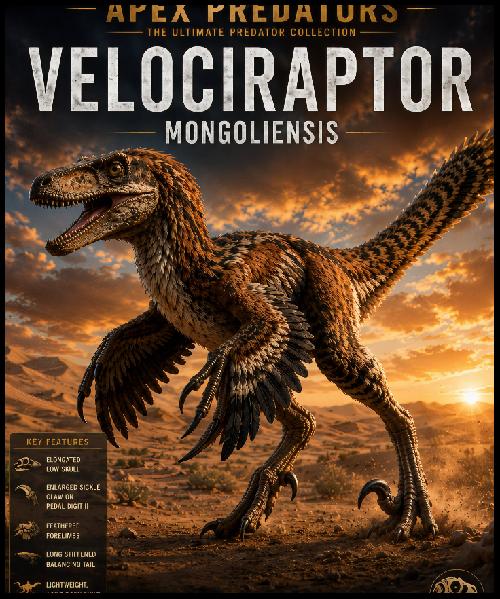
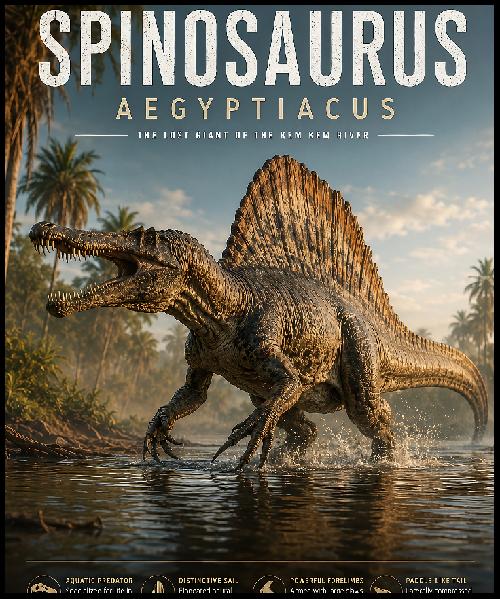
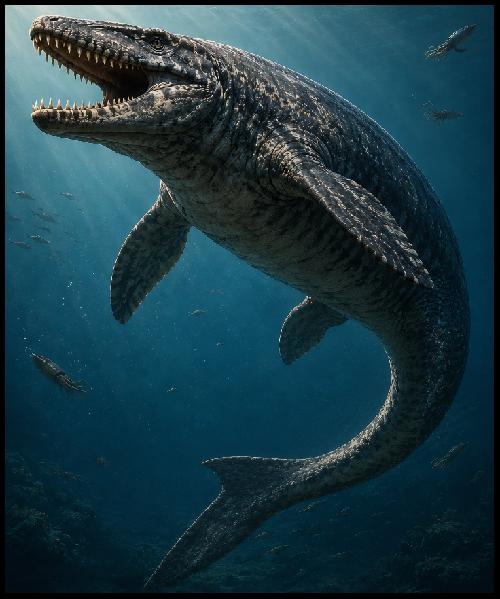
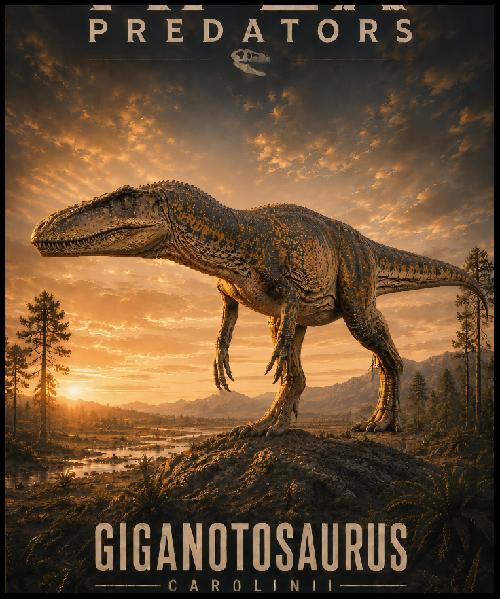
Museum-quality paleoart and educational poster
collections based on evidence-informed prehistoric
Life reconstructions.