
| Field | Information |
|---|---|
| Species | Otodus megalodon — Otodontidae |
| First appearance | Early Miocene, ~23 Ma |
| Last appearance | Early Pliocene, ~3.6 Ma |
| Total temporal range | ~19.4 million years |
| Contemporary world | Warm Miocene seas; early whales; no non-avian dinosaurs |
Quick Answer: Megalodon lived from approximately 23 million years ago to 3.6 million years ago — spanning the Early Miocene through the Early Pliocene. It existed for nearly 20 million years, making it one of the longest-persisting apex predators in the marine fossil record. It appeared long after the dinosaurs had gone and vanished millions of years before modern humans evolved.
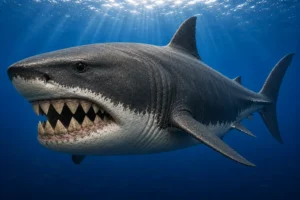
Twenty million years is a difficult number to hold in perspective. To put it in scale: the entire evolutionary history of the genus Homo — from earliest human ancestors to the present — occupies roughly 3 million years. Megalodon persisted for more than six times that span.
When Did Megalodon Live?
Otodus megalodon first appears in the fossil record in the Early Miocene, approximately 23 million years ago. Its last confirmed fossil material dates to the Early Pliocene, approximately 3.6 million years ago. This gives the species a temporal range of roughly 19–20 million years — a span that encompasses multiple major climatic transitions, the diversification of modern whale lineages, and the emergence of early hominids on land. The exact boundaries of this range are subject to ongoing refinement as additional dated specimens are described.
This is an active area of research. Details here reflect current scientific consensus but may be revised as new fossil evidence or analysis emerges.
The Miocene — Megalodon’s World
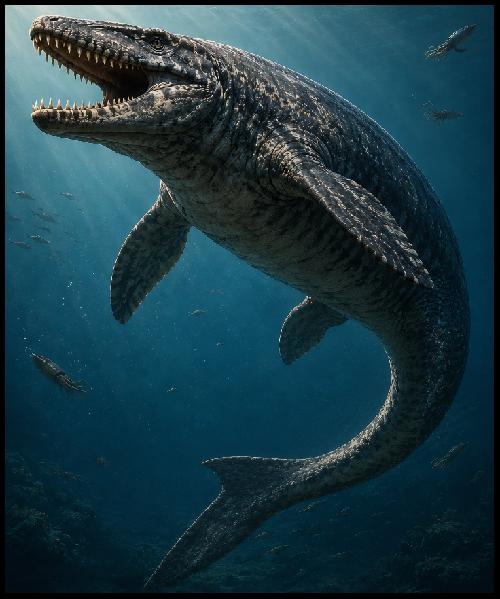
The Miocene epoch (23–5.3 Ma) was a period of globally warmer climates than today, with reduced polar ice caps and higher sea levels that created extensive shallow epicontinental seas — exactly the habitat type in which megalodon’s fossil distribution is concentrated. The Miocene marine world was populated by early baleen whales undergoing rapid diversification, ancestral dolphins and porpoises, large raptorial sperm whales including Livyatan melvillei, and a diverse shark fauna in which megalodon was the dominant apex predator.
Key Miocene Milestones for Megalodon
- ~23 Ma — earliest confirmed Otodus megalodon fossil material
- ~15–10 Ma — probable peak abundance and geographic range; warmest Miocene conditions
- ~10–5 Ma — Late Miocene cooling begins; range may begin contracting
- ~5.3 Ma — Pliocene epoch begins; cooling accelerates
The Pliocene — Decline and Extinction
The Pliocene (5.3–2.6 Ma) brought progressive oceanic cooling and the restructuring of ocean circulation following the closure of the Central American Seaway approximately 3.5 Ma — an event that altered Atlantic and Pacific current systems and further reduced warm coastal sea extent. Megalodon’s last confirmed fossil material dates to approximately 3.6 Ma, placing its extinction in the earliest Pliocene. The causes of that extinction are covered in detail on our extinction page.
How Does Megalodon’s Timeline Compare?
| Reference point | Approximate date |
|---|---|
| Non-avian dinosaur extinction | ~66 Ma |
| Megalodon first appearance | ~23 Ma |
| Homo genus first appearance | ~3 Ma |
| Megalodon extinction | ~3.6 Ma |
| Modern humans (H. sapiens) | ~0.3 Ma |
Megalodon appeared approximately 43 million years after the last non-avian dinosaurs went extinct. It went extinct approximately 3.6 million years before modern humans evolved. Humans and megalodon never coexisted.
Related and Contemporary Species
- Livyatan melvillei — large raptorial sperm whale; Miocene contemporary; extinct before megalodon
- Cetotherium-group mysticetes — small Miocene baleen whales whose diversification and subsequent decline tracked closely with megalodon’s range
- Carcharodon carcharias (great white shark) — began expanding during megalodon’s terminal Pliocene decline; temporal overlap confirmed.
- Otodus chubutensis — direct predecessor species; final Oligocene–early Miocene form before O. megalodon appears
- Homo spp. — earliest hominids appear near the end of megalodon’s range; the two lineages briefly overlapped in geological time but never in ecological space
Frequently Asked Questions
Did megalodon live at the same time as humans?
No. Otodus megalodon went extinct approximately 3.6 million years ago. The genus Homo did not appear until approximately 3 million years ago, and anatomically modern humans (Homo sapiens) evolved roughly 300,000 years ago. Megalodon was already long gone before any member of the human lineage existed.
How long did megalodon exist?
Otodus megalodon persisted for approximately 19–20 million years, from the Early Miocene (~23 Ma) to the Early Pliocene (~3.6 Ma). This makes it one of the most temporally persistent large apex predators in the marine fossil record — a substantially longer run than, for example, Tyrannosaurus rex, which existed for approximately 2.5 million years.
What epoch did megalodon live in?
Megalodon lived primarily during the Miocene epoch (23–5.3 Ma) and into the earliest part of the Pliocene epoch (5.3–2.6 Ma). It did not live during the Mesozoic Era — the age of the dinosaurs — which ended 66 million years ago, long before megalodon appeared.
Conclusion
Megalodon’s timeline is defined by warm Miocene seas at one end and Pliocene cooling at the other. It occupied nearly 20 million years of Earth’s history — appearing long after the dinosaurs, persisting through multiple climatic shifts, and disappearing millions of years before the first humans. Its duration alone marks it as one of the most successful large predators the ocean has ever produced.
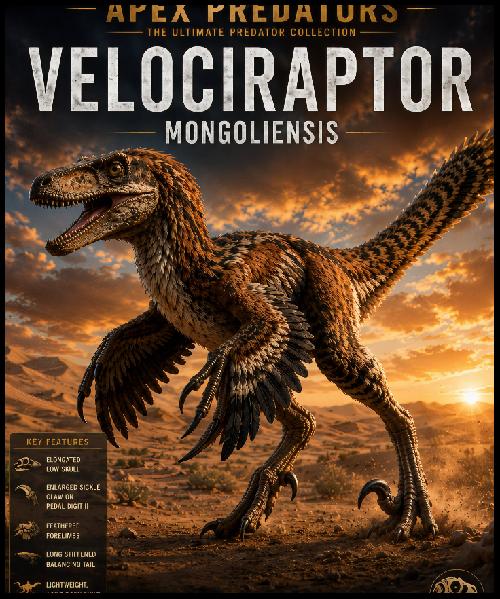
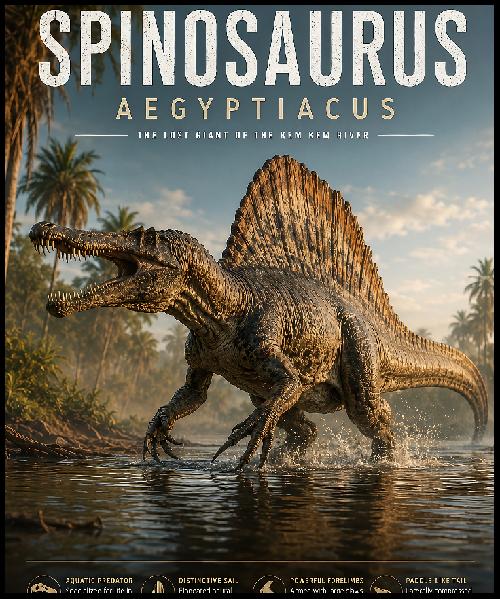
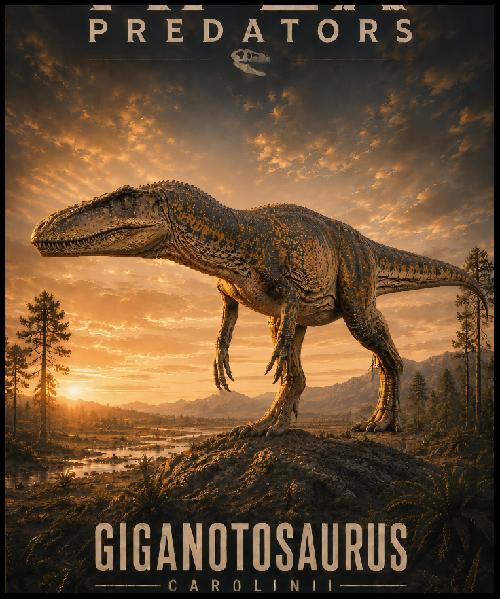
Featured Museum Collections
Museum-quality paleoart and educational poster
collections based on evidence-informed prehistoric
Life reconstructions.