

Quick Answer
Iguanodon and Mantellisaurus are closely related iguanodontian dinosaurs that were once considered members of the same genus. Modern research, however, recognizes them as distinct genera based on consistent differences in their skeletons, body proportions, and evolutionary relationships. Iguanodon was generally larger and more robust, whereas Mantellisaurus was smaller, more lightly built, and likely better adapted for bipedal locomotion. Although both possessed the characteristic thumb spike and occupied similar Early Cretaceous environments in western Europe, they represent separate evolutionary lineages within Styracosterna.

Comparison Summary
| Feature | Iguanodon | Mantellisaurus |
|---|---|---|
| Time Period | Early Cretaceous (Barremian–early Aptian) | Early Cretaceous (Barremian–early Aptian) |
| Estimated Adult Length | 9–11 m | 6–8 m |
| Estimated adult mass (values vary among specimens and reconstruction methods.) | 3–5 tonnes | 0.7–2 tonnes |
| Build | Robust | More lightly built |
| Thumb Spike | Large and robust | Present but relatively more slender |
| Locomotion | Facultative biped and quadruped | Probably spent more time moving bipedally |
| Taxonomic Status | Valid genus | Valid genus, formerly classified within Iguanodon |
| Scientific Certainty | High | High |
Introduction
Iguanodon and Mantellisaurus share one of the closest relationships among Early Cretaceous ornithopod dinosaurs. For more than a century, fossils now assigned to Mantellisaurus were classified as species of Iguanodon, largely because both animals possessed similar skulls, thumb spikes, and overall body plans.
Detailed anatomical studies during the late twentieth and early twenty-first centuries demonstrated that these similarities reflected close evolutionary relationships rather than membership in the same genus. Differences in body proportions, skeletal anatomy, and phylogenetic position now support their recognition as separate genera.
Comparing these dinosaurs provides insight into how closely related species can evolve distinct adaptations while occupying similar ecosystems.
What Are the Main Differences?
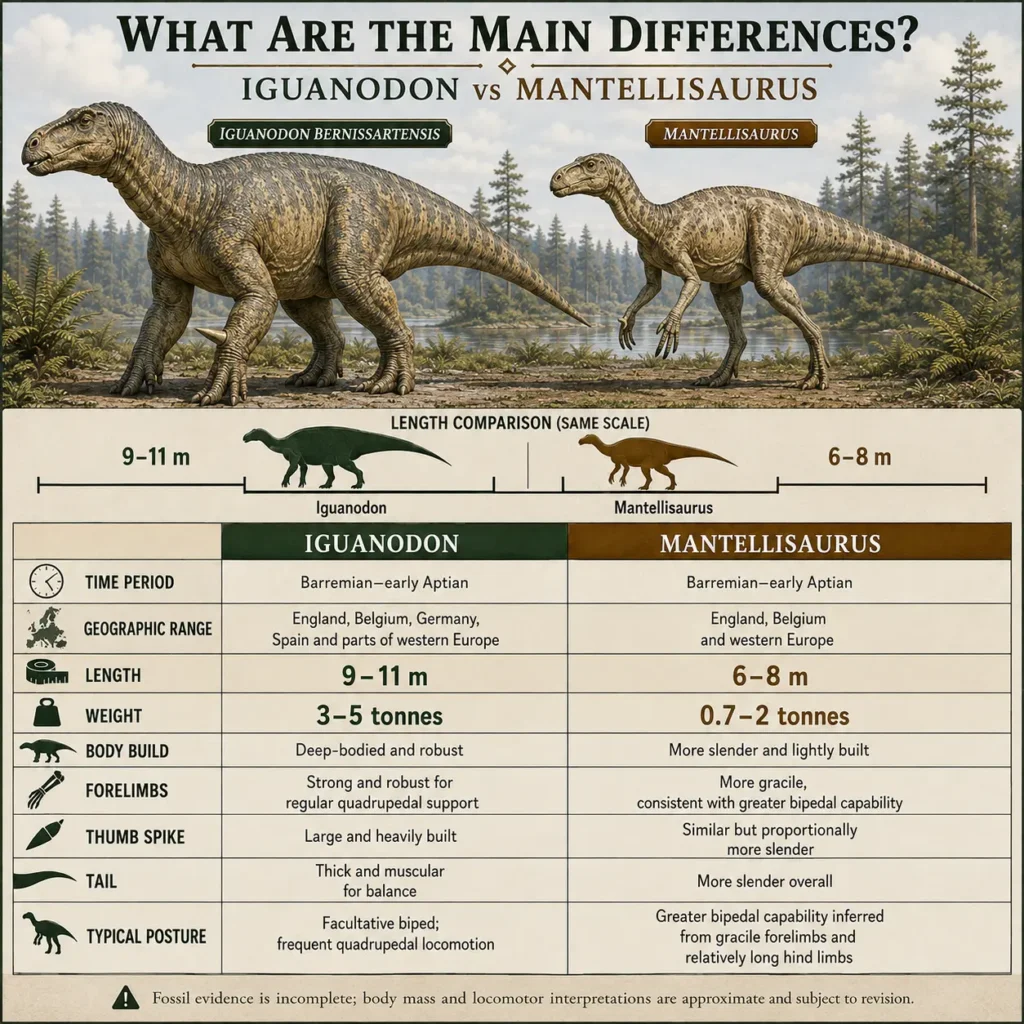
Side-by-Side Comparison
| Characteristic | Iguanodon | Mantellisaurus |
|---|---|---|
| Time Period | Early Cretaceous (Barremian–early Aptian) | Early Cretaceous (Barremian–early Aptian) |
| Geographic Range | England, Belgium, Germany, Spain and parts of western Europe | England, Belgium and western Europe |
| Length | 9–11 m | 6–8 m |
| Weight | 3–5 tonnes | 0.7–2 tonnes |
| Body Build | Deep-bodied and robust | More slender and lightly built |
| Forelimbs | Strong and robust for regular quadrupedal support | More gracile, suggesting greater bipedal capability |
| Thumb Spike | Large and heavily built | Similar but proportionally more slender |
| Tail | Thick and muscular for balance | More slender overall |
| Typical Posture | Facultative biped with frequent quadrupedal locomotion | Its more gracile forelimbs and relatively long hind limbs have been interpreted as consistent with greater reliance on bipedal locomotion. |
Diagnostic Characteristics
| Feature | Iguanodon | Mantellisaurus | Scientific Importance |
|---|---|---|---|
| Overall Size | Very large | Smaller | Primary distinguishing feature |
| Body Proportions | Robust torso | Slender torso | Indicates different locomotor adaptations |
| Forelimb Robustness | Heavily constructed | More gracile | Supports taxonomic distinction |
| Pelvis | Broad and robust | Narrower | Important diagnostic character |
| Skull | Larger and deeper | More lightly built | Used in comparative anatomy |
| Vertebrae | More massive | Less robust | Reflects body proportions |
| Phylogenetic Position | Derived iguanodontian | Distinct styracosternan lineage; exact position varies among phylogenetic analyses. | Clarifies evolutionary relationships |
Scientific Explanation
Although Iguanodon and Mantellisaurus appear superficially similar, numerous anatomical differences distinguish them. The most obvious is body size. Iguanodon was substantially larger and more heavily built, with a deep torso, powerful limbs, and a more robust skeleton suited to supporting greater body mass.
Mantellisaurus, by contrast, possessed a lighter skeleton with relatively longer hind limbs and more slender forelimbs. These proportions suggest a more agile animal that may have relied more heavily on bipedal locomotion than its larger relative. Despite these differences, both genera retained hallmark iguanodontian features, including hoof-like central digits, a flexible fifth finger, and a prominent thumb spike.
Many of the distinguishing features are subtle and require careful comparison of multiple skeletal elements. Modern phylogenetic analyses consistently recover Mantellisaurus as a separate genus closely related to, but distinct from, Iguanodon. These findings demonstrate that similarities between the two animals reflect shared ancestry rather than taxonomic identity.
Evidence Strength
Very High
Evidence Assessment
The anatomical differences between Iguanodon and Mantellisaurus are supported by numerous well-preserved skeletons and comprehensive comparative studies. Their separation into distinct genera is widely accepted within modern palaeontology, although minor differences in phylogenetic placement continue to be refined as new specimens are described.
Classification and Evolution
Taxonomic Comparison
| Category | Iguanodon | Mantellisaurus |
|---|---|---|
| Kingdom | Animalia | Animalia |
| Phylum | Chordata | Chordata |
| Clade | Dinosauria | Dinosauria |
| Order | Ornithischia | Ornithischia |
| Clade | Ornithopoda | Ornithopoda |
| Clade | Styracosterna | Styracosterna |
| Genus | Iguanodon | Mantellisaurus |
Evolutionary Relationship
| Topic | Current Understanding |
|---|---|
| Shared Ancestry | Both descended from advanced styracosternan ornithopods |
| Divergence | Represent closely related but distinct evolutionary lineages |
| Closest Relatives | Share close relationships with other iguanodontians such as Ouranosaurus and Barilium |
| Evolutionary Context of Selected Ornithopod Groups | Demonstrate increasing diversity among Early Cretaceous ornithopods before the rise of hadrosaurids |
Scientific Explanation
Modern phylogenetic research places both Iguanodon and Mantellisaurus within Styracosterna, a major lineage of advanced ornithopod dinosaurs. Their close relationship explains why they were historically grouped for many decades.
Detailed cladistic analyses have shown that Mantellisaurus occupies its own branch within this radiation rather than representing a species of Iguanodon. This distinction is supported by multiple independent anatomical characteristics rather than any single feature.
The separation of these genera illustrates the increasing diversity of iguanodontians during the Early Cretaceous. Several closely related herbivores evolved similar feeding adaptations while differing in body size, locomotion, and skeletal proportions, allowing them to exploit slightly different ecological niches.
These evolutionary relationships continue to be refined through the discovery of new fossils and increasingly sophisticated phylogenetic methods, but the recognition of Mantellisaurus as a distinct genus is now strongly supported.
Evidence Strength
High
Evidence Assessment
The evolutionary relationship between these genera is supported by multiple independent phylogenetic analyses and comparative anatomical studies. While the precise branching order of some iguanodontians remains subject to revision, the distinction between Iguanodon and Mantellisaurus is well established and broadly accepted.
Size and Body Shape
Body Measurements
| Measurement | Iguanodon | Mantellisaurus |
|---|---|---|
| Length | 9–11 m | 6–8 m |
| Estimated Mass | 3–5 tonnes | 0.7–2 tonnes |
| Estimated hip height | Approximately 2.5–3 m | Approximately 1.8–2.3 m |
| Skull Length | Up to approximately 1 m | Generally under 0.8 m |
| Forelimb Length | Robust and proportionally shorter | More slender and relatively longer |
Skeletal Differences
| Anatomical Feature | Iguanodon | Mantellisaurus |
|---|---|---|
| Skull | Larger, deeper and more robust | More lightly built and narrower |
| Neck | Thick and powerful | More slender |
| Torso | Deep chest and broad ribcage | Narrower, lighter body |
| Limbs | Heavy forelimbs and robust hind limbs | More gracile forelimbs with relatively long hind limbs |
| Pelvis | Broad and strongly constructed | More lightly built pelvis |
| Tail | Thick muscular tail for balancing greater mass | More slender balancing tail |
Scientific Explanation
Body proportions provide some of the clearest distinctions between Iguanodon and Mantellisaurus. Iguanodon was one of the largest European ornithopods of the Early Cretaceous, possessing a robust skeleton capable of supporting several tonnes of body mass. Its deep torso, powerful forelimbs, and heavily constructed pelvis indicate an animal well adapted for both quadrupedal support and occasional bipedal movement.
Mantellisaurus retained the same general body plan but on a smaller and more lightly built scale. Its comparatively slender skeleton and relatively longer hind limbs suggest increased agility and a greater reliance on bipedal locomotion. These differences likely reflect distinct ecological strategies rather than fundamentally different lifestyles.
Despite these contrasts, both dinosaurs shared the characteristic iguanodontian body plan, including a stiffened balancing tail, specialised hands with thumb spikes, and powerful hind limbs. Their similarities demonstrate their close evolutionary relationship, while their proportional differences provide the anatomical basis for recognising them as separate genera.
Evidence Strength
Very High
Evidence Assessment
Differences in body size and skeletal proportions are documented by numerous well-preserved specimens representing both genera. Measurements vary somewhat between individuals and ontogenetic stages, but the overall pattern of a larger, more robust Iguanodon and a smaller, more gracile Mantellisaurus is consistently supported across the fossil record.
Skull and Feeding Adaptations
Skull Comparison
| Feature | Iguanodon | Mantellisaurus |
|---|---|---|
| Skull Length | Larger, up to approximately 1 m | Smaller and more lightly built |
| Snout Shape | Broad and robust | Narrower and more gracile |
| Beak | Broad keratin-covered beak | Similar beak but proportionally narrower |
| Cheek Region | Deep and strongly developed | Less robust |
| Jaw Strength | Powerful jaws for processing tough vegetation | Strong but less heavily built |
| Dental Arrangement | closely packed cheek teeth with continuous replacement | comparable replacement dentition, with differences related to skull size and anatomy |
Feeding Adaptation
| Adaptation | Iguanodon | Mantellisaurus |
|---|---|---|
| Cropping Vegetation | Broad beak effective for clipping plants | Similar feeding strategy |
| Chewing Mechanism | Powerful grinding motion | Comparable chewing system |
| Tooth Replacement | Continuous throughout life | Continuous throughout life |
| Diet | Low-growing vegetation, shrubs, and small trees | Similar herbivorous diet |
| Feeding Height | Able to browse both low and moderately high vegetation | Likely focused on lower to intermediate browsing heights |
| Food Processing Efficiency | Well-developed oral processing for an Early Cretaceous iguanodontian | Comparable but on a smaller scale |
Scientific Explanation
The skulls of Iguanodon and Mantellisaurus are remarkably similar because both belong to the same evolutionary lineage of advanced iguanodontians. Each possessed a toothless keratin-covered beak for cropping vegetation and powerful jaws equipped with tightly packed teeth capable of efficiently grinding plant material.
The principal differences reflect body size rather than fundamentally different feeding strategies. Iguanodon possessed a larger, more robust skull with stronger jaw musculature, enabling it to process greater quantities of vegetation. Mantellisaurus retained the same basic feeding apparatus but in a lighter, more gracile form consistent with its smaller body size.
Both genera possessed one of the most advanced chewing mechanisms among Early Cretaceous herbivorous dinosaurs. Their continuously replacing teeth formed effective grinding surfaces that allowed efficient processing of fibrous plants long before the evolution of the highly specialized dental batteries seen in later hadrosaurids.
Overall, current evidence suggests that the two genera probably consumed similar types of vegetation, with differences arising primarily from body size, browsing height, and food intake rather than major dietary specialization.
Evidence Strength
High
Evidence Assessment
The skull anatomy and dentition of both genera are well documented by numerous fossil specimens. Functional interpretations of feeding are supported by comparative anatomy, dental wear patterns, and biomechanical analyses. Although direct evidence of dietary preferences is limited, the similarities between their skulls strongly indicate comparable herbivorous feeding strategies.
Locomotion and Lifestyle
Locomotion Comparison
| Feature | Iguanodon | Mantellisaurus |
|---|---|---|
| Relative agility | Lower expected agility due to larger body size | Potentially greater relative agility |
| Evidence | Limb proportions and biomechanics | Limb proportions and biomechanics |
Lifestyle Comparison
| Ecological Trait | Iguanodon | Mantellisaurus |
|---|---|---|
| Diet | Herbivorous | Herbivorous |
| Habitat | Floodplains, forests, and river systems | Similar environments |
| Social Behaviour | Possibly lived in groups | Social behaviour uncertain; aggregation is possible but not demonstrated |
| Predator Avoidance | Possible defensive adaptations | Thumb-spike function remains uncertain. |
| Ecological Role | Large-bodied browser | Medium-sized browser |
Scientific Explanation
Although both dinosaurs shared the characteristic iguanodontian body plan, differences in skeletal proportions suggest subtle differences in locomotion and ecology.
Iguanodon possessed heavily built forelimbs capable of supporting a large body during quadrupedal movement. Modern biomechanical studies indicate that it could alternate between bipedal and quadrupedal locomotion depending on speed and activity. Its robust skeleton reflects the demands of supporting several tonnes of body mass while moving through complex floodplain environments.
Mantellisaurus retained the same general locomotor pattern but exhibited more gracile proportions, particularly in the forelimbs and overall body build. These differences suggest it relied more extensively on bipedal locomotion and may have been relatively faster and more agile than Iguanodon.
Ecologically, both genera occupied similar Early Cretaceous habitats dominated by river systems, floodplains, and forests. They likely fed on comparable vegetation and may have coexisted in some environments by exploiting slightly different browsing heights or feeding strategies. Their differences therefore appear to reflect body size and locomotor specialization rather than fundamentally different lifestyles.
Evidence Strength
Moderate to High
Evidence Assessment
Interpretations of locomotion are supported by articulated skeletons, limb proportions, biomechanical modelling, and fossil trackways from related iguanodontians. Ecological reconstructions rely on associated fossil assemblages and sedimentological evidence. While the general locomotor differences are well supported, behavioural and ecological distinctions remain partly inferential.
Fossil Evidence
Fossil Record Comparison
| Topic | Iguanodon | Mantellisaurus |
|---|---|---|
| Number of Known Specimens | Numerous, including many articulated skeletons | Less exceptionally abundant than the Bernissart record, but represented by several important specimens. |
| Completeness | Exceptional due to Bernissart discoveries | Good, though generally less complete |
| Geographic Distribution | Western Europe, with securely documented occurrences in Britain and Belgium and additional historically assigned material requiring taxonomic qualification. | Primarily England and Belgium |
| Historical Importance | One of the best-known dinosaur fossil records | Important for understanding iguanodontian diversity |
| Research History | Studied continuously since 1825 | Recognized as a distinct genus through modern revision |
Important Specimens
| Taxon | Important Specimen | Scientific Importance |
|---|---|---|
| Iguanodon bernissartensis | Bernissart articulated skeletons | Define the anatomy of Iguanodon and revolutionized dinosaur reconstruction |
| Iguanodon | Maidstone specimen | Historically important early reconstruction used by Mantell |
| Mantellisaurus atherfieldensis | Holotype from the Isle of Wight | Basis for recognizing Mantellisaurus as a separate genus |
| Mantellisaurus | Additional Wessex Formation specimens | Clarify anatomical variation and evolutionary relationships |
Scientific Explanation
The fossil records of Iguanodon and Mantellisaurus differ primarily in completeness and historical significance. Iguanodon is represented by one of the richest fossil records of any Early Cretaceous dinosaur, largely because of the spectacular Bernissart discoveries, which yielded dozens of articulated skeletons. These fossils provide exceptional information on anatomy, growth, locomotion, and variation within the genus.
Mantellisaurus is represented by fewer specimens, but several are sufficiently complete to demonstrate that it differs consistently from Iguanodon. Detailed anatomical comparisons of these fossils led researchers to conclude that the former species Iguanodon atherfieldensis warranted placement in its own genus.
The comparison between these fossil records illustrates how advances in specimen discovery and anatomical analysis can refine dinosaur taxonomy. As additional material has become available, differences once regarded as individual variation are now recognized as evidence of separate evolutionary lineages.
Together, the fossil evidence demonstrates both the close relationship and the clear distinction between these two important iguanodontian genera.
Evidence Strength
Very High
Evidence Assessment
The comparison is supported by numerous museum specimens, exceptionally preserved articulated skeletons of Iguanodon, and well-described material assigned to Mantellisaurus. While Mantellisaurus is represented by fewer fossils, the available material is sufficient to establish consistent anatomical differences. Consequently, the fossil evidence provides strong support for recognizing both genera as distinct evolutionary taxa.
Comparison with Other Iguanodontians
Iguanodontian Comparison
| Taxon | Relationship | Key Difference |
|---|---|---|
| Mantellisaurus | Closely related iguanodontian lineage | Smaller and more gracile body with relatively longer limbs |
| Barilium | Early styracosternan | More robust pelvis and distinctive vertebral anatomy |
| Hypselospinus | Closely related British iguanodontian | More elongated neural spines and different pelvic proportions |
| Ouranosaurus | Derived African iguanodontian | Prominent dorsal sail and elongated neural spines |
| Lurdusaurus | Derived African iguanodontian | Extremely heavy-bodied with shortened limbs |
| Hadrosaurids | More derived descendants | Highly specialized dental batteries and greatly reduced thumb |
Evolutionary Context
| Group | Shared Features | Distinguishing Features |
|---|---|---|
| Basal Ornithopods | Herbivory, bipedal ancestry | Small body size and simple dentition |
| Styracosternans | Thumb spike, improved chewing mechanism, facultative quadrupedalism | Increasing body size and forelimb specialization |
| Advanced Iguanodontians | Robust skulls, efficient herbivory | Diversity in body proportions and locomotion |
| Hadrosauriforms | More advanced chewing adaptations | Reduction of thumb spike and increased dental complexity |
| Hadrosaurids | Sophisticated herbivorous feeding system | Extensive dental batteries and highly specialized skulls |
Scientific Explanation
Iguanodon and Mantellisaurus represent only two members of a diverse radiation of Early Cretaceous iguanodontian dinosaurs. During this period, numerous closely related herbivores evolved across Europe, Africa, and Asia, sharing a common body plan while developing distinctive anatomical specializations.
Among these relatives, Mantellisaurus is one of the closest to Iguanodon, but other genera such as Barilium, Hypselospinus, Ouranosaurus, and Lurdusaurus demonstrate the remarkable diversity that evolved within Styracosterna. Some lineages became increasingly robust, whereas others evolved lighter skeletons or unique features such as the dorsal sail of Ouranosaurus.
Collectively, these dinosaurs illustrate an important stage in ornithopod evolution between small basal ornithopods and the highly specialized hadrosaurids that dominated herbivorous dinosaur faunas during the Late Cretaceous. Their similarities reflect shared ancestry, while their differences reveal how closely related dinosaurs adapted to different ecological pressures over millions of years.
Scientific Debate
Scientific Debate Summary
| Question | Current Consensus | Confidence |
|---|---|---|
| Should Mantellisaurus remain within Iguanodon? | No; it is a distinct genus | Very High |
| Are diagnostic skeletal differences sufficient? | Yes | High |
| Are historical species assignments valid? | Several have been revised or reassigned | High |
| Are published size estimates reliable? | Generally reliable but vary among specimens | Moderate to High |
| What is the exact evolutionary relationship? | Closely related but distinct lineages | High |
| Did the two genera differ ecologically? | Probably, but differences were modest | Moderate |
Competing Interpretations
| Topic | Earlier Interpretation | Current Understanding | Supporting Evidence |
|---|---|---|---|
| Placement of Mantellisaurus | Species of Iguanodon (I. atherfieldensis) | Separate genus (Mantellisaurus atherfieldensis) | Comparative anatomy and phylogenetic analyses |
| Diagnostic Skeletal Differences | Individual variation | Consistent anatomical distinctions | Multiple well-preserved skeletons |
| Species Validity | Numerous Iguanodon species | Fewer valid species after taxonomic revision | Modern systematic studies |
| Size Estimates | Broad estimates based on incomplete material | Refined using complete skeletons | Articulated specimens and scaling analyses |
| Evolutionary Relationships | Poorly resolved | Well-supported within Styracosterna | Cladistic analyses |
| Functional Differences | Little distinction between genera | Differences in robustness and locomotor emphasis | Comparative biomechanics and limb proportions |
Scientific Explanation
The scientific distinction between Iguanodon and Mantellisaurus represents one of the most significant taxonomic revisions among European ornithopods. For much of the twentieth century, fossils of Mantellisaurus were classified as Iguanodon atherfieldensis, largely because of their overall anatomical similarity.
Detailed comparative studies demonstrated that the differences between these animals were consistent across multiple skeletal regions, including the skull, vertebral column, pelvis, and limb proportions. These anatomical distinctions proved too extensive to represent simple variation within a single genus and instead reflected separate evolutionary lineages.
Modern phylogenetic analyses have reinforced this interpretation, consistently recovering Mantellisaurus as a closely related but distinct styracosternan. As additional fossils have been discovered and analytical techniques have improved, confidence in this classification has increased substantially.
Some debate continues regarding the exact evolutionary relationships among early iguanodontians because discoveries occasionally alter the branching order of closely related taxa. Similarly, estimates of body mass and ecological differences vary slightly among studies owing to differences in reconstruction methods and available specimens.
Nevertheless, the central conclusion is now widely accepted: Iguanodon and Mantellisaurus are separate genera that evolved from a common ancestor while retaining many shared anatomical characteristics.
Evidence Strength
Very High
Evidence Assessment
The distinction between Iguanodon and Mantellisaurus is supported by extensive comparative anatomical research and multiple independent phylogenetic analyses. Although minor questions remain regarding relationships within Styracosterna and the ecological significance of anatomical differences, the taxonomic separation of the two genera is strongly supported by current evidence.
Current Scientific Understanding
Current Consensus
| Topic | Current Scientific Understanding |
|---|---|
| Taxonomic Status | Iguanodon and Mantellisaurus are distinct genera |
| Shared Ancestry | Both belong to the iguanodontian clade Styracosterna |
| Anatomical Similarity | Extensive due to close evolutionary relationship |
| Primary Differences | Body size, skeletal robustness, and limb proportions |
| Feeding | Similar herbivorous adaptations |
| Locomotion | Both facultative bipeds; Mantellisaurus likely more agile |
| Fossil Evidence | Strongly supports separation of the two genera |
| Scientific Confidence | High |
Current research recognizes Iguanodon and Mantellisaurus as closely related but anatomically and evolutionarily distinct iguanodontian dinosaurs. While both shared the characteristic thumb spike, advanced chewing apparatus, and facultative quadrupedal locomotion typical of Styracosterna, consistent differences in body proportions and skeletal anatomy justify their placement in separate genera.
Their comparison illustrates how modern phylogenetic methods and detailed anatomical analyses have refined dinosaur taxonomy. Rather than representing variation within a single genus, these dinosaurs are now understood as separate evolutionary lineages that occupied similar environments while exhibiting subtle differences in size, locomotion, and overall body construction.
Frequently Asked Questions
Are Iguanodon and Mantellisaurus the same dinosaur?
No. They are separate genera that share a close evolutionary relationship but differ in anatomy, body proportions, and phylogenetic position.
Why were they once classified together?
Early fossil material was incomplete, and their overall similarity led scientists to classify Mantellisaurus as a species of Iguanodon. More complete fossils later demonstrated consistent anatomical differences.
Which dinosaur was larger?
Iguanodon was considerably larger, typically reaching 9–11 metres in length, whereas Mantellisaurus generally measured 6–8 metres.
Did both have thumb spikes?
Yes. Both possessed the characteristic iguanodontian thumb spike, although that of Mantellisaurus was generally more slender.
Did they eat the same food?
They probably consumed similar vegetation using comparable chewing mechanisms, although body size may have influenced browsing height and daily food intake.
Could both walk on two and four legs?
Yes. Both were facultative bipeds capable of moving quadrupedally, although Mantellisaurus was likely more agile and relied more heavily on bipedal locomotion.
Did they live at the same time?
Yes. Both lived during the Early Cretaceous and likely overlapped in time and parts of western Europe.
How do scientists tell them apart?
They compare multiple skeletal features, including skull proportions, limb robustness, vertebrae, pelvis, and overall body size.
Are they closely related?
Yes. They are both advanced iguanodontians within Styracosterna and share a recent common ancestor.
Why is this comparison important?
It demonstrates how improved fossil discoveries and modern phylogenetic analyses can distinguish closely related dinosaurs that were once considered members of the same genus.
References
Primary Literature
- Hooley, R. W. (1925). On the skeleton of Iguanodon atherfieldensis sp. nov., from the Wealden Shales of Atherfield (Isle of Wight). Quarterly Journal of the Geological Society, 81, 1–61.
- Norman, D. B. (1986). On the anatomy of Iguanodon atherfieldensis (Ornithischia: Ornithopoda). Bulletin de l’Institut Royal des Sciences Naturelles de Belgique, Sciences de la Terre, 56, 281–372.
- Bonsor, J. A., Lockwood, J. A. F., Leite, J. V., Scott-Murray, A., & Maidment, S. C. R. (2023). The osteology of the holotype of the British iguanodontian dinosaur Mantellisaurus atherfieldensis. Monographs of the Palaeontographical Society, 177(665).
- Norman, D. B. (1980). On the ornithischian dinosaur Iguanodon bernissartensis from the Lower Cretaceous of Bernissart (Belgium). Institut royal des sciences naturelles de Belgique, Mémoire 178.
Taxonomy and Phylogeny
- Paul, G. S. (2007). Turning the old into the new: a separate genus for the gracile iguanodont from the Wealden of England. In K. Carpenter (Ed.), Horns and Beaks: Ceratopsian and Ornithopod Dinosaurs, 69–77. Indiana University Press.
- McDonald, A. T. (2012). Phylogeny of basal iguanodonts (Dinosauria: Ornithischia): an update. PLoS ONE, 7(5), e36745. https://doi.org/10.1371/journal.pone.0036745.
This is particularly valuable for your article because McDonald explicitly discusses the uncertain relationships of basal iguanodonts and the taxonomic splitting of traditional Iguanodon material.
- McDonald, A. T. (2012). The status of Dollodon and other basal iguanodonts (Dinosauria: Ornithischia) from the Lower Cretaceous of Europe. Cretaceous Research, 33, 1–6.
- McDonald, A. T., Barrett, P. M., & Chapman, S. D. (2010). A new basal iguanodont (Dinosauria: Ornithischia) from the Wealden (Lower Cretaceous) of England. Zootaxa, 2569, 1–43.
Functional Anatomy and Locomotion
- Norman, D. B. (2004). Basal Iguanodontia. In D. B. Weishampel, P. Dodson, & H. Osmólska (Eds.), The Dinosauria (2nd ed., pp. 413–437). University of California Press.
- Sellers, W. I., & Manning, P. L. Relevant biomechanical studies of dinosaur locomotion and musculoskeletal reconstruction.
- Bates, K. T., & colleagues. Quantitative studies of dinosaur body reconstruction and locomotor biomechanics.
Editorial note: I would not publish the last two entries in this incomplete form. They need the exact paper titles, year, journal, volume, and pages before publication. They are useful research categories, but not yet finished bibliography entries.
Historical and Comparative Context
- Mantell, G. A. (1825). Notice on the Iguanodon, a newly discovered fossil reptile from the sandstone of Tilgate Forest, Sussex. Philosophical Transactions of the Royal Society of London, 115, 179–186.
- Dollo, L. (1882–1885). Early publications on the Bernissart iguanodonts. Bulletin du Musée royal d’Histoire naturelle de Belgique.
- Weishampel, D. B., Dodson, P., & Osmólska, H. (Eds.). (2004). The Dinosauria (2nd ed.). University of California Press.
Recommended Paleontology & Natural History Books
As an Amazon Associate, Extinct Atlas may earn from qualifying purchases.
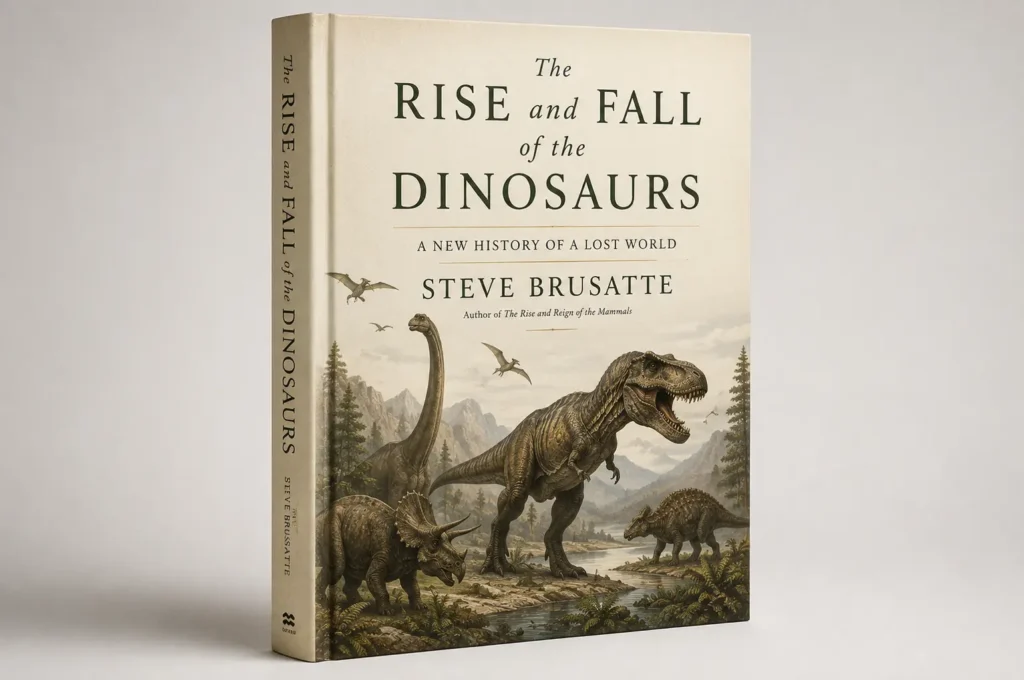
The Rise and Fall of the Dinosaurs
A compelling history of dinosaurs, tracing their origins, diversification, 200-million-year reign, extinction, and enduring legacy.
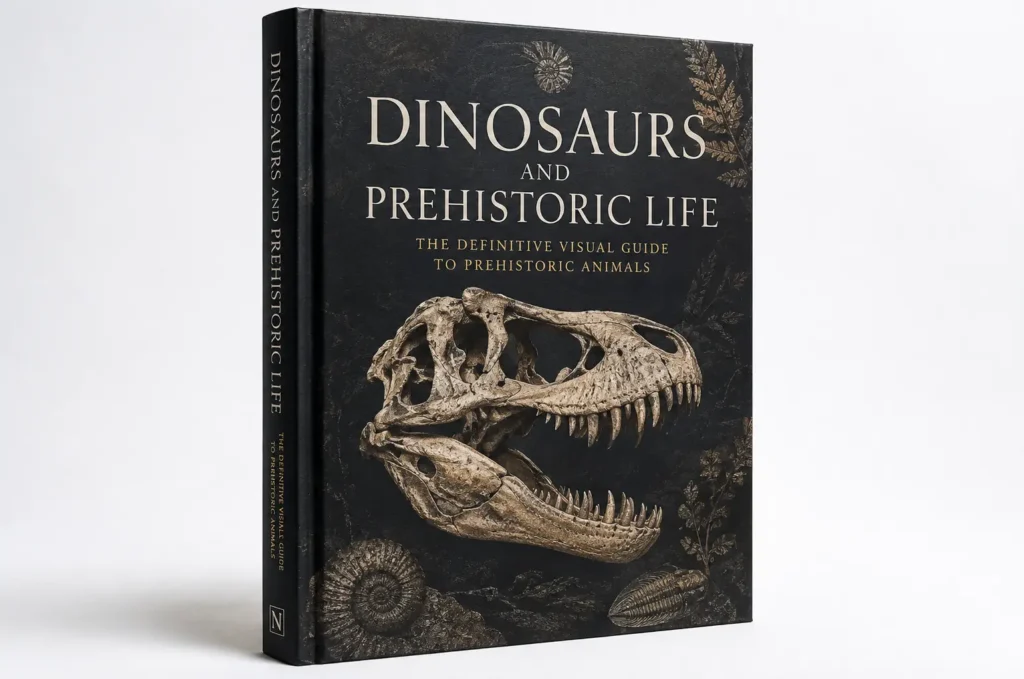
Dinosaurs and Prehistoric Life
A richly illustrated visual reference exploring dinosaurs, fossils, evolution, and prehistoric life across geological time.
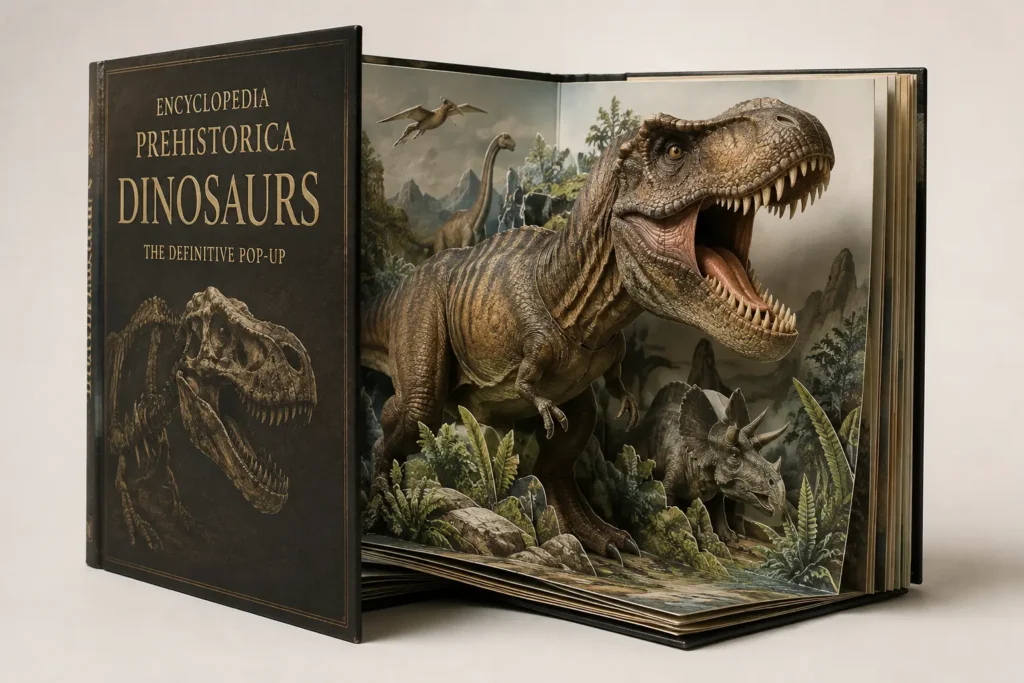
Encyclopedia Prehistorica: Dinosaurs
An interactive dinosaur book featuring spectacular three-dimensional pop-ups, particularly suited to young readers and families.
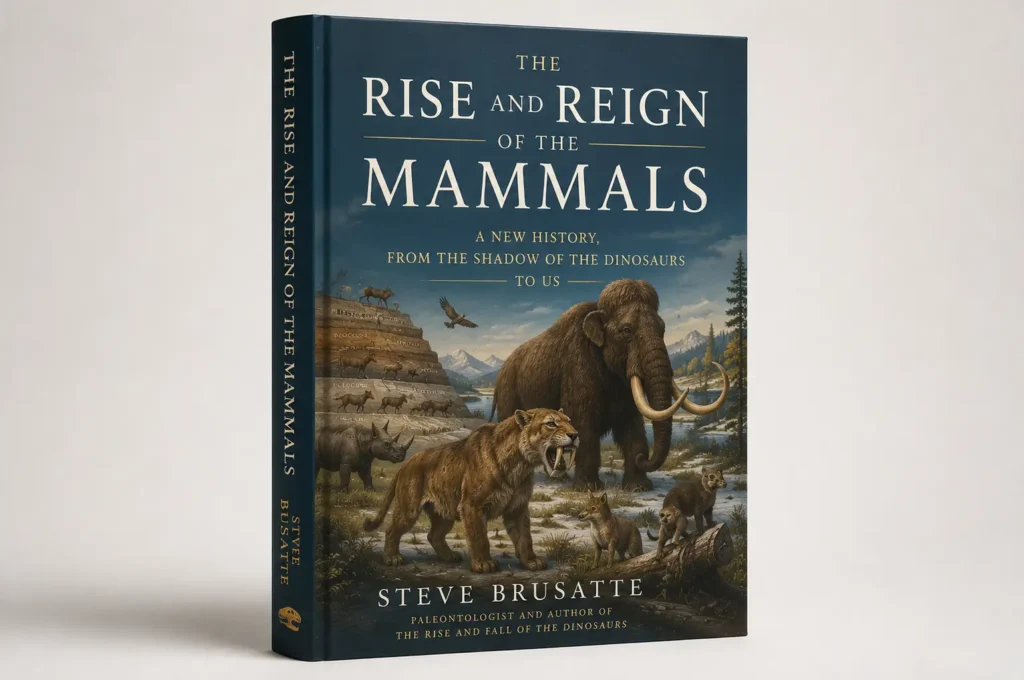
The Rise and Reign of the Mammals
A sweeping history of mammalian evolution, from their origins alongside dinosaurs through the Cenozoic and the emergence of humans.