
Quick Answer
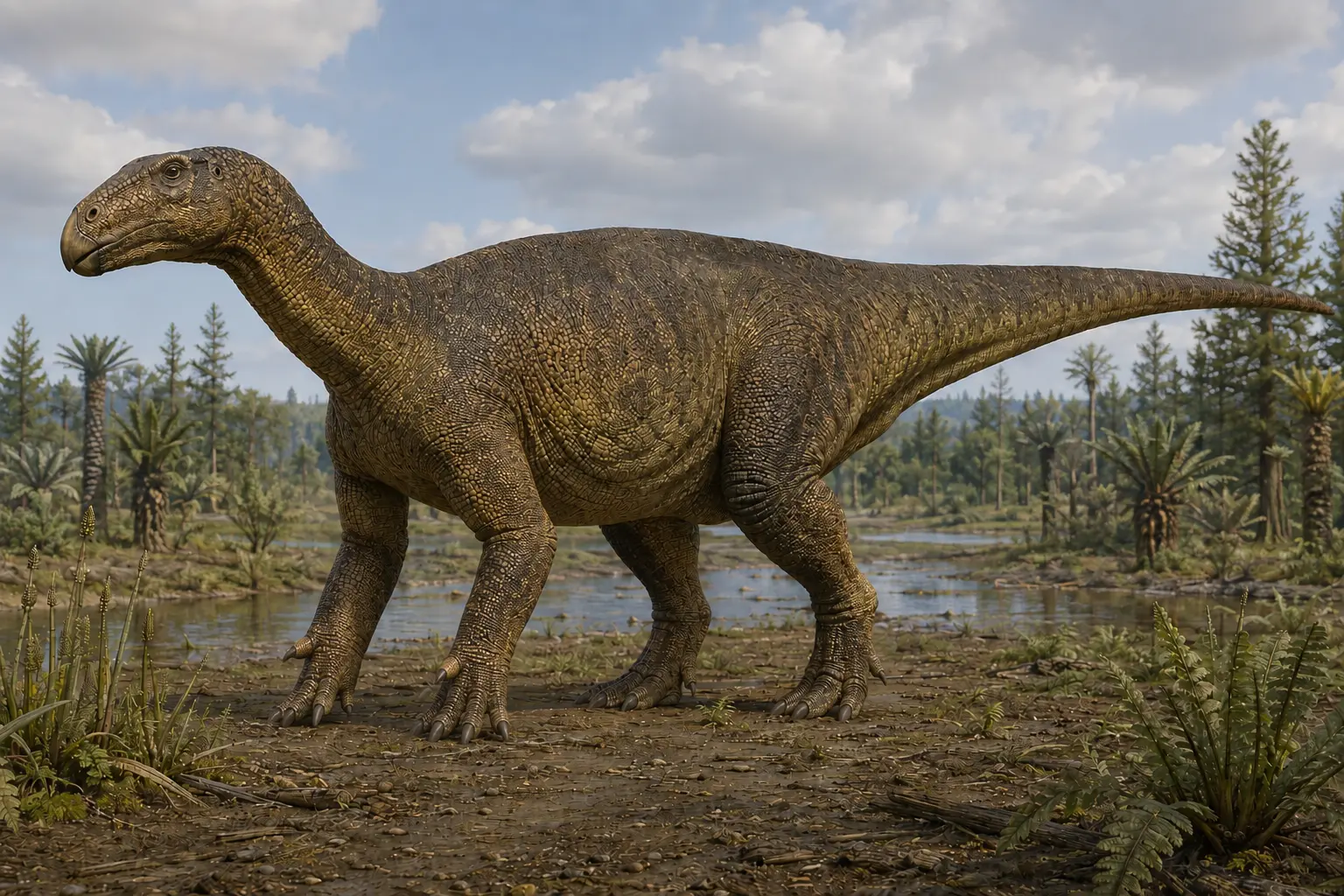
Iguanodon was a large herbivorous ornithopod dinosaur that lived during the Early Cretaceous, approximately 126–122 million years ago. It is one of the most historically significant dinosaurs because it was among the first genera to be scientifically described and played a central role in the recognition of dinosaurs as a distinct group of reptiles. Fossil evidence from numerous well-preserved skeletons, particularly those discovered at Bernissart in Belgium, shows that Iguanodon possessed a robust body, powerful hind limbs, flexible forelimbs, and a distinctive thumb spike. Modern research indicates that it was a facultative quadruped capable of walking on both two and four limbs while feeding on a variety of Early Cretaceous vegetation.
Species Quick Info
| Attribute | Information |
|---|---|
| Scientific Name | Iguanodon bernissartensis |
| Meaning of Name | “Iguana tooth” |
| Classification | Dinosauria → Ornithischia → Ornithopoda → Styracosterna → Iguanodontia |
| Geological Age | Early Cretaceous (Barremian–early Aptian, ~126–122 Ma) |
| Diet | Herbivore |
| Estimated Length | 9–11 m (30–36 ft) |
| Estimated Body Mass | 3–5 tonnes |
| Locomotion | Facultative biped and quadruped |
| Distinctive Feature | Enlarged conical thumb spike |
| Known Distribution | Western Europe, primarily Belgium, England, Germany and Spain |
| Notable Fossils | Articulated skeletons from the Bernissart Coal Mine, Belgium |
| Named By | Gideon Mantell (1825) |
Introduction
Iguanodon bernissartensis is among the best-known herbivorous dinosaurs and remains one of the most scientifically important ornithopods ever discovered. Since its description in 1825, it has contributed to nearly every stage of dinosaur research—from the early recognition of Dinosauria to modern studies of locomotion, feeding biomechanics, growth, and ornithopod evolution.
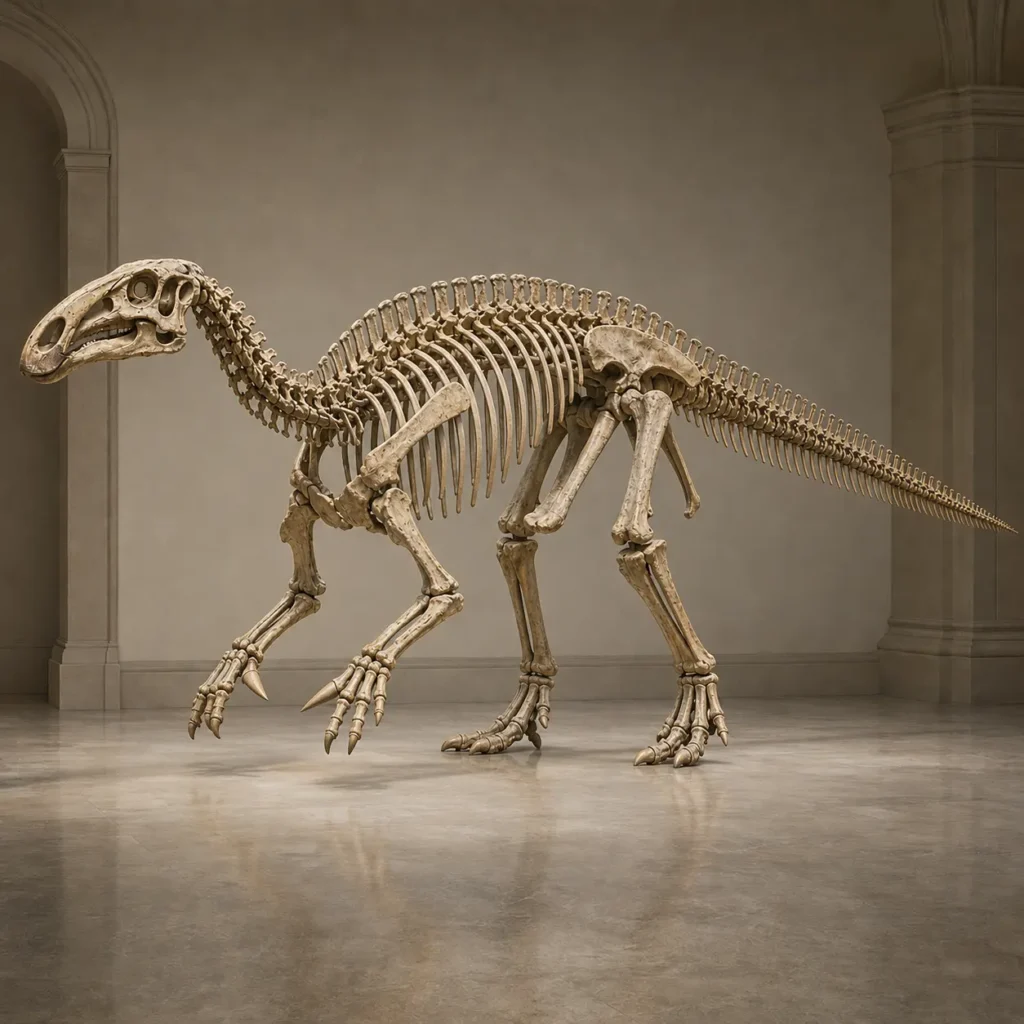
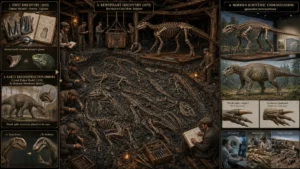
The discovery of more than thirty articulated skeletons at Bernissart in 1878 transformed scientific understanding of the genus. Unlike many dinosaurs known only from isolated bones, these exceptionally preserved skeletons allowed palaeontologists to reconstruct the animal’s anatomy with unprecedented accuracy. They corrected several early misconceptions, including the famous interpretation of the thumb spike as a nasal horn, and established Iguanodon as one of the best-documented large herbivorous dinosaurs of the Early Cretaceous.
Today, Iguanodon occupies an important evolutionary position between earlier ornithopods and the more derived hadrosaurids, making it a key taxon for understanding the diversification of herbivorous dinosaurs during the Cretaceous.
Classification
Quick Classification
| Rank | Classification |
|---|---|
| Kingdom | Animalia |
| Phylum | Chordata |
| Clade | Dinosauria |
| Clade | Ornithischia |
| Clade | Neornithischia |
| Clade | Ornithopoda |
| Clade | Iguanodontia |
| Clade | Styracosterna |
| Genus | Iguanodon |
| Type species | I. bernissartensis |
Scientific Explanation
Iguanodon belongs to the ornithopod lineage of herbivorous ornithischian dinosaurs. It is classified within Styracosterna, a clade representing an important evolutionary stage between earlier ornithopods and the highly specialized duck-billed dinosaurs (Hadrosauridae).
The taxonomy of Iguanodon has undergone extensive revision since the nineteenth century. Numerous species were historically assigned to the genus based on fragmentary remains from Europe and elsewhere. Advances in comparative anatomy and phylogenetic analysis have shown that many of these species represent distinct genera, substantially narrowing the definition of Iguanodon. Today, Iguanodon bernissartensis, based on the abundant Bernissart material, is the principal species accepted by most researchers.
This taxonomic refinement illustrates how new fossil discoveries and analytical methods continue to improve scientific understanding of dinosaur diversity.
Evidence Strength
Very High
Evidence Assessment
The classification of Iguanodon bernissartensis is supported by numerous articulated skeletons, including the exceptional Bernissart specimens that preserve much of the skeleton in anatomical position. Modern phylogenetic analyses consistently place Iguanodon within Styracosterna. While fragmentary material from other European localities is sometimes difficult to assign confidently, the taxonomic identity and evolutionary placement of I. bernissartensis itself are strongly supported by direct fossil evidence.
Size Overview
Size Summary
| Measurement | Estimate |
|---|---|
| Adult Length | 9–11 m (30–36 ft) |
| Estimated Mass | 3–5 tonnes |
| Hip Height | Approximately 2–3 m |
| Body Build | Robust, deep-bodied herbivore |
| Tail | Long and stiffened for balance |
Scientific Explanation
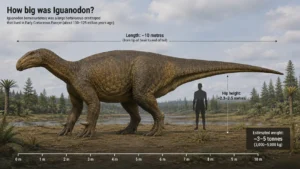
Iguanodon was one of the largest ornithopods of the Early Cretaceous. Adults possessed a deep torso, powerful hind limbs, comparatively shorter but muscular forelimbs, and a long, stiffened tail that acted as a counterbalance during locomotion.
The abundance of relatively complete skeletons allows scientists to estimate body proportions with greater confidence than for many other ornithopods. Individual variation exists, reflecting differences in age, growth stage, and preservation, but adult individuals consistently fall within the large-bodied range expected for the genus.
Body mass estimates are inherently less certain than skeletal dimensions because they depend on volumetric reconstructions and biomechanical modelling rather than direct fossil evidence. Nevertheless, independent studies broadly converge on a mass of approximately three to five tonnes for mature individuals.
Evidence Strength
High
Evidence Assessment
Adult body length is supported by numerous articulated skeletons, making overall size one of the best-constrained aspects of Iguanodon biology. Body mass estimates are derived from biomechanical and volumetric modelling and therefore involve informed inference rather than direct fossil evidence. Although published values vary slightly among studies, the overall size range is well supported.
Diet Overview
Diet Summary
| Characteristic | Evidence |
|---|---|
| Diet | Herbivorous |
| Primary Evidence | Tooth morphology and jaw anatomy |
| Feeding Method | Cropping and processing vegetation |
| Chewing Ability | Well-developed oral processing compared with earlier ornithopods |
| Direct Stomach Contents | Not known |
| Dietary Certainty | High |
Scientific Explanation
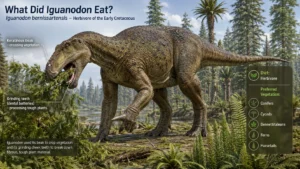
Iguanodon was a herbivore adapted to feeding on a variety of Early Cretaceous plants. Its skull, jaws, and leaf-shaped teeth are specialised for cropping and slicing vegetation. The arrangement of the jaws and dental batteries allowed food to be processed more efficiently than in many earlier herbivorous dinosaurs, representing an important evolutionary step toward the sophisticated feeding systems of hadrosaurids.
Its flexible forelimbs may have assisted in gathering vegetation, while its ability to alternate between quadrupedal and bipedal postures likely enabled browsing at multiple heights. These interpretations are supported by functional studies of the forelimbs and comparisons with closely related iguanodontians.
Because no confirmed stomach contents have been recovered, the precise composition of its diet remains uncertain. Instead, palaeontologists reconstruct feeding ecology using tooth morphology, dental wear patterns, jaw mechanics, and comparisons with living herbivorous reptiles and mammals.
Evidence Strength
High
Evidence Assessment
The herbivorous diet of Iguanodon is strongly supported by direct anatomical evidence, including its tooth morphology, jaw structure, and patterns of dental wear. Functional interpretations of feeding behaviour are reinforced by biomechanical analyses and comparative anatomy. However, the specific plant species consumed remain unknown because direct dietary evidence, such as preserved stomach contents or associated plant remains, has not been discovered. Consequently, dietary composition is inferred rather than directly observed.
Habitat and Environment
Habitat Summary Table
| Characteristic | Information |
|---|---|
| Geological Age | Early Cretaceous (Barremian–early Aptian) |
| Primary Environment | River floodplains and lowland forests |
| Climate | Warm, humid, seasonally wet |
| Associated Habitats | Coastal plains, wetlands, river channels |
| Known Distribution | Western Europe |
| Ecological Role | Large terrestrial herbivore |
Scientific Explanation
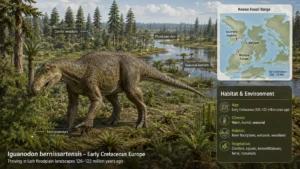
Iguanodon inhabited western Europe during the Early Cretaceous, when much of the region consisted of broad river systems, floodplains, forested lowlands, and coastal environments. Geological formations preserving Iguanodon fossils indicate landscapes shaped by active rivers, periodic flooding, and abundant vegetation.
The flora available during this period differed considerably from modern ecosystems. Flowering plants were only beginning to diversify, while conifers, cycads, bennettitaleans, ferns, horsetails, and other seed plants dominated many landscapes. These environments likely provided abundant browse for large herbivorous dinosaurs.
Iguanodon shared its ecosystem with a diverse assemblage of dinosaurs, crocodilians, turtles, fishes, pterosaurs, and small mammals. Predatory theropods occupied higher trophic levels, while numerous herbivorous dinosaurs partitioned available vegetation through differences in body size, feeding height, and jaw mechanics.
Evidence Strength
High
Evidence Assessment
Reconstructions of Iguanodon‘s habitat are supported by multiple lines of evidence, including sedimentology, fossil plant assemblages, associated vertebrate fossils, and regional geological studies. The exact vegetation composition varied among localities, but the interpretation of warm, vegetated floodplain ecosystems is well supported. Climatic details are inferred from geological proxies rather than observed directly.
Thumb Spike
Thumb Spike Summary
| Characteristic | Information |
|---|---|
| Structure | Enlarged conical first manual digit |
| Position | Thumb of each forelimb |
| Evidence Type | Direct skeletal evidence |
| Confirmed Function | Unknown |
| Leading Hypotheses | Defence, intraspecific display or combat, vegetation manipulation |
| Scientific Consensus | Multiple functions remain possible |
Scientific Explanation
One of the defining characteristics of Iguanodon is its enlarged thumb spike. Unlike the flattened fingers used to support weight during quadrupedal locomotion, the thumb formed a robust conical spike projecting away from the hand.
Early reconstructions famously misidentified this structure as a nasal horn because only isolated elements were initially available. The discovery of articulated skeletons at Bernissart demonstrated that the spike belonged to the hand, fundamentally changing interpretations of Iguanodon anatomy.
Several hypotheses have been proposed regarding its function. The spike may have served as a defensive weapon against predators, been used during interactions between individuals of the same species, or assisted in manipulating branches and vegetation while feeding. None of these interpretations has been conclusively demonstrated, and the structure may have fulfilled multiple roles.
Evidence Strength
Moderate
Evidence Assessment
The anatomy and position of the thumb spike are established by exceptionally preserved articulated skeletons and represent direct fossil evidence. However, its function cannot be observed directly. Proposed uses rely on biomechanical analyses, functional morphology, and comparisons with living animals. No single hypothesis currently has sufficient evidence to be regarded as definitive, making this one of the best-known examples of functional uncertainty in dinosaur palaeobiology.
Discovery History
Discovery Summary
| Event | Year |
|---|---|
| First fossil discovered | Early 1820s |
| Scientific description | 1825 |
| Named by | Gideon Mantell |
| Bernissart discovery | 1878 |
| Scientific Importance | One of the first dinosaurs ever described |
Scientific Explanation
Iguanodon occupies a unique place in the history of palaeontology. Gideon Mantell recognised unusual fossil teeth collected in southern England during the early 1820s and formally described the genus in 1825. The resemblance of the teeth to those of modern iguanas inspired the name Iguanodon, meaning “iguana tooth.”
At the time, only fragmentary material was available, leading to several inaccurate reconstructions. The thumb spike, for example, was initially interpreted as a horn positioned on the animal’s nose.
A breakthrough occurred in 1878 when miners working at Bernissart, Belgium, uncovered dozens of articulated Iguanodon skeletons deep underground. This discovery represented one of the most remarkable dinosaur fossil assemblages ever found and allowed palaeontologists to reconstruct the complete skeleton with far greater confidence than previously possible.
The Bernissart specimens continue to be among the most scientifically valuable dinosaur fossils, providing insights into anatomy, growth, locomotion, and taxonomy.
Evidence Strength
Very High
Evidence Assessment
The discovery history is documented through historical publications, museum archives, original specimen records, and surviving fossil collections. The Bernissart discoveries remain among the best-documented events in vertebrate palaeontology, and their scientific importance is firmly established.
Locomotion
Locomotion Summary
| Characteristic | Information |
|---|---|
| Primary Mode | Facultative quadrupedalism |
| Bipedal Ability | Yes |
| Forelimb Function | Weight support and food gathering |
| Tail Function | Counterbalance |
| Locomotion Evidence | Skeletal anatomy, biomechanics, trackways |
Scientific Explanation
Modern research indicates that Iguanodon was capable of both bipedal and quadrupedal locomotion. Earlier reconstructions commonly portrayed the animal standing permanently upright, but analyses of complete skeletons demonstrate that such postures are inconsistent with its anatomy.
The forelimbs were robust enough to support body weight during walking, while the powerful hind limbs enabled efficient bipedal movement when required. The long, stiffened tail acted as a counterbalance, contributing to stability during locomotion.
Biomechanical studies suggest that Iguanodon probably alternated between postures depending on behaviour. Quadrupedal movement may have been favoured during routine travel and feeding, whereas bipedal postures likely assisted in reaching higher vegetation or moving under particular circumstances.
Detailed questions concerning gait, speed, and locomotor mechanics are explored in the dedicated Iguanodon Locomotion guide.
Evidence Strength
High
Evidence Assessment
The ability of Iguanodon to move on both two and four limbs is supported by articulated skeletons, limb proportions, joint anatomy, biomechanical modelling, and fossil trackways attributable to iguanodontians. Precise walking speeds and habitual posture remain subjects of ongoing biomechanical investigation, but the interpretation of facultative quadrupedalism is strongly supported by current evidence.
Scientific Significance
Scientific Significance Summary Table
| Contribution | Significance |
|---|---|
| Early dinosaur research | Among the first named dinosaur genera |
| Dinosaur classification | Helped establish Dinosauria as a distinct group |
| Exceptional fossils | Bernissart articulated skeletons |
| Evolutionary importance | Transitional iguanodontian |
| Research value | Anatomy, locomotion, feeding, growth, taxonomy |
Scientific Explanation
Few dinosaurs have influenced palaeontology as profoundly as Iguanodon. Alongside Megalosaurus and Hylaeosaurus, it helped provide the evidence used by Richard Owen to establish the clade Dinosauria in 1842.
The discovery of numerous articulated skeletons transformed scientific approaches to reconstructing extinct vertebrates by demonstrating the importance of complete fossil assemblages over isolated bones. Research on Iguanodon has also contributed to understanding herbivorous dinosaur evolution, the origin of hadrosaurian feeding adaptations, and the functional evolution of ornithopod locomotion.
Because it is represented by abundant, well-preserved material spanning multiple growth stages, Iguanodon continues to serve as an important reference taxon in studies of dinosaur anatomy, biomechanics, phylogeny, and Early Cretaceous ecosystems.
Evidence Strength
Very High
Evidence Assessment
The scientific importance of Iguanodon is supported by nearly two centuries of palaeontological research and extensive fossil material. Its historical role in the development of dinosaur science is directly documented, while its continuing importance is reflected in its frequent inclusion in phylogenetic, anatomical, and biomechanical studies. Its significance extends beyond the species itself, influencing the broader understanding of ornithopod evolution and dinosaur palaeobiology.
Current Scientific Understanding
Research over the past several decades has transformed Iguanodon from one of the earliest—and most misunderstood—dinosaurs into one of the best-documented large herbivorous dinosaurs of the Early Cretaceous. Numerous articulated skeletons, advances in biomechanical modelling, and modern phylogenetic analyses have refined scientific understanding of its anatomy, locomotion, ecology, and evolutionary relationships.
Several conclusions are now widely supported:
- Iguanodon bernissartensis is a valid and well-defined species within Styracosterna.
- It was a large herbivorous ornithopod capable of both quadrupedal and bipedal locomotion.
- Its skull and dentition were highly adapted for processing fibrous vegetation.
- The Bernissart skeletons provide one of the most complete anatomical records for any large Early Cretaceous dinosaur.
- It occupies an important transitional position between earlier ornithopods and the later hadrosaurids.
Despite this strong evidence base, several aspects of Iguanodon biology remain incompletely understood. These include the primary function of the thumb spike, details of its social behaviour, reproductive biology, and the exact composition of its diet. Ongoing discoveries and analytical techniques continue to refine interpretations rather than overturn the broad scientific consensus.
Evidence Assessment
| Topic | Evidence Strength | Primary Evidence | Confidence |
|---|---|---|---|
| Taxonomy | Very High | Articulated skeletons, phylogenetic analyses | Very High |
| Anatomy | Very High | Numerous articulated skeletons | Very High |
| Body Size | High | Complete skeletons, skeletal measurements | High |
| Diet | High | Skull anatomy, dentition, dental wear | High |
| Habitat | High | Sedimentology, associated fossils, palaeobotany | High |
| Locomotion | High | Limb anatomy, biomechanics, trackway evidence | High |
| Thumb Spike Anatomy | Very High | Direct skeletal preservation | Very High |
| Thumb Spike Function | Moderate | Functional morphology and biomechanical inference | Moderate |
| Behaviour | Low–Moderate | Comparative inference, limited fossil evidence | Moderate-Low |
| Reproduction | Low | Comparative inference only | Low |
Direct Fossil Evidence
The strongest evidence for Iguanodon comes from exceptionally preserved articulated skeletons, particularly the Bernissart assemblage. These fossils directly document skeletal anatomy, body proportions, limb structure, vertebral anatomy, and the distinctive thumb spike.
Trace Evidence
Trackways attributed to iguanodontians provide additional evidence for locomotion and gait. Although not all can be confidently assigned to Iguanodon, they support interpretations derived from skeletal anatomy regarding quadrupedal and bipedal movement.
Biomechanical Evidence
Biomechanical analyses have improved understanding of locomotion, feeding mechanics, and forelimb function. These studies support many interpretations but remain inferential because behaviour cannot be observed directly.
Comparative Inference
Some aspects of Iguanodon biology—such as browsing behaviour, growth patterns, and aspects of ecology—are reconstructed using comparisons with closely related iguanodontians and hadrosauriforms. These interpretations are scientifically reasonable but remain less certain than conclusions supported directly by fossils.
Remaining Scientific Uncertainty
Current uncertainties include:
- The principal function of the thumb spike.
- The extent of social behaviour.
- Nesting biology and parental care.
- Seasonal movements.
- Exact dietary preferences.
- Variation among fragmentary European material historically referred to Iguanodon.
These uncertainties reflect gaps in available evidence rather than disagreement about the animal’s overall anatomy or evolutionary relationships.
Frequently Asked Questions
Was Iguanodon one of the first dinosaurs discovered?
Yes. Iguanodon was formally described by Gideon Mantell in 1825 and was one of the first dinosaur genera to receive a scientific name. Together with Megalosaurus and Hylaeosaurus, it helped establish the concept of Dinosauria.
How big was Iguanodon?
Adults generally measured between 9 and 11 metres in length and weighed approximately 3 to 5 tonnes, although estimates vary slightly among studies.
What did Iguanodon eat?
It was a herbivore that fed on Early Cretaceous vegetation. Fossil evidence from its teeth and jaws indicates adaptations for processing fibrous plants, but the exact plant species it consumed remain unknown.
Did Iguanodon walk on two or four legs?
Current evidence indicates that Iguanodon was a facultative quadruped. It could move on all four limbs but was also capable of bipedal locomotion.
What was the thumb spike used for?
Its precise function remains uncertain. Proposed uses include defence, intraspecific combat or display, and manipulating vegetation. No single hypothesis is currently supported strongly enough to be considered definitive.
Why is the Bernissart discovery important?
The Bernissart Coal Mine in Belgium yielded more than thirty articulated Iguanodon skeletons, making it one of the most significant dinosaur fossil discoveries in history. These specimens transformed scientific understanding of the animal’s anatomy and corrected several early misconceptions.
Is Iguanodon closely related to duck-billed dinosaurs?
Yes. Iguanodon belongs to Styracosterna and represents an evolutionary stage between earlier ornithopods and the more derived hadrosaurids.
References
Primary Scientific Literature
- Boulenger, G. A. (1881). Sur les Iguanodons de Bernissart. Bulletin du Musée royal d’Histoire naturelle de Belgique.
- Mantell, G. A. (1825). Notice on the Iguanodon, a newly discovered fossil reptile from the sandstone of Tilgate Forest, Sussex. Philosophical Transactions of the Royal Society of London.
- Norman, D. B. (1980). On the ornithischian dinosaur Iguanodon bernissartensis from the Lower Cretaceous of Bernissart (Belgium). Institut royal des Sciences naturelles de Belgique.
- Norman, D. B. (1986). On the anatomy of Iguanodon atherfieldensis (Ornithischia: Ornithopoda). Bulletin de l’Institut Royal des Sciences Naturelles de Belgique.
- Norman, D. B. (1987). A mass accumulation of vertebrates from the Lower Cretaceous of Nehden (Sauerland), West Germany. Proceedings of the Royal Society of London B.
- Norman, D. B. (1988). A review of the family Iguanodontidae and its relationships. In The Phylogeny and Classification of the Tetrapods.
Systematics and Phylogeny
- McDonald, A. T. (2012). Phylogeny and systematics of Styracosterna (Dinosauria: Ornithopoda). PLoS ONE.
- McDonald, A. T., Barrett, P. M., & Chapman, S. D. (2010). A new basal iguanodont from the Wealden of England and implications for ornithopod evolution.
- Verdú, F. J., Royo-Torres, R., & Cobos, A. (2015). Updated phylogenetic relationships among basal styracosternan ornithopods.
- Boyd, C. A. (2015). The systematic relationships and biogeographic history of ornithischian dinosaurs.
Functional Anatomy and Biomechanics
- Maidment, S. C. R., Bates, K. T., Barrett, P. M., & Gunga, H.-C. Selected studies on ornithopod locomotion and body-mass estimation.
- Bates, K. T., Manning, P. L., Hodgetts, D., & Sellers, W. I. (2009). Estimating mass properties of dinosaurs using laser imaging and volumetric reconstructions.
- Sellers, W. I., Manning, P. L., et al. Studies on dinosaur locomotor biomechanics and musculoskeletal modelling.
Palaeoecology and Evolution
- Norman, D. B. (2004). Basal Iguanodontia. In The Dinosauria (2nd ed.). University of California Press.
- Horner, J. R., Weishampel, D. B., & Forster, C. A. (2004). Hadrosauridae. In The Dinosauria (2nd ed.).
- Barrett, P. M., Butler, R. J., & colleagues. Selected studies on Early Cretaceous ornithopod evolution and palaeoecology.
Standard Reference Works
- Brusatte, S. L. (2018). The Rise and Fall of the Dinosaurs.
- Paul, G. S. (2016). The Princeton Field Guide to Dinosaurs (2nd ed.).
- Weishampel, D. B., Dodson, P., & Osmólska, H. (eds.). (2004). The Dinosauria (2nd ed.). University of California Press.
- Holtz, T. R. Jr. (latest edition). Dinosaurs: The Most Complete, Up-to-Date Encyclopedia for Dinosaur Lovers of All Ages.
Palaeobotany and Early Cretaceous Environments
- Cleal, C. J., & Rees, P. M. Studies on Early Cretaceous floras.
- Friis, E. M., Crane, P. R., & Pedersen, K. R. Early Flowers and Angiosperm Evolution.
- Scott, A. C. Selected works on Mesozoic vegetation and terrestrial ecosystems.
📘 Related Species


Recommended Paleontology & Natural History Books
As an Amazon Associate, Extinct Atlas may earn from qualifying purchases.
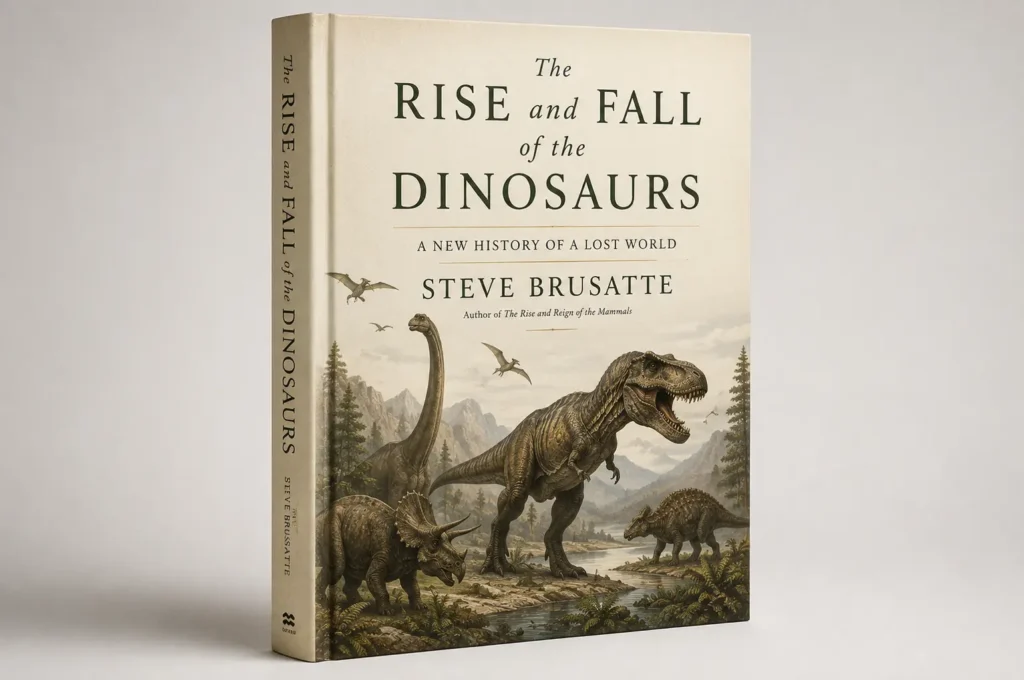
The Rise and Fall of the Dinosaurs
A compelling history of dinosaurs, tracing their origins, diversification, 200-million-year reign, extinction, and enduring legacy.
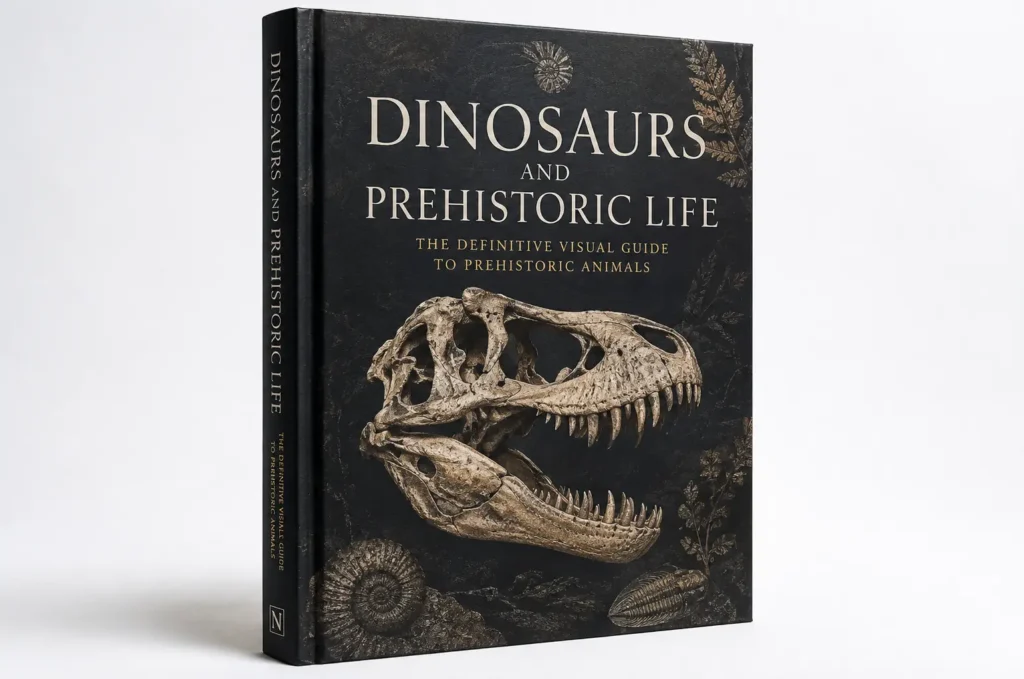
Dinosaurs and Prehistoric Life
A richly illustrated visual reference exploring dinosaurs, fossils, evolution, and prehistoric life across geological time.
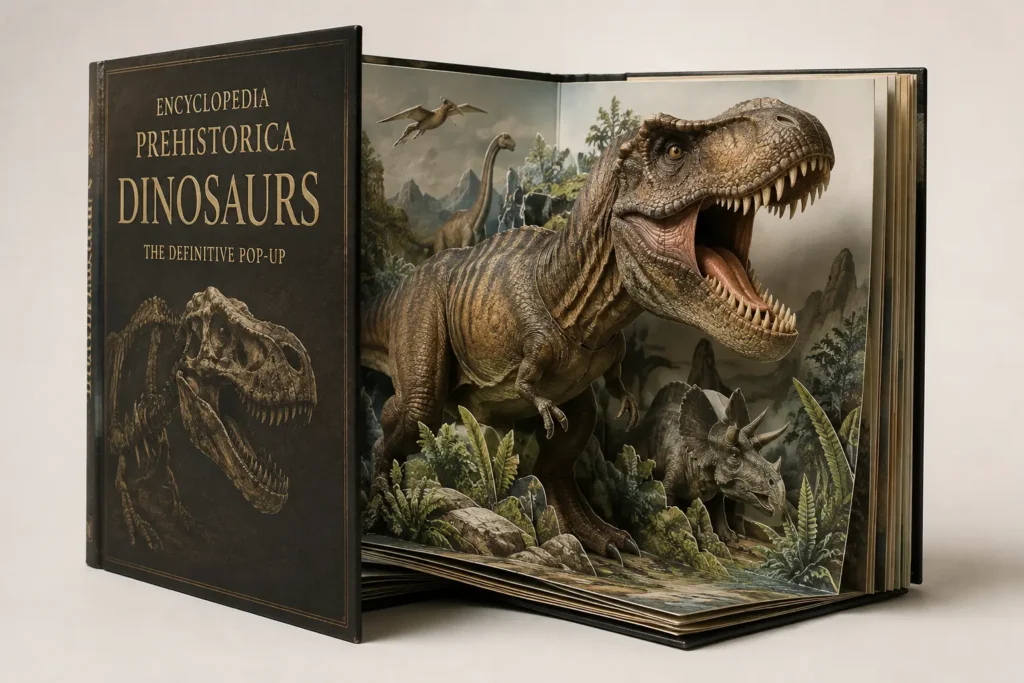
Encyclopedia Prehistorica: Dinosaurs
An interactive dinosaur book featuring spectacular three-dimensional pop-ups, particularly suited to young readers and families.
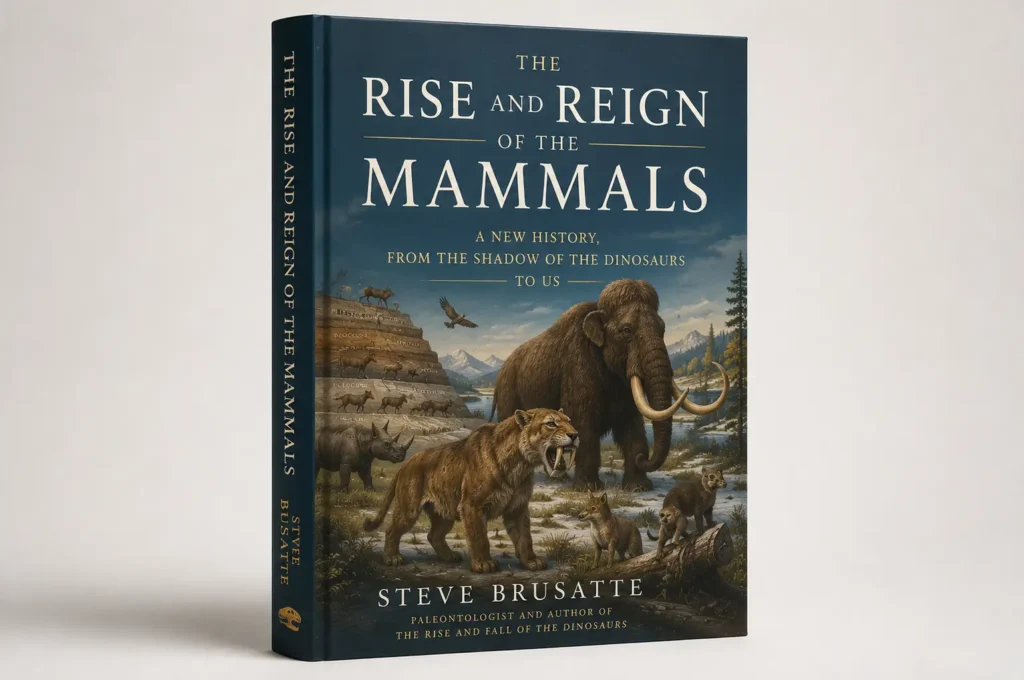
The Rise and Reign of the Mammals
A sweeping history of mammalian evolution, from their origins alongside dinosaurs through the Cenozoic and the emergence of humans.